
Little Giant CS-SS
4.2Editor score
Ready-to-assemble system
Automatic float switch
Cast iron pump
A sump pump for a crawl space or basement must do more than move water quickly. It needs dependable automatic operation, corrosion-resistant construction, a discharge route that suits the property, and enough capacity for the volume of water and debris it may encounter.
The products in this guide cover complete basin-and-pump systems, standalone submersible pumps, high-capacity utility pumps, solid-handling sewage pumps, and a water-powered emergency backup. We compared their stated power, capacity, construction, controls, included components, and intended applications.
Each review explains the product's strongest benefits, practical limitations, and ideal installation environment. The list also shows how choices differ for finished systems, retrofit projects, dirty water, emergency protection, and compact crawl spaces. Product availability and prices can change.
4.2Editor score

4.9Editor score

As an Amazon Associate we earn from qualifying purchases.
This side-by-side comparison highlights each pump's power source, construction, capacity, control method, and most suitable installation environment, helping readers distinguish complete systems from standalone pumps and emergency backup equipment.


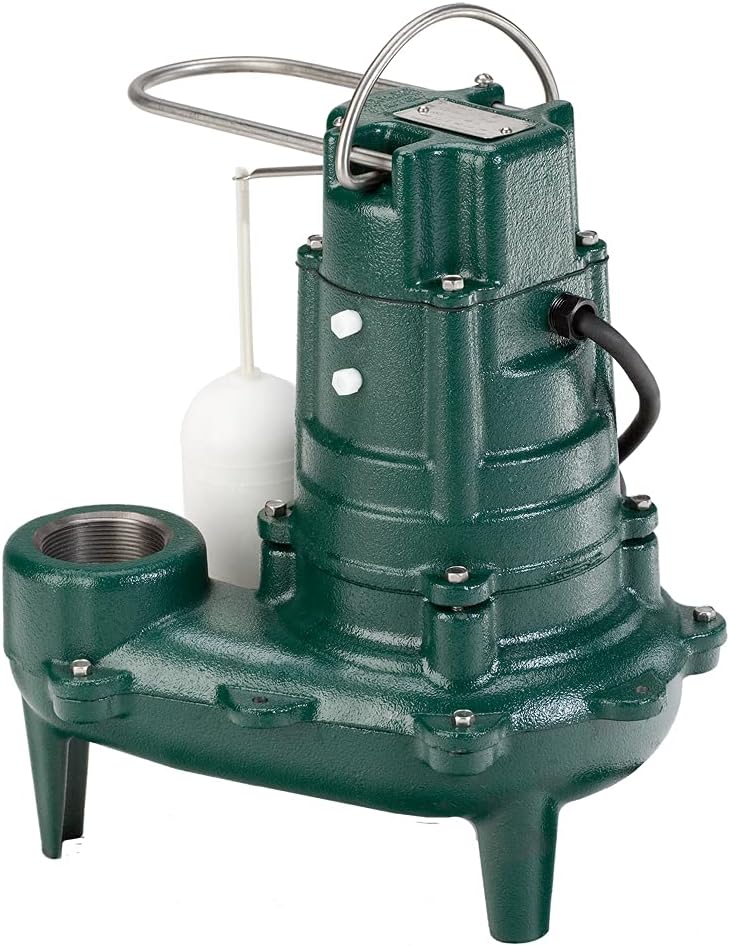


The Little Giant CS-SS is a complete automatic sump and basin kit designed specifically for residential crawl spaces, shallow sump pits, and other low-lying areas. It carries a 4.2 rating and stands out because it combines a cast iron pump, perforated basin, structural foam cover, discharge hose kit, and check valve rather than requiring the buyer to assemble the entire installation from separate components.
We may earn a commission when you buy through this link, at no additional cost to you.
Its 1/3 HP motor is rated for 115 volts, 6 running amps, and 600 watts, with overload protection and a 20-foot cord. The snap-action float switch activates when water reaches between 8 and 11 inches and stops the pump when the level falls between 2 and 5 inches. That generous activation range gives the float time to respond before a crawl space becomes wet, while the lower shutoff range prevents the pump from cycling unnecessarily.
The pump delivers 3,000 GPH at a five-foot lift and is rated to a 22-foot shutoff height. The included 24-foot universal discharge hose kit accepts 1.25-inch and 1.5-inch adapters, which makes it adaptable to existing discharge arrangements. The trade-off is that the kit is a ready-to-assemble system rather than a fully installed solution: a suitable discharge path, electrical connection, and careful basin placement are still necessary.
This is a strong choice for a homeowner who wants one coordinated package for a crawl space or shallow basement pit. It is especially appealing when the installation area has limited room and the basin, cover, float control, check valve, and discharge components need to work together. Buyers should measure the available space and confirm where the discharge water can legally and safely exit.
The compact basin and automatic controls are tailored to environments where water collection needs to begin before substantial damage occurs. The system is also listed for yards, patios, driveways, and other areas that can collect standing water.
Including the perforated basin, structural foam cover, check valve, discharge hose, and adapters reduces the number of separate components that must be sourced. Buyers still need to verify local discharge requirements and electrical safety.
We may earn a commission when you buy through this link, at no additional cost to you.
The Star 5STS is a standalone 1/2 HP submersible sump pump intended for basements, crawl spaces, septic applications, and other residential or light commercial water-management needs. It has a 1-1/2-inch discharge, an included float switch, and a stated flow rate of 60 gallons per minute. Unlike the complete systems elsewhere in this guide, it does not include a basin, lid, or discharge pipe.
We may earn a commission when you buy through this link, at no additional cost to you.
Its stainless steel construction is an important selling point in wet installations because it is designed to resist corrosion. The pump can pass 3/8-inch solids and is described as suitable for dirty water and light debris. A 7.8-amp motor gives it substantial operating capability, while the automatic float switch allows unattended water removal without manual intervention.
The main limitation is that the product data does not provide a customer rating, so it cannot be evaluated using the same rating history as the other picks. It also requires the homeowner to add a suitable basin or sump pit, a discharge line, and appropriate electrical service. High flow does not replace correct sizing; an oversized pump can produce excessive cycling, while a poorly planned discharge can overwhelm the pipe.
The Star 5STS is best for a do-it-yourself homeowner who already has or will install the surrounding sump infrastructure and wants a powerful, corrosion-resistant pump with a float switch. It may be particularly useful where moderate debris is expected and a 1-1/2-inch discharge is preferable to a smaller connection.
The half-horsepower motor and stated 60 GPM output make this pump suitable for properties that need more capacity than a compact residential unit. Its ability to pass 3/8-inch solids makes it a practical middle ground between clean-water and sewage-rated pumps.
Because the basin and discharge are not included, this option works best for a replacement or a planned installation where the existing pit dimensions, electrical supply, and piping are already known.
We may earn a commission when you buy through this link, at no additional cost to you.
The SEESII 1HP is a high-output utility pump designed to remove water from flooded basements, pools, hot tubs, yards, and similar locations. It has a 4.4 rating and is specified to move up to 4,755 gallons per hour. The included 23-foot hose and adapters make it much more useful for immediate drainage than an unconfigured bare pump.
We may earn a commission when you buy through this link, at no additional cost to you.
Its one-horsepower motor and claimed 36-foot lift height allow water to be moved farther or higher than a typical small sump pump. A built-in filter helps block small debris and is intended to reduce clogging. The product data specifies use with clean and lightly dirty water, making the filter a preventive feature rather than a license to pump sewage or heavy mud.
This is not a conventional automatic sump pump with a basin-mounted float switch. It is best treated as a portable or standby drainage pump that an operator places in the water and connects to the supplied hose. Because it lacks automatic sump-pit control, it cannot replace a permanently installed system on its own. Its 25-foot power cord also means users should evaluate extension-cord guidance and electrical conditions before operation.
Homeowners with a backup-drainage need, a pool, a hot tub, or a property that occasionally collects deep standing water may find this pump useful. For a crawl space or basement that requires unattended daily operation, pair it with a proper automatic sump system rather than relying on the utility pump alone.
The stated 4,755 GPH output and 36-foot lift make the pump suitable for substantial volumes and elevated discharge points. Actual performance depends on hose friction, lift distance, and the condition of the water being moved.
Because it is a portable utility pump rather than an automatic pit system, it is most useful for emergency removal, scheduled pumping, and other situations where an operator is available to start and monitor it.
We may earn a commission when you buy through this link, at no additional cost to you.
The JACKEL Sump Pump System is a complete installation package with a 4.9 rating, the highest listed customer rating in this guide. It combines a 1/2 HP sump pump, 15-gallon basin, gas-tight cover, inlet hub, check valve, and vertical float switch. The stated 87 GPM output gives it exceptional capacity for a residential basement or crawl-space system.
We may earn a commission when you buy through this link, at no additional cost to you.
The pump uses a stainless steel housing with a cast iron base and a high-efficiency PSC motor equipped with thermal overload protection. It is rated for continuous duty, while the top-suction design is intended to reduce clogging. A vertical float switch controls operation according to the water level in the basin, providing the automatic response required for an unattended sump installation.
Its largest practical consideration is space. A 15-gallon basin needs enough room to remain accessible and should sit where groundwater or foundation drainage can reach it. The 10-foot power cord may also be shorter than the distance to a suitable outlet, depending on the layout. Installation must comply with local electrical rules and include a GFCI-protected circuit where required.
The JACKEL system is an excellent match for a homeowner replacing an aging installation or planning a complete new sump pit without assembling each component individually. It is particularly compelling for properties with high water volume because the combination of motor power, 87 GPM rating, continuous-duty rating, and a generous basin provides substantial operating margin.
The pump, basin, sealed cover, inlet hub, check valve, and float switch are supplied together, reducing compatibility concerns. The buyer must still supply and connect the discharge pipe and arrange the electrical supply correctly.
The 87 GPM rating and 15-gallon basin provide useful capacity where inflow can be substantial. Correct basin sizing and a properly designed discharge remain more important than horsepower alone.
We may earn a commission when you buy through this link, at no additional cost to you.
The Zoeller 105-001 is a compact automatic drain pump system designed for spaces where gravity drainage is unavailable. Its listed uses include under-sink and utility-sink installations, basements, garages, wet bars, and laundry rooms. It has a 4.6 rating and an approximately 11-3/4 by 12-1/2-inch basin footprint, making it easier to place in tight areas.
We may earn a commission when you buy through this link, at no additional cost to you.
The 115-volt, 3/10 HP submersible pump uses a non-clogging vortex impeller that can pass solids up to 1/2 inch. That capability is useful for laundry lint, food particles, and similar small debris. A built-in check valve helps limit reverse flow, while the factory-tested construction is backed by a three-year limited manufacturer warranty.
Although the product can serve in basements, it is more compact than a full-size foundation sump system. That makes it appropriate for localized drainage or a small receiving basin, but not automatically sufficient for an entire high-water basement. The small basin offers less temporary water storage than the JACKEL's 15-gallon model, so inflow and pump capacity should be assessed together.
This is a strong choice when the drainage point is confined, the water contains manageable solids, and installing a conventional excavation is impractical. It can also function as a secondary drain in a suitable location. For broad foundation protection, compare the basin volume and expected inflow against a larger complete system.
The compact basin can fit under a sink, utility sink, or in another tight service area. Its footprint makes localized drainage more practical than installing a large excavation.
The vortex impeller can pass solids up to 1/2 inch, which is useful for lint and small particles. It should not be treated as a sewage pump capable of handling large waste objects.
We may earn a commission when you buy through this link, at no additional cost to you.
The Zoeller 108-0001 is a crawl-space sump system with a listed rating of 5.0. It includes a pump, pipe, sump basin, and basin cover, providing the principal components required for a basement or crawl-space installation. The 3/10 HP, 115-volt pump draws 9.7 amps, making adequate electrical capacity an important installation consideration.
We may earn a commission when you buy through this link, at no additional cost to you.
A notable feature is the availability of simplex and duplex configurations. A simplex installation uses a primary pump, while a duplex arrangement adds a backup pump for greater continuity. Depending on the configuration, the system may include a switch or require a control panel. This flexibility allows the buyer to match redundancy to the property's water exposure rather than using one configuration for every site.
The product data is less detailed than for several other picks, so exact flow, solids-handling, and basin-capacity figures are not supplied. Those omissions make it especially important to review the current manufacturer documentation and confirm that the package contains the switch or control equipment appropriate to the selected configuration. The presence of a complete system also does not mean it is ready to operate without a correctly installed discharge line and power source.
The Zoeller 108-0001 is most suitable for a homeowner who wants a recognized crawl-space or basement sump architecture and may want redundancy. Those willing to carefully confirm switch, panel, basin, and discharge requirements are likely to appreciate the flexibility more than a simple standalone pump purchase.
The availability of simplex and duplex versions is valuable where a single failure could lead to meaningful damage. A backup arrangement adds protection but also introduces more components and potentially a control panel.
Because switches and control panels can vary, buyers should confirm the components included with the selected version. Electrical service and discharge design should be reviewed before installation.
We may earn a commission when you buy through this link, at no additional cost to you.
The Zoeller Waste-Mate 267-0001 is a heavy-duty 1/2 HP automatic sewage, effluent, or dewatering pump rated for residential and commercial use. It has a 4.4 rating and is built for demanding applications where ordinary clean-water pumps would be unsuitable. Its two-pole mechanical float switch provides automatic operation without a separate control panel.
We may earn a commission when you buy through this link, at no additional cost to you.
The pump can pass 2-inch spherical solid waste through a plastic vortex impeller. That capacity clearly distinguishes it from the 3/8-inch and 1/2-inch solids options elsewhere in this guide. It is particularly relevant to sewage, effluent, or drainage installations where larger solids may enter the pit and clog a standard residential sump impeller.
Construction uses ASTM Class 25 cast iron for the switch case and pump housing, adding mechanical strength in harsh, wet conditions. The unit is completely submersible, watertight, and dust-tight, while the integrated float switch keeps the installation compact. Its trade-off is that this heavier-duty design is more specialized than a typical basement dewatering pump and should not be selected solely because of its power rating.
This is the appropriate choice for a property with sewage or effluent handling requirements, larger solid debris, or a commercial application needing robust construction. For ordinary foundation drainage with only minor debris, a standard sump system will usually be simpler and more appropriately sized.
The ability to pass 2-inch spherical solids makes the pump suitable for sewage and effluent systems where standard impellers can clog. A basin, cover, discharge, and proper waste-handling setup must still be designed around the application.
Cast iron construction, a mechanical float switch, and a sealed submersible design support reliable use in demanding environments. Routine inspection remains necessary because even a solids-capable pump can be affected by binding debris.
We may earn a commission when you buy through this link, at no additional cost to you.
The Liberty Pumps 257 is a 1/3 HP cast iron sump pump designed as a durable workhorse for basement dewatering and sump-pit operation. It carries a 4.6 rating, and its straightforward construction makes it relevant to buyers who prioritize a proven housing design over an all-in-one package. The product listing identifies it as a sump, effluent, and sewage category pump.
We may earn a commission when you buy through this link, at no additional cost to you.
Its solid, one-piece housing is finished with an epoxy powder coat that resists corrosion. The design also eliminates a lower motor seal, an intentional feature that can reduce one common source of leaks and maintenance. The listed configuration uses a 1-1/2-inch connection, giving installers a familiar option for compatible discharge systems.
The product data provides less detail than the guide's more fully specified picks. It does not state a flow rate, maximum lift, switch arrangement, or included accessories, so buyers should not assume automatic operation or a basin and cover are included. These missing details are not necessarily negative, but they make careful comparison with the current manufacturer instructions especially important.
The Liberty 257 is a sensible option for replacing a compatible existing pump or constructing a sump setup with separately selected controls and basin components. It is most appropriate for a homeowner who values cast iron durability and a straightforward dewatering design and who can verify the exact model specifications before purchase.
The one-piece housing and powder-coated finish focus on durability and corrosion resistance. Homeowners with a compatible existing pit may find this approach less complex than buying a complete sealed system.
Because the supplied data omits capacity and control details, buyers should review the current model documentation. The discharge, float control, basin, and electrical arrangement may need to be purchased separately.
We may earn a commission when you buy through this link, at no additional cost to you.
The Zoeller M98 Flow-Mate is a 1/2 HP cast iron submersible sump pump with a 4.4 rating. It is designed for automatic basement water removal and is stated to remove up to 4,320 gallons per hour. Unlike the complete basin systems in this guide, it is a standalone pump that needs a suitable sump basin, cover, discharge piping, and electrical connection.
We may earn a commission when you buy through this link, at no additional cost to you.
The oil-filled motor and cast iron housing support heat dissipation and help the unit cope with continuous submerged operation. A corrosion-resistant plastic vortex impeller is designed to pass solids while reducing maintenance. The built-in snap-action float switch provides automatic operation, while the float guard and switch arm help protect moving components.
Its nine-foot cord and LED power plug are practical details for installation planning. The LED allows a homeowner to check quickly whether power is present at the plug, while the cord length may be adequate for some pits and inadequate for others. No extension-cord recommendation is supplied, so local electrical requirements and the manufacturer's instructions should guide any setup.
The M98 is a strong standalone option for a new pit or a replacement where the owner wants a high-capacity pump with automatic controls. It is best for buyers comfortable selecting the basin and discharge components themselves. For a quick retrofit in a very confined area, its larger motor and housing may be less convenient than a compact drain pump.
The combination of a 1/2 HP motor, stated 4,320 GPH output, and snap-action float control is well suited to a standard sump pit. Real-world capacity changes with lift height and discharge-pipe friction.
The LED plug makes power verification easier, and the oil-filled motor supports cooling in submerged operation. Buyers should still confirm basin dimensions, discharge compatibility, and cord reach before ordering.
We may earn a commission when you buy through this link, at no additional cost to you.
The SumpJet is a fully automatic, water-powered backup sump pump designed to provide emergency protection when a primary sump pump cannot operate. It has a 4.5 rating and a completely different operating principle from the electrically powered products in this guide. Instead of drawing current from a receptacle or dedicated circuit, it uses incoming water pressure to drive the pumping action.
We may earn a commission when you buy through this link, at no additional cost to you.
The pump accepts an inlet supply ranging from 20 to 100 PSI and is described as providing high output flow rates. Because the unit is compact and fully assembled, it can be added to a sump arrangement without the extensive basin and float-switch configuration required by a conventional standby pump. That makes it particularly interesting for homeowners concerned about power loss or a failed primary pump.
The key limitation is its dependence on usable supply pressure. A SumpJet is not appropriate where incoming water is unreliable, and it cannot operate if the water service itself is shut off or lacks sufficient pressure. It also does not replace a primary sump pump, a basin, or a properly engineered discharge system. The exact installation arrangement and discharge requirements should be confirmed with the current instructions.
The SumpJet is best considered an added layer of protection for an existing basement sump installation, especially in a home where an outage during heavy rain would be costly. Homeowners should examine the entire drainage system rather than assuming the backup pump alone will eliminate flooding.
The pump's water-powered design allows it to operate without the electrical supply used by a conventional sump pump. It therefore adds valuable redundancy when power loss coincides with dangerous water accumulation.
Supply pressure is the trade-off for electrical independence. The pump should be considered alongside a primary sump pump and not as a substitute for one in every installation.
We may earn a commission when you buy through this link, at no additional cost to you.
Choosing a sump pump requires matching the equipment to the space, water conditions, drainage route, power supply, and maintenance plan. The most important distinctions are between a complete system and a standalone pump, between clean and solid-handling equipment, and between primary and emergency protection.
A complete system can simplify procurement by supplying a pump, basin, cover, float control, check valve, and sometimes discharge components as a coordinated package. The JACKEL includes a 15-gallon basin and gas-tight cover, while the Little Giant CS-SS supplies a perforated polypropylene basin and structural foam cover. These integrated arrangements are helpful for a new installation, but the buyer must still confirm that the basin fits the excavation and that the cover can be safely removed for service. A standalone pump may be better when replacing a compatible existing pit or when the basin needs a specific size or shape.
Choose a complete system for straightforward new construction, and choose a standalone pump when your existing basin and controls must remain. Always compare the available space with the full assembled dimensions.
Horsepower alone does not determine sump-pump suitability. Capacity must be adequate for the incoming water volume and the vertical distance to the discharge outlet, while pipe friction and horizontal runs also reduce effective output. The listed products range from a 3/10 HP motor to 1 HP, with stated capacities including 3,000 GPH for the Little Giant, 4,320 GPH for the Zoeller M98, 4,755 GPH for the SEESII utility pump, and 87 GPM for the JACKEL system. These figures are not directly interchangeable because test conditions, lift heights, and product purposes differ.
Prioritize verified flow at the required lift rather than selecting on motor size alone. Match the pump to the pit's real drainage demand and avoid creating a discharge route that unnecessarily reduces capacity.
A standard foundation sump usually handles relatively clean drainage water, but lint, soil, gravel, and other debris can reach the impeller. The Star 5STS is stated to pass 3/8-inch solids, the Zoeller 105-001 can pass solids up to 1/2 inch, and the SEESII has a filter for small debris. At the opposite end, the Zoeller Waste-Mate handles sewage or effluent and can pass 2-inch spherical solids. Using a sewage-rated pump for clean water is possible, but it may add unnecessary cost and complexity.
Match the impeller to what actually enters the basin. If sewage, effluent, or large waste is involved, choose a pump explicitly rated for it rather than relying on a standard residential sump model.
Automatic operation allows a pump to remove water without continuous supervision. The Little Giant uses a snap-action float switch with an activation range of 8 to 11 inches and a shutoff range of 2 to 5 inches. The JACKEL uses a vertical float switch, the Zoeller M98 includes a snap-action switch, and the Waste-Mate uses a two-pole mechanical switch. Portable utility pumps such as the SEESII generally require an operator, while the SumpJet responds automatically using water pressure.
Choose a correctly positioned float switch with enough freeboard to avoid short cycling. Test the control regularly and make sure the switch and its moving parts remain accessible.
Crawl spaces impose strict limits on weight, clearance, ventilation, and service access. The Little Giant package is designed for low-lying residential spaces, while the Zoeller 108-0001 is also specifically described as a crawl-space system. A compact unit such as the Zoeller 105-001 may fit where a large 15-gallon basin cannot. The basin should also be positioned where it can receive water without creating a trip, access, or code issue.
Measure the full installation area before purchasing, including cover removal space. Check the height under joists, the distance to the discharge route, and the location of the electrical supply.
The discharge design determines where water can safely go and how much flow reaches the outlet. The Little Giant includes a 24-foot universal hose kit with 1.25-inch and 1.5-inch adapters, the Star uses a 1-1/2-inch discharge, and the Liberty 257 is listed with a 1-1/2-inch configuration. A check valve prevents reverse flow and helps stop the basin from emptying after the pump stops. In cold climates, the discharge line also needs appropriate protection against freezing.
Plan the complete discharge route before buying a pump. Local restrictions, drainage direction, pipe slope, and freezing conditions can make an otherwise suitable pump impractical.
Sump pumps operate in wet environments where metal corrosion, seal wear, and heat accumulation shorten service life. Cast iron appears in the Little Giant, JACKEL, Waste-Mate, Liberty, and M98 designs. The Star 5STS uses stainless steel, while the M98 also uses stainless steel hardware and a corrosion-resistant plastic vortex impeller. These material choices affect durability differently, and a durable housing cannot compensate for poor sealing or an unsuitable application.
Favor construction suited to the water and surrounding conditions. For sewage, effluent, or harsh commercial use, the Waste-Mate's cast iron and solids-capable impeller provide a clearer fit than a light-duty clean-water pump.
Electrical pumps need a correctly rated circuit and a safe outlet location, while water-powered equipment introduces a different dependency: incoming supply pressure. The SumpJet can serve as an emergency backup when power fails, but it cannot operate without pressure. Other useful maintenance features include overload protection, thermal protection, indicator lighting, and easy basin access. The Little Giant includes overload protection, the JACKEL uses a motor with thermal overload protection, and the M98's LED plug helps reveal whether power is present.
Decide whether the pump is primary, secondary, or emergency equipment before finalizing the system. Budget for periodic cleaning, float testing, discharge inspection, and prompt removal of debris.
Begin by confirming that the pit is stable, the basin is level, and the pump stands upright in the position specified by the manufacturer. Connect the discharge pipe, install the check valve, and secure the discharge outlet so water cannot return toward the foundation. Route the electrical supply with appropriate GFCI protection and follow the manufacturer's instructions for the cord, circuit, and switch.
Fill the basin slowly with clean water and observe the float, pump activation, shutoff, discharge flow, and check valve. The pump should start when the selected water level is reached and stop before the basin is emptied enough to expose the pump intake. Listen for unusual vibration, restricted discharge, repeated short cycling, or a check valve that permits reverse flow, and correct those issues before relying on the system.
Inspect the pump and basin at regular intervals, particularly before forecasts of heavy rain or snowmelt. Remove sediment and debris from the basin, check that the float moves freely, inspect the impeller if the manufacturer permits removal, and confirm that the discharge outlet remains open. For a backup pump, test it under the conditions described in its instructions. Never operate a pump dry unless its documentation specifically allows it, and unplug or disconnect power before entering the pit.
The correct size depends on the volume of incoming water, basin capacity, vertical lift, discharge-pipe length, and debris conditions rather than horsepower alone. A compact 3/10 HP model may be sufficient for modest drainage, while a 1/2 HP pump offers more capacity for higher inflow or lift. Measure the space and estimate drainage needs before choosing a model.
Not necessarily, but the pump still needs to match the pit, inflow, and discharge. Excessive capacity without adequate basin volume can cause short cycling, while an undersized pump may fail during heavy rain. Compare rated flow at the required lift, basin volume, and solids-handling needs before deciding.
A cover helps restrict debris, odors, accidental contact, and access to the pump, but it should be removable for inspection and maintenance. Gas-tight or sealed covers can be useful in finished or sensitive areas. Ensure the cover does not interfere with the float switch or require unsafe removal during servicing.
It depends on the impeller and the stated solids rating. The Star 5STS is listed for 3/8-inch solids, the Zoeller 105-001 for solids up to 1/2 inch, and the Waste-Mate for 2-inch spherical solids. Avoid sending stones or oversized debris into any pump, and use a basket or filter where appropriate.
A sump pump is generally installed in a basin with automatic float control to remove water as it accumulates. A utility pump is usually portable or manually positioned to drain a defined volume of water, as with the SEESII model here. Utility pumps can be useful for emergency drainage, but they do not replace a permanently installed automatic sump system.
A backup is worthwhile when flooding would be expensive, the property experiences frequent heavy rain, or an outage could leave the crawl space unattended for long periods. The SumpJet offers water-powered emergency operation but depends on incoming supply pressure. A conventional backup may be more appropriate where reliable power and a second discharge path are available.
Test the pump and float control at least several times each year and before major storms. A common test involves adding enough water to activate the pump, then watching it shut off and checking that the check valve prevents reverse flow. Never enter a wet pit while the pump is energized, and follow the manufacturer's safety instructions.
A single pump may serve one connected drainage arrangement, but a broad crawl space and a finished basement should be evaluated separately. A larger basin, higher-capacity pump, and separate backup may be appropriate if both areas drain into one pit. For independent protection, separate pumps and discharge routes offer greater resilience.
The JACKEL system stands out as the most complete high-capacity option, combining a 1/2 HP pump, 87 GPM stated output, a 15-gallon basin, gas-tight cover, and vertical float switch. The Little Giant CS-SS is another coordinated choice, with a ready-to-assemble basin package, automatic controls, and a 24-foot discharge kit designed for low-lying residential spaces.
Prioritize the application before the model name. Use a compact system where space is limited, a high-flow pump for substantial inflow or remote discharge, a solids-rated sewage pump for sewage and effluent, and a water-powered backup where electrical continuity is a concern. Basin volume, lift, discharge routing, and maintenance access are just as important as the motor specification.
Review the current product details, included accessories, electrical requirements, warranty terms, and installation instructions before ordering. Product specifications and availability can change, as can prices, so compare the complete installed requirements rather than focusing on one headline feature or a temporary purchase deal.