
Akamatis Presence Sensor v2.2
4.4Editor score
24GHz radar presence detection
20-foot indoor detection range
USB-C powered operation
Home Assistant human presence sensors compared for radar detection, ecosystem support, light sensing, setup ease, and automation versatility.
A Home Assistant human presence sensor can make automations feel genuinely responsive by detecting people who are sitting, reading, or sleeping instead of continuously moving. Unlike a traditional PIR sensor, the strongest options use radar, ambient-light sensing, and flexible controls to distinguish occupied rooms from empty ones.
This guide compares ten Wi-Fi and Zigbee options based on detection technology, Home Assistant compatibility, setup requirements, power method, environmental sensors, and useful automation features. It includes models dedicated exclusively to Home Assistant, multi-ecosystem Zigbee devices, and Matter-based sensors for buyers with different hub configurations.
Each pick highlights the details that matter in daily use, including stationary presence detection, installation flexibility, and whether a hub is necessary. Ratings reflect the supplied customer feedback, while technical claims come from the product information. Prices and availability can change, so confirm current details before buying.
4.4Editor score

4.4Editor score

3.6Editor score
The table below compares all ten sensors by connection method, radar type, detection capability, power source, and notable extras, making it easier to match a sensor to an existing Home Assistant setup.




The Akamatis Litos v3 combines 24GHz mmWave radar with an integrated VEML7700 ambient-light sensor, making it one of the most focused choices for Home Assistant users. It carries a 4.4 rating, and its strongest distinction is the combination of presence and lighting data in a single compact unit.
We may earn a commission when you buy through this link, at no additional cost to you.
The HLK-LD2401 radar module can detect moving and stationary objects up to 20 feet indoors. That makes it more appropriate than a basic PIR sensor for reading, working at a desk, or sitting on a sofa, while the external antenna on the Seeed XIAO ESP32-C3 is intended to improve Wi-Fi stability. Light-permeable front material allows the VEML7700 to measure room brightness through the panel.
The main limitation is that the Litos v3 works exclusively with Home Assistant and expects an existing installation. It also uses 2.4GHz Wi-Fi, which may require a nearby access point or suitable router coverage. Those are meaningful requirements, but they are reasonable for the intended audience and do not outweigh the integrated light sensor and ready-to-use firmware.
This is the strongest overall recommendation for a household that already runs Home Assistant and wants accurate room occupancy, lighting conditions, and dependable automations without managing a separate Zigbee hub. It is particularly useful for nighttime lighting rules that activate only when a room is occupied and dark.
Pairing radar presence data with ambient-light readings simplifies automations. A single entity can determine whether someone is present and whether the room is bright enough to justify turning on a lamp.
Pre-flashed ESPHome firmware removes the need to compile or manually flash firmware. Home Assistant users can focus on adding the device, supplying Wi-Fi credentials, and building the desired automations.
We may earn a commission when you buy through this link, at no additional cost to you.
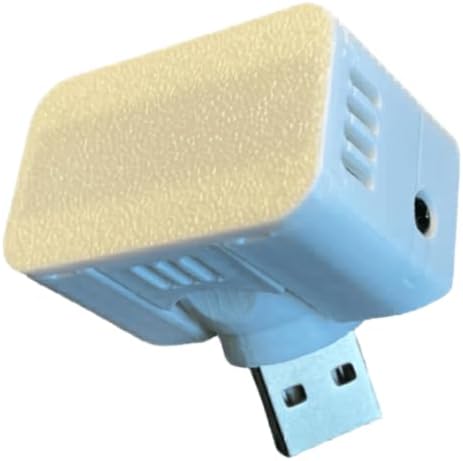
The Akamatis Presence Sensor v2.2 is a direct, cost-conscious option for Home Assistant installations. Its 4.4 rating matches the Litos v3, and it offers the same essential 24GHz presence sensing with detection up to 20 feet, but without a built-in light sensor.
We may earn a commission when you buy through this link, at no additional cost to you.
The HLK-LD2410B module is paired with a Seeed C3 controller and external Wi-Fi antenna. Because the radar recognizes both motion and stationary objects, it can support occupancy automations where a conventional motion detector would eventually switch lights off. USB-C power also makes placement straightforward near a suitable outlet or cable.
Its limitations are straightforward: it is designed only for Home Assistant and must connect over 2.4GHz Wi-Fi. It also includes only the sensor, and the absence of an ambient-light sensor means lighting automations may need a separate light entity. For a buyer whose priority is dependable presence detection rather than a broad feature bundle, that trade-off is reasonable.
Choose the v2.2 when you want a focused Home Assistant presence sensor without paying for functions you will not use. It is a good fit for bedrooms, offices, or living rooms where occupancy triggers a scene, while users who want a combined light-reading entity should consider the Litos v3 instead.
The LD2410B radar provides both movement and stationary-object detection, covering the main weakness of PIR sensors in quiet rooms and scheduled lighting.
Ready-to-use ESPHome firmware means setup involves the device hotspot and Wi-Fi credentials. No custom compilation or manual firmware transfer is required.
We may earn a commission when you buy through this link, at no additional cost to you.
The Aqara Presence Sensor FP300 is the feature-rich premium option, combining 60GHz mmWave radar, PIR, light, temperature, and humidity sensing. Its 3.6 rating is the lowest in this group, but the product also provides the broadest environmental and ecosystem feature set.
We may earn a commission when you buy through this link, at no additional cost to you.
Aqara says adaptive AI learning helps the sensor reduce false triggers while keeping lights on for a person who is resting. It supports Matter over Thread and Zigbee, with stated compatibility including Home Assistant, Apple Home, Alexa, Google Home, SmartThings, and Homey. Third-party Matter use requires a Thread Border Router and Matter Controller, while Aqara users need a compatible hub and current firmware.
Those network requirements make the FP300 less plug-and-play than a direct Wi-Fi sensor. Its 120-degree field of view, adjustable mount, and stated range of up to six meters offer installation flexibility, while two replaceable CR2450 batteries can last up to three years in Zigbee mode or two years in Thread mode.
The FP300 is the best premium pick for a household willing to establish a robust Thread or Zigbee infrastructure. It is particularly compelling when temperature, humidity, and illuminance data are valuable alongside presence detection, and when compatibility with several ecosystems matters more than having a single-purpose Wi-Fi device.
Radar, PIR, light, temperature, and humidity sensing can feed several automations from one installation, reducing the need to mount separate environmental devices.
Dual-protocol support gives buyers more placement options, although Matter over Thread requires the appropriate border router and controller in the home network.
We may earn a commission when you buy through this link, at no additional cost to you.
This generic-named Zigbee Human Presence Sensor offers a practical mix of 24GHz radar, broad hub compatibility, and battery-powered placement. Its 4.0 rating places it in the middle of the group, while its ability to detect a person sitting or sleeping is central to its value.
We may earn a commission when you buy through this link, at no additional cost to you.
The stated compatibility list includes Home Assistant, SmartThings, Hubitat, Tuya, and several Echo models with built-in Zigbee hubs. Detection reaches 20 feet, and two AAA batteries are claimed to last up to two years in typical use, making it easier to install away from outlets.
A compatible Zigbee hub is required, and that hub determines much of the actual integration experience. The product information provides fewer details about adjustable detection zones, calibration, or reporting controls than some competitors, so buyers should verify that its exposed entities meet their Home Assistant automation needs.
This sensor suits a mixed-ecosystem home or a battery-powered location where a wired unit is inconvenient. Home Assistant users who already operate a capable Zigbee coordinator and need simple stationary-presence triggers will find the broad compatibility more valuable than extra standalone controls.
Radar detection can maintain lighting while a person reads, works, or sleeps, avoiding the repeated hand waving sometimes required with PIR-based automations.
Support for several common Zigbee ecosystems makes the sensor more adaptable than devices restricted to a single vendor, provided the chosen hub is compatible.
We may earn a commission when you buy through this link, at no additional cost to you.
The SONOFF SNZB-06P24 stands out for its seven-zone positioning and self-learning calibration. It has a 3.8 rating, but its 24GHz radar, light sensor, and granular zone controls are especially relevant to nuanced room-occupancy automations.
We may earn a commission when you buy through this link, at no additional cost to you.
Within a four-meter range, users can enable or disable up to seven detection areas across a 110-degree field of view. This is useful for excluding a corridor, window, or appliance area while concentrating detection around a sofa or desk. Detection calibration learns the environment and filters repetitive interference, and the ambient-light sensor adds brightness context.
The trade-offs are USB-C power and the need for a compatible Zigbee hub. Its stated range is shorter than the 20-foot reach listed for several competitors, and the reported 3.8 rating suggests some mixed customer experiences. Advanced settings are configured through BLE in the eWeLink app, while Home Assistant, SmartThings, and Alexa are supported through the Zigbee side.
This is a strong selection for a desk, seating area, or compact room where unwanted zones need to be excluded. Choose it when zone control and calibration are more important than maximum reach or completely wireless battery operation.
Seven configurable zones help the sensor follow the geometry of a room rather than treating every area in front of it identically. That precision can reduce unwanted triggers from hallways and exterior doors.
Self-learning calibration filters repetitive interference from household features such as pipes, appliances, or airflow, which can improve stability after the sensor has been installed.
We may earn a commission when you buy through this link, at no additional cost to you.
The SONOFF SNZB-06P is an established Zigbee presence option with a 4.0 rating. It uses 5.8GHz centimeter-wave radar to detect both movement and a stationary person, while a built-in light detector supports occupancy-aware lighting automations.
We may earn a commission when you buy through this link, at no additional cost to you.
The sensor works with Zigbee 3.0 coordinators, including SONOFF NSPanel Pro, iHost, ZB Bridge Pro, ZBDongle-E, and Echo Plus 2nd generation. It also supports Alexa, Google Home, SmartThings, Alice, IFTTT, and Home Assistant. Local scene linkage can run without an internet connection, an important benefit for reliable automations.
The principal drawback is ecosystem dependence: a Zigbee hub or bridge is required, and the supplied information does not describe a long detection range, configurable zones, or a battery specification. Home Assistant users must also ensure their coordinator and integration expose the desired presence and illumination entities.
For a household with a compatible SONOFF or other Zigbee setup, the SNZB-06P is a straightforward way to add presence-aware lighting. It is best suited to users who value local scene execution and multi-platform support over advanced placement controls.
Presence and light information can work together so lights activate when a person enters a dark room and remain on while that person remains there.
The stated support for local scene linkage means linked Zigbee devices can execute their scenes even when the internet connection is unavailable.
We may earn a commission when you buy through this link, at no additional cost to you.
The Compact Zigbee Presence Sensor combines 24GHz radar with temperature, humidity, and illumination measurements in a 40-by-40-by-20-millimeter enclosure. Its 3.9 rating is close to the group average, and the integrated environmental sensors make it more versatile than a single-function presence detector.
We may earn a commission when you buy through this link, at no additional cost to you.
It is explicitly designed for Home Assistant through Zigbee and emphasizes local control and low-latency automation triggers. The radar can identify slight breathing and small micro-movements, allowing a room to remain occupied while someone is still. Temperature, humidity, and light readings can support climate, ventilation, and illumination automations from the same device.
A CR2450 battery is included, and the magnetic base offers quick attachment to metal surfaces. Included 3M tape provides an alternative for glass, tile, or walls. A Zigbee connection is still required, and the supplied information gives no exact radar range, so placement should be verified in the intended room.
This is the best compact pick for a small desk, bedside table, or mounted corner where minimizing visual clutter matters. It is also attractive to Home Assistant users who want a single battery-powered entity for presence and environmental context.
Combining radar, temperature, humidity, and light can simplify dashboards and automations while avoiding several separate sensors around a small workspace.
The magnetic base and included adhesive make the sensor easy to reposition as furniture arrangements or automation needs change.
We may earn a commission when you buy through this link, at no additional cost to you.
The Akamatis Presence Sensor v1.3 has the highest supplied rating in the group at 4.9. It is a direct Wi-Fi presence sensor for Home Assistant, combining 24GHz radar, adjustable sensitivity, and a 20-foot indoor detection range.
We may earn a commission when you buy through this link, at no additional cost to you.
The HLK-LD2410B radar detects both moving and stationary objects. An ESP32-C3-WROOM controller and external Wi-Fi antenna support the connection, and a two-axis joint on the USB-A connector makes it easier to orient the sensor after installation. Ready-to-use ESPHome firmware removes manual flashing from the setup process.
Its main constraints mirror those of the v2.2: Home Assistant is mandatory, 2.4GHz Wi-Fi is required, and there is no built-in light sensor. It also draws continuous power, so a nearby USB source is needed. A high customer rating does not make it suitable for every ecosystem, but it is a strong signal within its intended Home Assistant category.
This is an attractive alternative for users who want the directness of Wi-Fi and the 20-foot reach without a Zigbee hub. Compared with the Litos v3, the v1.3 prioritizes presence detection rather than combining brightness readings in the same enclosure.
A 4.9 supplied rating makes the v1.3 the most positively reviewed model here, particularly notable because it is a specialized sensor with a narrow Home Assistant focus.
Presence sensitivity can be adjusted, while the articulated USB-A connection lets users refine the radar's aim after the sensor is mounted.
We may earn a commission when you buy through this link, at no additional cost to you.
The WenzhiIoT Presence Sensor differentiates itself through unusually detailed controls. It has a 3.8 rating, but its 5.8GHz radar, nine sensitivity levels, adjustable detection distances, and configurable reporting interval offer substantial control for Home Assistant users comfortable with Zigbee configuration.
We may earn a commission when you buy through this link, at no additional cost to you.
The device distinguishes human presence, static presence, micro-motion, and general movement, which allows more nuanced automations than a simple binary motion event. Minimum detection range can begin at zero, maximum range extends to 9.5 meters, and separate delays are provided for detecting a person and for clearing an unattended state. Illuminance monitoring supports scene linkage.
Integration is the main trade-off. A Tuya Zigbee gateway is required and strongly recommended for compatibility, and a Zigbee2MQTT installation may need a JavaScript support file if the device is not directly recognized. The product also requires continuous USB-C power, limiting some of the placement freedom associated with battery sensors.
Choose the WenzhiIoT model when precise thresholds, reporting behavior, and multiple human states matter. It is particularly useful for experienced users willing to manage the gateway and Zigbee2MQTT configuration in exchange from greater control over automation inputs.
Separate sensitivity, minimum-distance, maximum-distance, detection-delay, and unattended-delay settings allow automations to be tuned closely to different rooms and behaviors.
The configurable reporting interval can reduce unnecessary network traffic while preserving immediate synchronization when the presence state changes.
We may earn a commission when you buy through this link, at no additional cost to you.
The meross Presence Sensor MS600 is a corded, Matter-oriented option for mixed smart homes. Its 3.8 rating is modest, but the combination of radar, PIR, light sensing, and broad platform support gives it a distinct role beyond dedicated Home Assistant devices.
We may earn a commission when you buy through this link, at no additional cost to you.
Radar can detect presence without movement, while PIR adds conventional motion sensitivity and the light sensor supports lighting automations. The stated effective presence range is up to six meters, and the adjustable base pivots 180 degrees and rotates 360 degrees. A 1.5-meter cord adds placement flexibility, while a supplied pet-proof shield helps reduce accidental pet or robot-vacuum triggers.
The compatibility wording is important. It can work without a hub for HomeKit, Alexa, Google Home, Home Assistant, and the Meross app, but Matter compatibility itself requires a hub. Continuous power is also required, so this is less convenient in locations without a nearby outlet or powered USB arrangement.
The MS600 is worth considering for a household that wants one presence sensor to participate in Home Assistant alongside Apple Home, Alexa, Google Home, or Meross routines. It is a practical Matter choice, but users seeking a fully wireless battery sensor should look elsewhere.
Using radar, PIR, and light sensing together gives the sensor different ways to interpret room activity and can support both occupancy and conventional motion automations.
Matter over Wi-Fi can keep the sensor relevant in a mixed ecosystem, although a compatible Matter hub is required for the stated Matter functionality.
We may earn a commission when you buy through this link, at no additional cost to you.
The right presence sensor depends on your hub, power access, room layout, and the automations you want to create. These factors determine whether a device is genuinely useful after installation or merely adds another entity that needs constant adjustment.
A human presence sensor should ideally detect both motion and a person who remains stationary. Radar models use changes in electromagnetic reflection to identify micro-movements such as breathing, making them better suited to quiet reading, desk work, sleeping, and bathroom occupancy than a conventional PIR sensor. The products here use 5.8GHz, 24GHz, or 60GHz radar, with the lower-frequency options commonly offering a wider field and the 60GHz Aqara model emphasizing high-frequency precision. Review the stated range, field of view, and mounting guidance rather than assuming every radar behaves identically.
Direct Wi-Fi sensors are generally the simplest for an existing Home Assistant network, especially when they come pre-flashed with ESPHome. Zigbee sensors reduce network congestion and can integrate neatly with existing coordinators, but they require a compatible radio, hub, and configuration. Matter over Wi-Fi may appeal to multi-ecosystem households, although some Matter features require a hub. Confirm whether Home Assistant communicates with the device through ESPHome, Zigbee2MQTT, ZHA, Matter, or a vendor integration before making a purchase.
The listed maximum range is only the start of the placement decision. Radar behavior changes with walls, furniture, room geometry, mounting height, and the orientation of the sensor. A wide field of view may cover a lounge area, while a narrower or adjustable mount may suit a desk or hallway. Sensors with configurable zones or detection distances can exclude doors, windows, and exterior corridors. Products with articulated bases are particularly useful because you can refine the angle after observing real-world false triggers rather than committing to a fixed position on the first day.
A built-in light sensor can make presence automations more energy-efficient by activating a lamp only when the room is occupied and dark. Temperature and humidity sensing adds useful data for climate and ventilation rules, but it also increases the value of careful calibration. If you already have reliable environmental sensors elsewhere, a dedicated presence model may be enough. If reducing the number of separate devices is important, the Aqara FP300, SONOFF SNZB-06P24, compact Zigbee sensor, WenzhiIoT model, and meross MS600 offer broader sensing combinations.
USB-powered sensors are dependable for fixed rooms with convenient outlets, and continuous power avoids battery replacement and concerns about low-energy Zigbee behavior. Battery models are easier to place on shelves, desks, or walls, but their runtime varies with reporting frequency, detection activity, and protocol. AAA and CR2450 cells are convenient to replace, while stated two- or three-year figures are best treated as typical estimates rather than guarantees. Choose power based on placement first, because a sensor that is difficult to mount or maintain may create more frustration than an occasional battery change.
Radar can still respond to moving curtains, pets, fans, pipes, or appliances. Look for adjustable sensitivity, minimum and maximum distance, separate detection delays, zone controls, or self-learning calibration. More controls are not automatically better, because overly complex configuration can be difficult to maintain. Start with the manufacturer's recommended settings, observe the room during different conditions, and then narrow the coverage. The WenzhiIoT sensor offers especially detailed thresholds, the SONOFF SNZB-06P24 provides seven zones, and the Aqara FP300 uses adaptive AI learning.
Terms such as Home Assistant compatible, Zigbee compatible, and Matter compatible do not necessarily mean identical setup requirements. Some devices are pre-flashed and connect directly to Wi-Fi, while others need a coordinator, a vendor app, or additional support files. Zigbee2MQTT users should verify direct device recognition and review the need for custom JavaScript. Matter installations may require a Thread Border Router and Matter Controller. The clearest standalone choice is a dedicated Wi-Fi ESPHome model, while Zigbee is attractive for people who already maintain a stable mesh.
Radar detects changes in the monitored area rather than capturing a camera image, which can make it a more private alternative to a camera-based occupancy system. Nevertheless, local operation and cloud dependence differ by model. Direct ESPHome devices and local Zigbee scene support are particularly attractive for privacy-focused automations. Other multi-platform products may offer broad ecosystem access while still relying on vendor infrastructure for configuration. Consider how the sensor is exposed in Home Assistant, whether recordings are possible, and whether essential automations continue locally during an internet outage.
Begin by mapping the area you want to monitor and choosing a mounting location that provides a clear view of the main occupied zone. Avoid placing a sensor directly beside a moving fan, moving curtain, window, or frequently opened doorway. For a corner or ceiling installation, use the included mount, articulated connector, magnetic base, or adhesive as appropriate, then aim the detection field toward where a person will usually sit or move.
Connect the sensor using the method stated in its documentation. For direct Wi-Fi units, join the device hotspot and enter 2.4GHz network credentials before adding the pre-flashed ESPHome device to Home Assistant. For Zigbee models, pair through the supported hub or coordinator and confirm that presence, occupancy, and light entities appear with sensible names. Matter devices may need an appropriate controller and hub, while WenzhiIoT users may need to obtain a Zigbee2MQTT support file if it is not recognized automatically.
Create conservative automations first, such as turning on a low-brightness night light when a person enters a dark room. Allow the sensor to learn the room for several days, then adjust sensitivity, zones, delay timers, and range. Keep the sensor clean and dry, avoid blocking its radar or light-sensing area, and replace batteries or confirm the power connection periodically. Recalibrate after moving furniture or changing a room's use.
It depends on the model. Akamatis sensors connect directly to Home Assistant over 2.4GHz Wi-Fi and are pre-flashed with ESPHome, so they do not require a separate Zigbee hub. The Zigbee options require a compatible coordinator or hub, while the meross MS600 can use Home Assistant without a hub for some functions but requires one for Matter compatibility. Check the connection requirements before installing.
Human presence detection is generally better when an automation must remain active while someone is still. A PIR sensor usually reacts to movement and may stop recognizing a person who is reading or sleeping. Radar-based presence sensors can detect stationary occupants and micro-movements, allowing lights and other devices to remain on. They can still experience false triggers, so placement and sensitivity tuning remain important.
The useful range depends on room size, radar frequency, mounting method, and furniture. Listed ranges range from about four meters for the SONOFF SNZB-06P24 to as much as 9.5 meters for the WenzhiIoT model's configurable maximum. A larger advertised range does not guarantee better coverage in every room, so consider the field of view, sensor angle, and whether the product supports zone or distance restrictions.
Several of the radar products explicitly claim detection of stationary people, sleeping occupants, breathing, or micro-movements. That makes them more suitable for bedroom and bathroom automations than ordinary PIR sensors. Results can vary with installation, distance, and room conditions, so test the sensor in its intended position and avoid placing it where large moving objects or strong airflow are likely to dominate the radar response.
An ambient light sensor allows a presence rule to distinguish between an occupied bright room and an occupied dark room. For example, a lamp can turn on only when someone enters and the measured brightness is below a chosen threshold. This can prevent unnecessary lighting during the day while preserving responsive nighttime behavior. The Litos v3, SNZB-06P24, SNZB-06P, compact Zigbee model, WenzhiIoT sensor, and Aqara FP300 include light sensing.
Battery operation can be convenient because the sensor can be placed away from outlets, but actual runtime depends on activity, reporting frequency, and the Zigbee implementation. Products state battery lives ranging from months to several years under typical conditions. For especially important automations, continuous power may be more predictable, while a battery model may be preferable for a bedside table, shelf, or other remote location.
Start by positioning the sensor away from moving curtains, fans, pets, windows, and frequently opened doors. Then use the available controls: adjustable sensitivity, configurable zones, minimum and maximum distance, detection delays, or self-learning calibration. Give the sensor time to observe the room, and make one adjustment at a time so you can identify which setting improves the result.
Yes. Presence states can control fans, heating, cooling, scenes, media, notifications, and security-related routines. Sensors that also report temperature, humidity, and illuminance can support broader climate and energy-management automations. The most useful rules combine presence with another condition, such as occupancy plus low light, rather than switching every device immediately whenever the radar detects movement.
The Akamatis Litos v3 is the most balanced overall choice because it combines 24GHz stationary-presence detection, an ambient light sensor, a 20-foot range, and pre-flashed ESPHome firmware in one focused unit. The Akamatis v2.2 is a compelling budget option when presence is the only requirement, while the Aqara FP300 leads the premium group with five sensors, AI-assisted tuning, and Matter or Zigbee connectivity.
Before buying, prioritize the protocol your Home Assistant installation already handles, the amount of room coverage you need, and the controls required to prevent false triggers. Dedicated Wi-Fi models offer the simplest path, Zigbee sensors suit an established mesh, and Matter devices add value when several ecosystems need to share occupancy data. Power placement and hub requirements should be settled before comparing detection claims.
Finally, check current product details, ratings, firmware support, and prices at the time of purchase. Presence-sensor ecosystems and integrations evolve quickly, so confirming current Home Assistant compatibility and installation requirements will prevent an otherwise capable device from becoming a frustrating addition to your automation system.