
Rechargeable Thin Heating Gloves
4.8Editor score
Full-hand heating coverage
Three adjustable heat levels
Fast thirty-second warming
Heated glove liners compared for warmth, battery life, fit, dexterity, weather resistance, and features to help you choose the right pair.
Heated glove liners combine the convenience of rechargeable warmth with the flexibility of thin gloves that can fit beneath mittens or insulated outerwear. A strong pair should distribute heat across the fingers and hands, preserve dexterity, and provide enough runtime for cold commutes, work shifts, or winter recreation.
This guide compares ten heated glove liners based on heating coverage, adjustable heat levels, battery configuration, touch compatibility, moisture management, wind protection, and the materials used to balance warmth with dexterity. The list also highlights important differences between outdoor-focused designs, lightweight liners, and models intended primarily for indoor tasks.
Each review identifies the strongest use case for its product while noting any limitations. Ratings and specifications reflect the available product information, and no personal hands-on testing is claimed. Prices and promotions can change over time, so shoppers should confirm current availability, fit details, and operating instructions before purchasing.
4.8Editor score

4.9Editor score

4.3Editor score
The comparison highlights meaningful differences in heat coverage, runtime, touch capability, weather protection, and intended layering role. Because not every liner is designed for the same conditions, the table is best used to match construction and features to your typical winter routine.


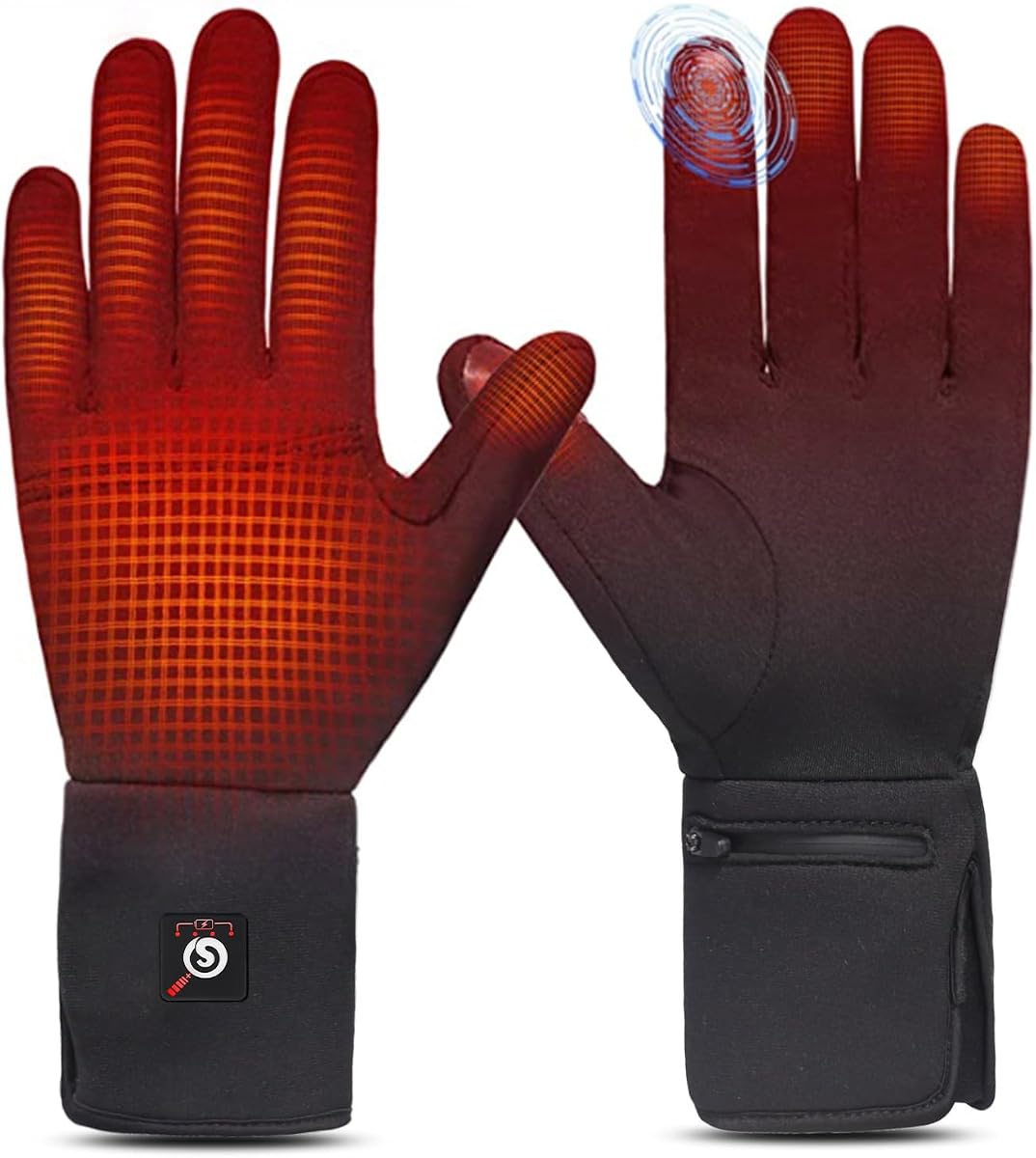
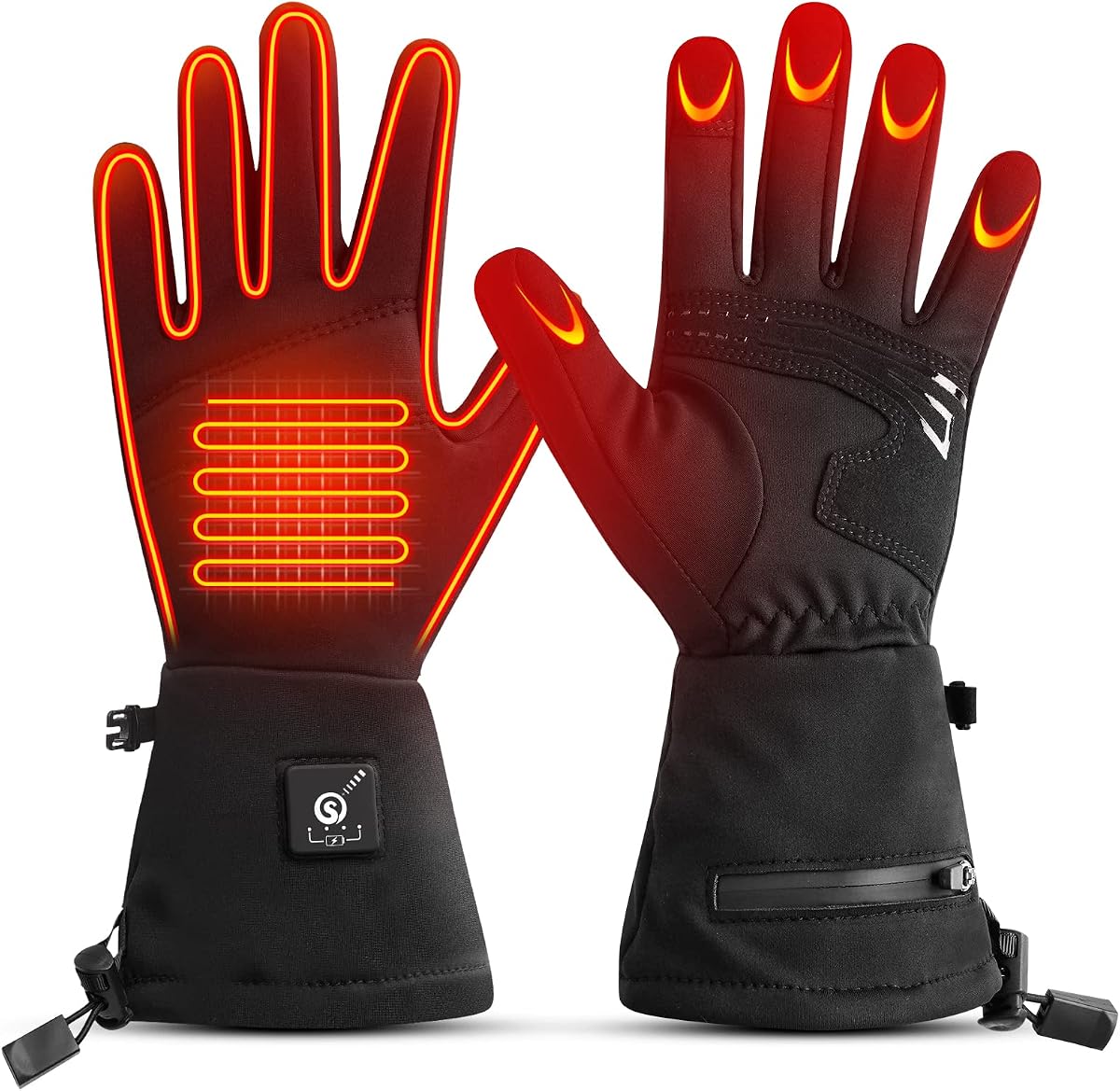
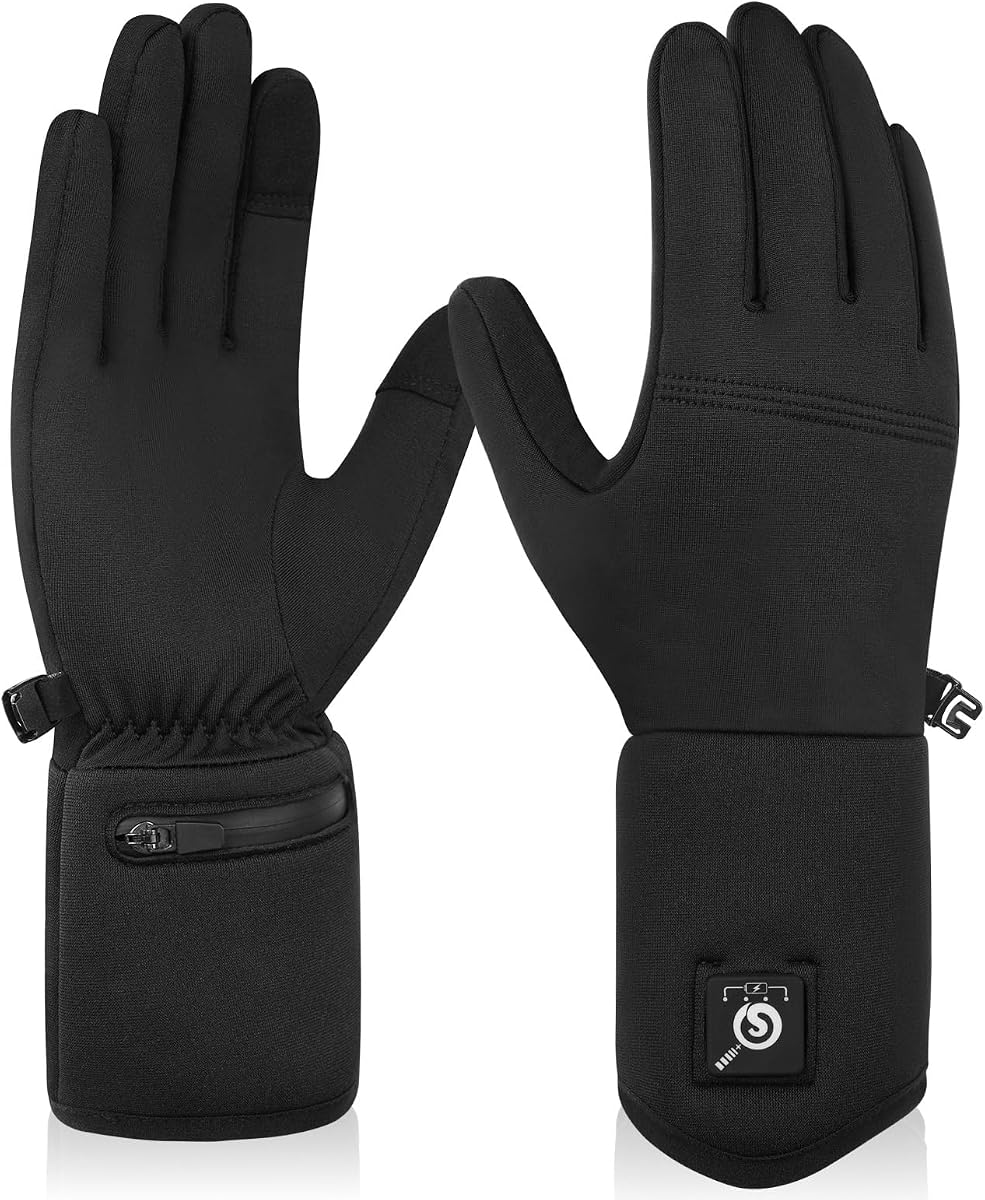
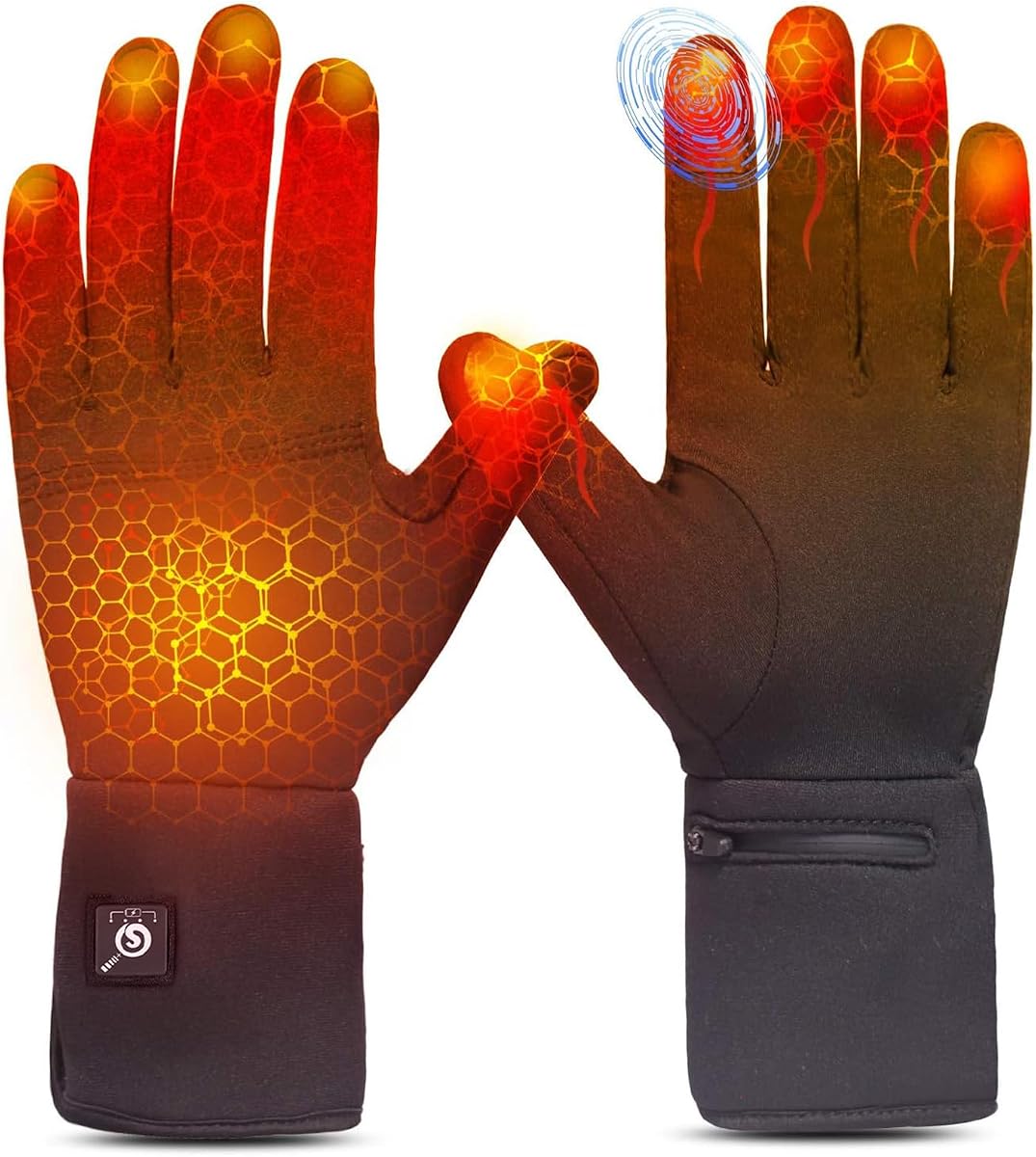

This Rechargeable Thin Heating Gloves model earns a 4.8 rating and stands out for combining broad heating coverage with a low-bulk liner format. Heat elements extend across the hands, fingers, and fingertips, while the product information indicates that warmth begins within approximately 30 seconds. That combination makes it appealing for skiers, runners, commuters, and anyone who wants warmth without the restricted movement of conventional winter gloves.
We may earn a commission when you buy through this link, at no additional cost to you.
The two 2200mAh, 7.4V lithium-polymer batteries provide separate power for the hands, and three color-coded heat settings let users move between high, medium, and low output. The recommended preheat sequence is especially thoughtful: begin on high for five to ten minutes, then reduce the setting to conserve power. A 45-minute automatic shutoff and overheat protection add practical safeguards for use around equipment, in a vehicle, or during an outdoor stop.
The upgraded full-palm touchscreen material is more expansive than the touch-only fingertips offered by some alternatives. It allows swiping, typing, and zooming without removing the gloves, which is useful for photography, navigation, and winter work. Water-resistant cuffs and a snug wrist fit help block wind, snow, and sleet, although the liners are still better treated as an inner layer than a complete substitute for heavy winter mittens in severe conditions.
This is our Best Budget and Best Overall pick because it balances warmth, control, dexterity, and protective features at a relatively accessible tier. It suits both brief outdoor activities and everyday cold-weather tasks, particularly for people who want touch control and visible heat-level selection. Buy an outer glove pair for prolonged exposure to extreme cold, wet snow, or high wind.
The three heat levels support a practical strategy: use high output for a rapid warm-up, then choose medium or low according to activity and temperature. This gives users better control over comfort and power consumption than a single fixed setting would.
Full-palm conductive material expands touchscreen access beyond the thumb and index finger. It is particularly convenient for typing, checking maps, taking photographs, and using a phone while skiing or waiting outdoors.
We may earn a commission when you buy through this link, at no additional cost to you.
This Waterproof Rechargeable Work Liners model has a 4.3 rating and emphasizes durability for demanding winter use. Its composite-fiber heating wire receives a high-temperature-resistant silicone coating, improving tensile strength and making the system more appropriate for work, skiing, driving, hunting, and other active settings. The product is also marketed toward people who experience discomfort associated with arthritis or Raynaud's.
We may earn a commission when you buy through this link, at no additional cost to you.
Its 7.4V, 2500mAh ternary lithium batteries are described as retaining better discharge efficiency at low temperatures than regular batteries. Depending on the selected setting, the gloves can provide between 2.5 and seven hours of operation. This range makes the high setting appropriate for short warm-up periods, while lower settings can support longer commutes or outdoor tasks. Three easy-to-adjust temperature levels make the output responsive to changing conditions.
The outer layer is windproof, and the soft inner layer is designed to wick moisture and dry quickly. Conductive PU on the thumb and index finger supports touch use, while an abrasion-resistant palm coating improves grip and durability. Those details distinguish this model from basic liners that place conductive fabric only at the fingertips. The trade-off is that the heated construction is slightly thicker than a standard non-heated liner.
The product description explicitly recommends adding insulated outer gloves for optimal warmth in extreme cold. That layering guidance is sensible: the liner provides powered heat, while the shell blocks wind and precipitation and preserves heat. This is a compelling choice for cold workers and active users who value heating-wire durability, moisture management, and a wide operating range over the absolute thinnest possible construction.
Silicone-coated composite wire is designed to withstand more demanding use than basic exposed heating elements. The added strength is useful when the gloves are frequently flexed, gripped, or used around tools and outdoor equipment.
The stated 2.5-to-seven-hour range reflects the importance of choosing the correct setting. Short bursts of high heat are useful for warming up, while medium and low modes provide a more sustainable balance for extended work or recreation.
We may earn a commission when you buy through this link, at no additional cost to you.
This Full-Coverage Electric Work Gloves model has a 3.5 rating, placing it lower in this comparison, but its core design remains competitive. Heating elements extend over the hands, fingers, and fingertips, and the stated warming target is approximately 30 seconds. It is offered for hunting, skiing, cycling, hiking, and general winter use, with a material composition of 93% spandex, 5% polyester, and 2% polyurethane.
We may earn a commission when you buy through this link, at no additional cost to you.
The glove set uses two 7.4V, 2200mAh lithium-polymer batteries and provides high, medium, and low settings. As with other models in the category, a brief preheat on high followed by a lower setting can conserve power. A 45-minute automatic shutoff and overheat protection are valuable features, while the close-fitting cuffs and flexible construction help retain warmth without severely restricting hand movement.
Its full-palm touchscreen design is another strength, allowing basic phone and tablet interaction without removing the gloves. Water-resistant cuffs can block light snow, sleet, and wind. However, this is a liner rather than a fully waterproof insulated shell, and its lower rating suggests buyers should examine current customer feedback carefully for fit, durability, or performance concerns before committing.
The model is worth considering for buyers who prioritize fingertip coverage, full-palm touch access, and a low-profile design. It is less compelling than the highest-rated products for shoppers seeking stronger published feedback or particularly long cold-weather runtime. Pairing it with properly insulated outer gloves is advisable for skiing, hunting, and prolonged exposure to severe weather.
The high spandex content supports stretch and natural finger movement. That flexibility can help with ski poles, hiking poles, tools, photography, and fastening clothing while the heating system remains active.
The automatic shutoff prevents continuous operation after 45 minutes, and the button can restart the cycle when more warmth is needed. This gives users control without leaving the heating system running indefinitely.
We may earn a commission when you buy through this link, at no additional cost to you.
This Battery-Powered 2025 Upgrade carries a 4.3 rating and offers a notably balanced combination of coverage, flexibility, and battery capability. Its carbon-fiber heating elements cover the palms, fingers, and back of the hands rather than concentrating warmth only across the top. The product is positioned for people seeking targeted warmth associated with cold-sensitive hands, arthritis discomfort, or Raynaud's.
We may earn a commission when you buy through this link, at no additional cost to you.
The rechargeable 7.4V, 2200mAh battery system delivers up to six hours of runtime, with three settings for adjusting output. A one-button control scheme keeps operation uncomplicated, and the batteries are described as having stronger low-temperature performance than standard lithium batteries. Their long standby behavior is also intended to keep the gloves ready for intermittent cold spells rather than only continuous use.
Stretchy, breathable fabric gives the liners a second-skin quality that works well for typing, gaming, photography, computer work, dog walking, and commuting. Touchscreen-compatible fingertips allow basic phone use. The gloves can also slip beneath larger mittens for colder weather, making the powered warmth highly versatile even though the outer layer remains essential in harsh conditions.
We chose this model as the Best Premium pick because of its 2025 heating-layout upgrade, broad palm coverage, and stated six-hour runtime. It is a particularly good fit for users who alternate between desk work, short commutes, and outdoor errands. Those needing stronger touch performance should verify which fingertips are conductive, while those in extreme cold should retain a windproof insulated outer glove.
Palm heating is meaningful for gripping handlebars, poles, tools, or steering wheels. Backhand and finger coverage adds broader warmth, helping the gloves feel more balanced than systems that warm only the top of the hand.
One-button control and rechargeable batteries remove the need for disposable cells or trailing power cords. The combination suits users who want the gloves ready for repeated short sessions throughout a cold day.
We may earn a commission when you buy through this link, at no additional cost to you.
This SAVIOR HEAT Nine-Hour Liners model has a 3.9 rating and distinguishes itself through a stated runtime of up to nine hours on a full charge. It is built for riding, skiing, snowboarding, hiking, and cycling, situations where users may remain outdoors for extended periods. The liners use a 92% polyester and 8% elastane composition with a soft Lycra exterior and breathable fleece lining.
We may earn a commission when you buy through this link, at no additional cost to you.
Heating covers the back of the hand and fingers, while a three-setting controller lets users choose the desired output. At a room temperature of 77°F, the listed maximum temperatures are 122°F on high, 104°F on medium, and 95°F on low. These are stated operating figures rather than guaranteed skin-temperature readings, but they provide a useful indication of the intended range.
Soft inner fleece helps absorb moisture, and the thin profile allows the liners to sit without feeling bulky beneath thicker gloves. Touch sensors on the forefinger and thumb support phone use without removing the gloves. The main limitation is that extra batteries are not included, which matters for users expecting to stay outside longer than a single full charge permits.
This is a strong option for long ski days, cold rides, and all-day outdoor work where sustained runtime is the priority. It is less suitable for anyone requiring heated palms or a fully sealed outer surface. As the product itself recommends, pairing it with thicker winter gloves will improve heat retention and protect the electronics from wind and precipitation.
The stated nine-hour maximum is the longest figure among the products compared. Actual duration will vary with the selected setting, temperature, and use, so high output should be reserved for shorter warm-up periods when planning a long outing.
The Lycra and fleece construction is intended to remain comfortable under insulated outer gloves. Breathability and moisture absorption help reduce the clammy feeling that can occur when warm hands remain enclosed for hours.
We may earn a commission when you buy through this link, at no additional cost to you.
This Instant Full-Hand Electric Gloves model has the highest rating in the guide at 4.9, making it the strongest editorial choice based on the supplied feedback. Carbon-fiber elements cover the fingers, palm, and back of the hand, and the product information says the system activates within seconds. That responsive approach is well suited to brief cold exposures, quick errands, and daily use.
We may earn a commission when you buy through this link, at no additional cost to you.
The rechargeable batteries provide four to six hours of continuous warmth, a balanced range for commutes, jogging, cycling, dog walking, and general winter activities. Lightweight construction, easy-to-use controls, touchscreen fingertips, and waterproof zippered battery pockets make the gloves convenient to operate. The body fabric is explicitly not waterproof, so serious precipitation still calls for a protective shell.
The design is also presented as a comfort option for people with poor circulation, arthritis discomfort, or Raynaud's. That positioning is reasonable in a general product sense, although individual comfort varies and heated gloves should not be considered a substitute for medical evaluation. The primary attraction remains the combination of broad heating coverage, strong rating, and uncomplicated everyday construction.
We selected it as the Editor's Choice because it delivers the most balanced overall package: fast heat, full-hand coverage, useful runtime, and a low-bulk profile. It is a strong match for commuters and active users who need warmth for moderate periods. Add insulated outer gloves for snow, wind, or extended cold, and follow the stated charging and care guidance.
Palm heating is especially useful when holding handlebars, tools, or a phone. Coverage across the fingers, palm, and backhand creates a more complete warming effect than a design limited to the top of the hand.
The thin, lightweight construction is less cumbersome than heavy heated work gloves. It can therefore serve as a standalone layer in moderate conditions or slide under mittens when greater insulation is required.
We may earn a commission when you buy through this link, at no additional cost to you.
This SAVIOR HEAT Six-Hour Liners model has a 4.2 rating and focuses on a soft, flexible design intended to be worn beneath thicker gloves. Its 90% polyester and 10% elastane construction combines a close fit with Lycra and fleece comfort. The result is positioned for winter activities where preserving dexterity matters more than complete standalone weather protection.
We may earn a commission when you buy through this link, at no additional cost to you.
The 7.4V, 2200mAh rechargeable lithium-ion batteries provide up to six hours of operation on a full charge, with three heat settings available. Heating elements cover the back of the hand and fingers. At a room temperature of 77°F, stated maximum temperatures reach 140°F on high, 122°F on medium, and 113°F on low, giving users clearly differentiated output levels.
Touch sensors on the forefinger and thumb allow basic phone interaction without removing the gloves. Moisture-absorbing fleece helps keep the interior dry, and extra batteries are available separately for extended activities. Compared with the nine-hour SAVIOR HEAT model, this version lists a shorter maximum runtime but offers a similar three-setting controller and soft liner design.
This is a practical choice for skiers, riders, hikers, and winter commuters who already plan to wear bulky gloves or mittens. Its strongest advantage is the combination of warmth and low profile under an outer layer. Shoppers seeking heated palms, full touchscreen surfaces, or a shell-ready design for extreme conditions should compare it carefully with the more specialized alternatives in this guide.
The slim Lycra body is intended to avoid the bulky sensation associated with many heated work gloves. A close fit also helps retain heat and allows users to manipulate straps, poles, and everyday objects without removing the outer glove.
The listed temperature ranges make it easier to select an appropriate level for different stages of an outing. High can provide immediate warmth, while medium and low are more practical for maintaining comfort over longer periods.
We may earn a commission when you buy through this link, at no additional cost to you.
This Ultra-Thin Full-Hand Liners model has a 4.4 rating and is clearly designed around indoor comfort and light outdoor activity. Lycra and thermal fleece create a lightweight, flexible layer that moves with the fingers, while heating elements cover the back of the hand and extend to the fingertips. The emphasis is on usable dexterity rather than heavy weather protection.
We may earn a commission when you buy through this link, at no additional cost to you.
A convenient button controls the heat level, allowing warmth to be adjusted without complicated settings. Conductive material on the index finger and thumb supports smartphone and tablet use. These qualities make the gloves particularly appealing for typing, photography, driving, walking, jogging, and working in a cold storage environment where keeping hands active and comfortable matters.
The main limitation is clearly stated: the liners do not provide windproof protection. They are best used alone in cool indoor spaces or mild outdoor conditions, and under heavier winter gloves when the weather becomes harsh. Their ultra-thin construction helps prevent the clunky feeling that can develop beneath insulated shells, but the outer glove still performs the job of blocking wind and moisture.
This model offers an effective solution for cold hands during desk work or brief excursions. It is less appropriate for skiing, prolonged rain, or exposed winter work unless paired with a proper outer shell. Buyers who prioritize natural hand movement, uncomplicated controls, and touch access should find its indoor-focused design especially practical.
Thin Lycra and thermal fleece help preserve fingertip feedback, which is useful for camera controls, keyboards, and touchscreens. The design avoids the stiffness that can come from bulkier heated gloves.
Because the body lacks windproofing, these liners should be placed beneath a wind-resistant glove or mitten in severe conditions. The outer layer traps some of the generated heat while protecting the electrical components.
We may earn a commission when you buy through this link, at no additional cost to you.
This Low-Temperature Composite Fiber Liners model has a 4.0 rating and emphasizes reliable warmth, low-temperature battery behavior, and easy charge monitoring. The gloves use Lycra and fleece lining for a lightweight, breathable fit, and composite-fiber elements distribute heat across the back of the hand and fingertips. The system is described as heating within seconds.
We may earn a commission when you buy through this link, at no additional cost to you.
Its upgraded low-temperature-resistant lithium batteries offer a stated six to eight hours of warmth on a full charge. A four-level indicator shows the remaining power, which is particularly useful for people who need to judge how much time remains before changing settings or recharging. Low, medium, and high levels are selected with a single button.
The flexible design is appropriate for typing, driving, cycling, hiking, photography, dog walking, and snow shoveling. Touchscreen fingertips improve convenience during outdoor breaks. Extra batteries are available separately for long commutes, workdays, or recreation, so buyers planning extended use should consider that accessory as part of their planning.
This is a versatile all-around liner for cold-weather users who want more runtime information than a simple indicator provides. The heating coverage is less comprehensive than models that explicitly heat the palms, and the product recommendation still calls for extra outer gloves in severe cold. Even so, the battery display, quick heating, and thin fit make it easy to recommend for mixed indoor and outdoor use.
A four-level display is more informative than a single status light. It helps users anticipate battery needs and choose lower output before an outing when charging time is limited.
The Lycra and fleece construction is intended to remain flexible from typing to cycling. That versatility allows the same pair to function as standalone cold-weather gloves in moderate conditions and as liners under ski gloves in freezing temperatures.
We may earn a commission when you buy through this link, at no additional cost to you.
This day wolf Flexible Heated Liners model has a 3.8 rating and stands out for practical care and charge-management features. The 92% polyester and 8% elastane body uses brushed Lycra with a 0.08-inch neoprene structure, creating a close fit while allowing natural finger movement. It can be worn alone for mild cold or placed under insulated gloves or mitts for skiing, snowboarding, and hunting.
We may earn a commission when you buy through this link, at no additional cost to you.
A 7.4V, 7.5W heating system warms the back of the hand and fingers. High, medium, and low settings are controlled with one button, and the high setting shifts to medium after about five minutes to help manage power. Two separate 2200mAh rechargeable batteries serve the left and right hands, while a four-dot display gives a quick view of remaining charge.
Conductive microfiber on the thumb and index fingertips supports basic touch interaction, useful for maps, messages, and navigation during rides or outdoor shifts. The care design is particularly appealing: the gloves can be machine washed in a laundry bag, anti-loss clips keep the pair together, and exterior zippered wrist pockets allow the batteries to be removed before washing or charging.
This is a strong choice for users who expect to wear heated liners regularly and want washing to be straightforward. Its main shortcomings are a lower rating than the leading products and a heating description that does not mention palm coverage. Those comfortable with backhand-and-finger heat will find the care system, battery display, and automatic setting adjustment particularly useful.
Removable batteries, zippered wrist compartments, and a laundry-bag washing instruction make seasonal care more manageable. Users should still verify the complete care label and remove electronics according to the manufacturer's directions before washing.
The automatic shift from high to medium helps control consumption without requiring immediate manual adjustment. The four-dot display allows users to check remaining power before commuting, riding, or starting a long outdoor task.
We may earn a commission when you buy through this link, at no additional cost to you.
The right heated glove liner depends on where it will be worn, how long the batteries must last, and whether preserving dexterity or surviving harsh weather matters more. Reviewing heating coverage, layering fit, controls, and care requirements before buying can prevent an unsuitable match.
Heating coverage varies from the back of the hand and fingers to comprehensive layouts that also warm the palm. Full-hand systems provide a more uniform sensation and are especially useful for gripping handlebars, poles, tools, or a steering wheel. Gloves described only as covering the backhand and fingers may leave the palm cooler, which can matter during active use. Buyers should compare not just the presence of a heating element, but the specific zones named in the product information.
Look for clear coverage across the backhand, fingers, fingertips, and palm when you want consistent warmth.
Runtime depends on heat level, outside temperature, battery age, and how often the controls are used. The compared products list maximum runtimes ranging from four to six hours for several models, with one model claiming up to nine hours and another offering a 2.5-to-seven-hour working range. A longer advertised maximum does not guarantee the same duration on high heat, so realistic expectations matter. Battery capacity, charging method, standby behavior, and whether replacement batteries are available are all useful points of comparison.
Match expected battery life to your longest outing and remember that high heat consumes power fastest.
Multiple heat levels make it easier to prevent overheating or waste power. A useful pattern is a short high-temperature preheat followed by medium or low operation. Some models add automatic high-to-medium reduction, while others use a single button and color-coded levels. Check whether the controller is easy to operate while wearing the gloves and whether you can identify the active setting without removing them.
Choose simple controls with at least three levels and an easy way to reduce heat during long outings.
A heated liner must fit closely enough to feel warm while remaining flexible enough to work. Look for stretch fabrics, articulated heating wires, and a second-skin construction that allows typing, gripping, photography, and fastening clothing. If the liners will sit under mittens, pay particular attention to thickness and wrist bulk. If they will be worn alone in relatively mild conditions, breathability and a low profile may be more important than extreme-weather protection.
Choose a close, flexible fit that preserves fingertip movement without creating excess bulk inside outer gloves.
Most heated glove liners are designed to work as an inner layer rather than replace a fully waterproof winter glove. Some include windproof or water-resistant cuffs, while others explicitly state that the body is not waterproof. A windproof outer glove can prevent heat loss and protect the electronics from snow and moisture. For skiing, snowboarding, or severe weather, pair thin liners with properly insulated, wind-resistant mittens or gloves.
Treat liners as the heat source and choose outer gloves for wind, precipitation, and insulation.
Touch support ranges from conductive thumb-and-index fingertips to a full conductive palm. Fingertip-only systems are sufficient for basic phone checks, maps, and messages, but a larger conductive area can make typing, scrolling, and photography more convenient. Touch response may be affected by screen protectors, moisture, or the tightness of the glove, so the available contact area should be considered before purchase.
Choose full-palm touch for frequent device use and fingertip touch for occasional navigation.
Useful safety features include automatic shutoff, overheat protection, and a means of restarting the heating cycle. A 45-minute auto-off appears on two products in this guide and can prevent continuous operation when the gloves are unattended. Care requirements also matter: one model is machine washable in a laundry bag, and several use removable batteries in zippered wrist compartments. Check the complete care instructions before washing and never charge damp gloves.
Look for auto-off protection, removable battery compartments, and clear washing guidance.
Charge both rechargeable batteries completely before the first outing and learn the control arrangement before leaving home. If the manufacturer recommends preheating, begin on high for five to ten minutes, then select medium or low. Wearing the liners over thin base gloves can reduce direct contact with moisture, while using a properly sized outer shell improves heat retention and protects against wind.
Inspect the glove body, wiring, battery pockets, and charging contacts before use. Do not use the gloves if a cable is damaged, a battery is swollen, or moisture is trapped inside the pocket. Turn the system off before removing batteries, and never charge the gloves while they are wet. Automatic shutoff should not be treated as a substitute for switching the gloves off when they are unattended.
Follow the product-specific care instructions before washing. Remove the batteries, close or secure all pockets, and use the recommended laundry bag if machine washing is permitted. Air-dry the liners rather than exposing them to direct high heat, and allow them to dry completely before charging. Periodic inspection of seams, heating elements, and connectors can help identify wear before it affects performance.
Yes, that is their primary purpose for many buyers. Thin heated liners can sit beneath ski gloves, insulated work gloves, or mittens, with the outer layer improving wind protection and heat retention. Check the available glove size and avoid a combination that is so tight that fingers cannot move naturally. The liners can also be worn alone in relatively mild conditions.
Runtime varies considerably by model, heat setting, temperature, and battery condition. Products in this guide list working or maximum ranges from roughly four to nine hours, often with the longest duration available on lower settings. High heat is best reserved for a short warm-up. For a full day outdoors, consider the runtime carefully and determine whether replacement batteries are available.
Many models include conductive fibers or PU on the thumb and index fingertips, allowing basic phone interaction. Some designs use a conductive full palm for easier swiping, typing, and zooming. Touch performance can vary with the device, screen protector, moisture, and glove fit. If frequent device use is important, prioritize a larger conductive area rather than relying only on basic fingertip support.
Usually not in their entirety. Some have water-resistant cuffs or waterproof battery pockets, while several product descriptions explicitly state that the body or outer layer is not waterproof. Heated liners are generally intended to be paired with a windproof and waterproof outer glove during snow, rain, or severe cold. Check the complete specifications before using them in exposed wet conditions.
Warmth may provide comfort for people whose hands feel cold because of arthritis discomfort, circulation concerns, or Raynaud's symptoms. However, customer experiences vary, and heated gloves are not a substitute for medical advice or treatment. Anyone experiencing persistent pain, color changes, numbness, or circulation symptoms should consult a qualified healthcare professional.
Care depends on the model, so the product label should take priority. At minimum, remove the rechargeable batteries before washing and make sure the battery compartments are secure. One of the compared liners is machine washable with a laundry bag, while others may require gentler care. Air-dry the gloves fully and do not charge them until every part is dry.
It is usually better to use high heat briefly to warm up, then move to medium or low. Sustained maximum output consumes more energy and may feel unnecessarily warm once the gloves have reached a comfortable temperature. Models with an automatic high-to-medium adjustment can handle this transition automatically, while users of manual models should monitor comfort and remaining battery power.
Their thin construction can preserve enough dexterity for typing, operating a phone, handling tools, or gripping a steering wheel, depending on the model. Users should avoid adjusting controls or touching a device while driving, and should pause the heating function if gloves become excessively warm. For industrial work, confirm that the model meets any relevant workplace safety requirements.
The Rechargeable Thin Heating Gloves model is the strongest all-around value because it combines broad heating coverage, fast warming, three settings, full-palm touch operation, and useful automatic shutoff. The Instant Full-Hand Electric Gloves earns the Editor's Choice distinction with the highest published rating, palm-and-finger heat, and a lightweight format suited to daily tasks, while the 2025 Battery-Powered Upgrade stands out for its palm coverage and stated six-hour runtime.
Prioritize heating zones first, followed by the duration your activities actually require. Thin liners work best when the goal is dexterity and moderate warmth, while skiing, snowboarding, and prolonged exposure demand a windproof insulated outer shell. Touchscreen coverage, battery visibility, washability, and automatic safety functions can then distinguish otherwise similar designs.
Ratings, product availability, and promotions can change, so check current customer feedback and the latest product details before buying. Confirm sizing, battery inclusions, charging instructions, and care requirements as well. Comparing the final choice against the intended weather, activity, and layering setup is the surest way to avoid paying for features that are not useful in everyday use.
