
Amazfit Bip 6 Smart Watch
4.2Editor score
140+ workout modes
Five-system GPS tracking
Two-week battery life
50m water resistance
A useful tennis smartwatch should capture the repetitive nature of the sport while remaining easy to use between points, practices, and matches. GPS, heart-rate sensing, sport profiles, workout summaries, and recovery metrics matter more than decorative extras. The best model also fits comfortably, stays readable outdoors, and lasts through a demanding week on court.
We compared all ten options by examining the supplied workout modes, positioning, health and recovery features, battery claims, display details, water resistance, ecosystem compatibility, and rating. The list covers general fitness watches, running specialists, premium multisport devices, and a lightweight call-enabled model, helping readers find the right balance of tracking depth, convenience, and endurance.
Each review explains where a watch stands out, where its capabilities stop, and which player it best suits. The Garmin Forerunner 165 leads with accessible performance tracking, the Amazfit Bip 6 offers value, and the Garmin fēnix 9 Pro targets demanding athletes. Product details and availability can change, so readers should confirm current specifications and prices before buying.
4.2Editor score

4.6Editor score

4.1Editor score
As an Amazon Associate we earn from qualifying purchases.
This side-by-side comparison highlights the practical differences among ten smartwatches, including display size, GPS capability, sport coverage, battery endurance, water resistance, and health features. Ratings reflect the supplied customer feedback, while the notes clarify which watch is most appropriate for different tennis priorities.




The Garmin Forerunner 165 carries a 4.6 rating and offers a compelling mix of performance measurement, navigation, health insight, and battery life. Its AMOLED touchscreen remains readable without taking on the visual bulk of some of the more premium multisport watches. Built-in GPS, wrist-based heart-rate tracking, and more than 25 activity profiles make it a natural fit for tennis players who also run, cycle, or train for general conditioning.
We may earn a commission when you buy through this link, at no additional cost to you.
The strongest feature is the combination of built-in GPS and an advertised battery life of up to 19 hours in GPS mode, with up to 11 days in smartwatch mode. A player can record a court session, review pace and distance afterward, and still have ample power for a full week of general use. Personalized suggested workouts, Garmin Coach, race-adaptive plans, training-effect labels, and recovery-time estimates add useful context beyond raw numbers.
The watch does not list a dedicated tennis sport profile among its confirmed functions, so users should verify how tennis is represented in Garmin Connect before buying. It also emphasizes running rather than court-sport analytics, and the supplied information does not mention onboard music storage. Those limitations matter for someone expecting automatic stroke detection, rally details, or a phone-free music library, but the Forerunner remains a strong general training tool for court athletes.
This is our Editor's Choice because it balances usability, endurance, and meaningful performance reporting without drifting into the size and complexity of the premium alternatives. It should appeal most to recreational and competitive players who want dependable GPS, heart-rate data, recovery guidance, and easy smartphone connectivity. Those wanting a more rugged construction or explicit tennis mode should look at the fēnix 9 Pro or verify compatible profiles.
Training-effect data, recovery estimates, HRV status, and a morning report can help explain how hard practice sessions affect the body. These features support training decisions across tennis, running, and strength work rather than limiting analysis to one match.
Built-in GPS allows a session to be recorded without relying on a phone connection. That is useful for long practices, outdoor hard courts, and players who prefer to leave the phone in a bag.
We may earn a commission when you buy through this link, at no additional cost to you.
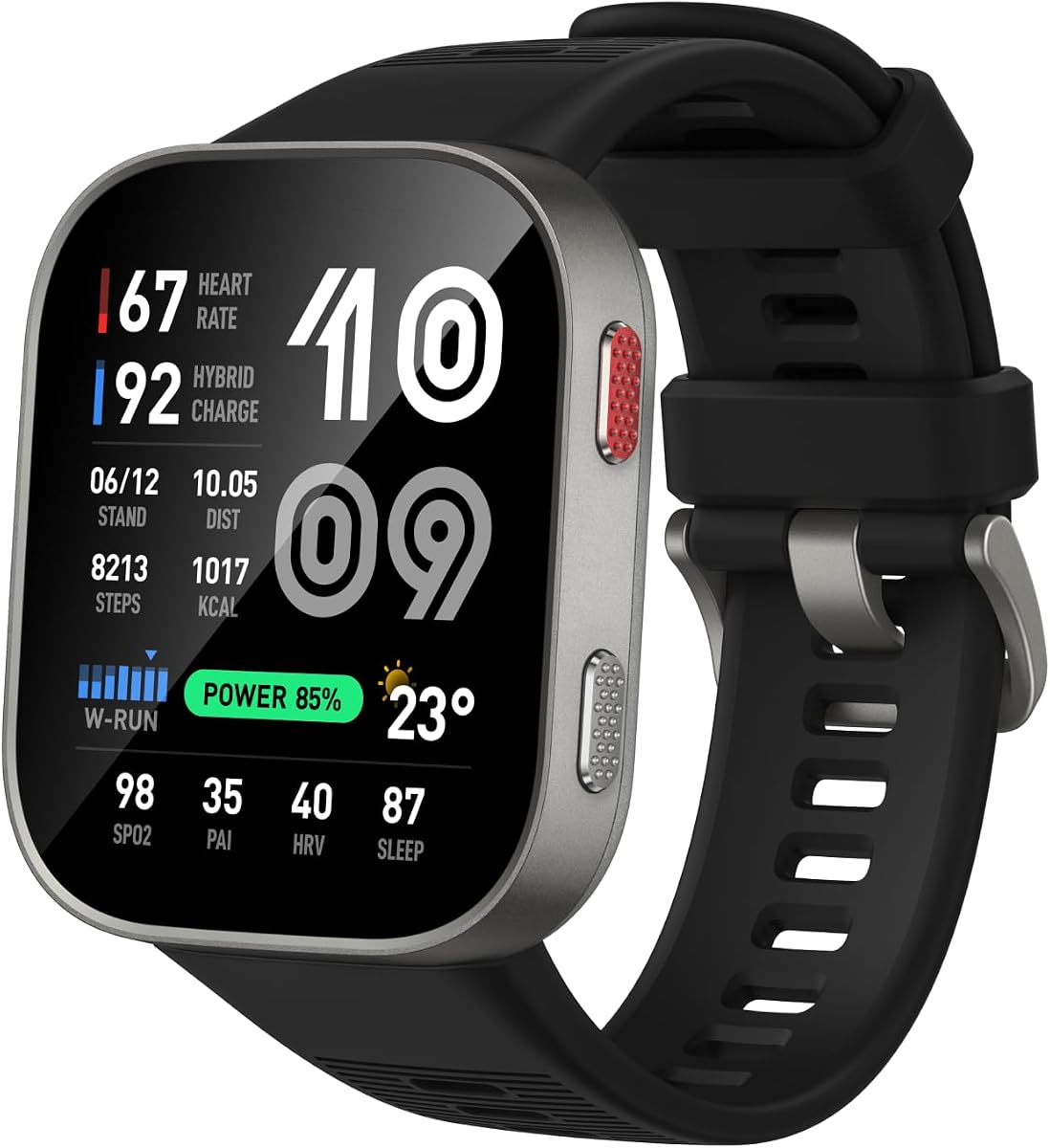
The Amazfit Bip 6 is a value-focused option with a 4.2 rating, a bright 1.97-inch AMOLED display, built-in GPS, and more than 140 workout modes. It combines a lightweight aluminum construction with health monitoring for heart rate, sleep, blood oxygen, and stress. That combination makes it appealing for recreational players who want dependable session records and broader health context without moving into specialist multisport hardware.
We may earn a commission when you buy through this link, at no additional cost to you.
Its battery claim of up to 14 days is especially useful for tennis. Players can wear one watch for multiple practices, travel days, and casual matches without charging it every night. GPS support spans five satellite systems, while downloadable maps and turn-by-turn directions improve its usefulness away from the club. A 50-meter water-resistance rating also gives players more freedom around courts and training environments.
The main compromise is that the supplied information does not identify a dedicated tennis activity mode, automatic stroke recognition, or set-by-set analysis. Its AI coaching and extensive workout list are useful, but less specialized than a watch built around court-sport performance. The 4.2 rating is respectable rather than exceptional, so buyers seeking the strongest customer-rating signal may prefer one of the Garmin models.
Choose the Bip 6 if budget, long battery life, and general workout coverage are your leading priorities. It is a strong first sports watch for doubles players, club members, and anyone building a consistent practice routine. Tennis specialists should confirm sport-mode compatibility and the exact metrics they need, because the watch's appeal lies in flexibility and value rather than court-specific intelligence.
An advertised battery life of up to 14 days reduces charging interruptions during a week that might include several practices, a match, travel, and everyday health monitoring.
More than 140 workout modes make the watch useful across tennis-adjacent conditioning such as running, strength work, cycling, yoga, and HYROX-style sessions.
We may earn a commission when you buy through this link, at no additional cost to you.
The 42mm Garmin vívoactive 5 in Ivory combines an AMOLED display, built-in GPS, health monitoring, and more than 30 sport apps. Its 4.3 rating reflects a well-rounded device that is equally at home on the court, during general exercise, and throughout the day. Compared with larger running or adventure watches, its dimensions should be easier to wear during sleep and recovery monitoring.
We may earn a commission when you buy through this link, at no additional cost to you.
The watch supports walking, running, cycling, HIIT, swimming, golf, and other activities, providing a useful foundation for a multi-sport tennis schedule. Garmin Coach offers adaptive running plans, while preloaded strength, cardio, HIIT, Pilates, and yoga workouts make it easy to log supporting sessions. Downloadable Spotify, Amazon Music, and Deezer playlists add another layer of convenience for travel or long practice days.
Body Battery, sleep coaching, HRV status, recovery time, and workout-benefit estimates are particularly relevant to competitive players trying to balance matches with training. Automatic nap detection can also refine the picture between longer practice blocks. The trade-off is that the supplied specifications do not confirm a tennis-specific profile or automatic swing analysis, and the vívoactive line is not presented as a rugged outdoor watch.
This Ivory model is a strong choice for players who want one device for tennis, conditioning, sleep, and everyday notifications without a large case. It is particularly suitable for health-oriented users who value recovery context and a compact design. Compare its 42mm size and sport library with the larger Forerunner 165 if GPS battery endurance during extended activity is the priority.
Body Battery, sleep coaching, and recovery-time estimates turn individual workout data into guidance that can help players decide when to push during the next session.
Playlist downloads from Spotify, Amazon Music, or Deezer can reduce the need to carry a phone during commutes and long training days, although phone-free listening requires compatible wireless headphones.
We may earn a commission when you buy through this link, at no additional cost to you.
The black 43mm Garmin Forerunner 165 earns a 4.6 rating and brings a bright AMOLED touchscreen, traditional buttons, built-in GPS, and wrist-based heart-rate monitoring. It is a running specialist, but that emphasis can benefit tennis players who rely on running for conditioning. The combination of physical controls and touch input also makes it straightforward to operate between points or while wearing sweaty hands.
We may earn a commission when you buy through this link, at no additional cost to you.
The headline endurance is up to 19 hours in GPS mode and up to 11 days in smartwatch mode. That leaves room for GPS-recorded activities, everyday wear, and health tracking without constant charging. Its 25-plus activity profiles cover running, cycling, HIIT, and strength, while adaptive suggested workouts, race plans, training effect, and recovery time create a connected view of workload.
Smart notifications, incident detection during selected outdoor activities, and Assistance features can be valuable during travel, although they require a paired compatible smartphone, network coverage, and setup. Garmin Pay adds everyday convenience. Conversely, the supplied description does not promise a dedicated tennis profile, serve speed, stroke count, or swing analysis, and users wanting court-specific measurements should not assume those data exist.
For players whose training plan blends tennis with running and interval work, this watch is an excellent general-purpose tracker. Its high rating, long battery life, and clear performance tools make it easier to recommend than a device that overcomplicates basic session tracking. A tennis-focused buyer should first review the available profiles and decide whether general workload insights are sufficient.
Running, cycling, HIIT, and strength profiles make it easier to monitor the supporting work that contributes to match performance. Garmin Coach adds structure for runners who want a more deliberate plan.
Traditional buttons provide tactile access to essential controls, while the AMOLED touchscreen provides a modern way to browse performance summaries and training information.
We may earn a commission when you buy through this link, at no additional cost to you.
The Samsung Galaxy Watch9 pairs a 4.5 rating with a compact 40mm format, personalized fitness guidance, and extensive health features. Its most tennis-relevant qualities are general wellness tracking, workout coaching, sleep analysis, and a single Heart Health Score that combines sleep time, BMI, activity, and vascular load. That makes it a practical daily companion for players who want context around training rather than only a match record.
We may earn a commission when you buy through this link, at no additional cost to you.
Fitness Index delivers tailored guidance based on fitness goals, while Vitals tracks health metrics during sleep and highlights changes from usual patterns. Advanced Sleep Coaching, Bedtime Guidance, and the breathable sports band support overnight use and comfort. Tap to Pay is convenient during errands or stops near the court, and raising the wrist provides access to voice-led AI assistance without a wake phrase.
Samsung also offers a separately sold cuff for blood-pressure calibration, which is useful for players interested in broader cardiovascular tracking. The central trade-off is that the supplied information does not state a dedicated tennis activity mode, built-in GPS, detailed workout metrics, or specific water-resistance rating. Buyers who need reliable court and route recording may find the Garmin options more purpose-built for sports.
Choose the Galaxy Watch9 for its compact proportions, strong health and sleep features, and Samsung-oriented user experience. It pairs seamlessly with Samsung phones and also supports other Android phones, while the Galaxy Wearable and Samsung Health apps handle setup. It is most compelling for tennis players who want a comfortable daily health tracker and regard manual workout logging as sufficient.
The Heart Health Score consolidates several inputs into a single metric. It does not replace medical evaluation, but it can simplify daily awareness for users who do not want to interpret every health reading separately.
Advanced Sleep Coaching, Bedtime Guidance, and the soft sports band reflect an emphasis on continuous wear. A player can gather recovery context without choosing between a daytime sports watch and a separate sleep tracker.
We may earn a commission when you buy through this link, at no additional cost to you.
The Samsung Galaxy Watch 7 combines a 4.6 rating with a 40mm design, Galaxy AI features, and recovery-focused fitness tools. Its Energy Score estimates physical readiness based on the previous day's activity, making it a useful companion for deciding whether a planned court session should be demanding or lighter. It is not presented as a GPS multisport specialist, so its main value lies in health context and everyday convenience.
We may earn a commission when you buy through this link, at no additional cost to you.
Improved heart-rate tracking is designed to filter movement-related interference for a more useful reading during workouts. Wellness Tips analyzes collected insights on the phone and provides personalized suggestions. Sleep tracking includes assistance for detecting moderate to severe sleep apnea, while the broader sleep monitor can reveal recovery patterns that influence practice quality.
The watch also compares current performance with a previous run or ride through Galaxy AI, which adds context to familiar training routes. However, that comparison is oriented toward running and cycling rather than tennis. The supplied information also does not confirm built-in GPS, offline maps, a dedicated tennis mode, or detailed court metrics. Buyers who expect automatic match analysis may need a more sports-focused device.
The Galaxy Watch 7 is best for Android users who want a compact health and recovery watch with thoughtful daily coaching. Its high rating, Energy Score, and sleep features make it an attractive companion to manual tennis logging. Players who place GPS route capture and training-load depth at the top of their list should compare it with the Amazfit Bip 6 or a Garmin multisport model.
The personalized Energy Score gives players a quick indication of physical readiness at the start of the day. It can complement subjective fatigue when planning intensity, although it should not be treated as medical advice.
Sleep tracking and sleep-apnea detection support players interested in understanding overnight changes. The phone-based analysis makes it possible to review patterns in greater detail than the watch screen alone provides.
We may earn a commission when you buy through this link, at no additional cost to you.
The Garmin Venu 4 offers a 4.5 rating, a 45mm stainless-steel design, a colorful AMOLED display, and up to 12 days of battery life. It sits between the vívoactive 5's general fitness focus and the fēnix line's expedition construction. For tennis players, its strongest appeal is the combination of polished daily styling, extensive health monitoring, and enough endurance to remain on the wrist throughout a training week.
We may earn a commission when you buy through this link, at no additional cost to you.
Body Battery, fitness age, stress tracking, wrist heart rate, and meditation features create a broad view of readiness. The sleep score and coaching features offer individualized sleep guidance, while the circadian-rhythm alignment feature and Pulse Ox-based breathing variation analysis add further context. The health-status function looks for shifts in heart rate, HRV, skin temperature, and other data that may be associated with stress, activity, illness, or other changes.
The Garmin Connect app adds lifestyle tracking for behaviors such as caffeine and alcohol intake, allowing players to compare daily choices with sleep, stress, and HRV. A built-in flashlight is a minor but useful feature for early-morning or evening sessions. The trade-offs are the larger 45mm case, which may not suit smaller wrists, and the absence of a stated tennis-specific activity profile or court-metric set.
This watch is ideal for players who want premium materials and recovery analytics without the extreme size and adventure features of the fēnix 9 Pro. It also suits users who will wear the watch as a daily health and sleep device. For dedicated running or multisport metrics at a lower weight, the Forerunner 165 may be the more practical choice.
The health-status feature is designed to identify meaningful changes across several metrics. Tracking trends over multiple weeks can reveal patterns more effectively than focusing on a single morning reading.
The stainless-steel case, bright AMOLED display, and silicone band create a watch that moves comfortably between court use, sleep tracking, and daily wear. Its 45mm dimensions remain the main consideration for smaller wrists.
We may earn a commission when you buy through this link, at no additional cost to you.
The Amazfit Bip Max stands out with a 2.07-inch AMOLED display, five-system GPS, 4GB of onboard storage, and a 4.4 rating. Its headline endurance is up to 20 days of typical use, making it one of the strongest choices for reducing charging interruptions. The large screen can be helpful on court, where checking a timer, workout summary, or navigation prompt at a glance is more convenient than on a compact display.
We may earn a commission when you buy through this link, at no additional cost to you.
Downloadable maps, turn-by-turn directions, and off-track alerts add value for outdoor travel and long practice sessions. The watch also supports 150-plus sports modes, built-in workouts, and gear mileage tracking for running shoes and cycling equipment. Those capabilities support a broad multisport routine, although the supplied details do not identify a dedicated tennis profile or confirm automatic court-specific metrics.
Zepp Coach and the BioCharge score are notable additions. BioCharge adjusts information from sleep quality, recent workouts, and stress, while metrics such as VO2 Max, Training Load, and Training Effect offer broader fitness context. The concern is size: a 2.07-inch display and large case may feel substantial during sleep or on smaller wrists, and some training-library content may depend on subscription terms that should be checked directly.
The Bip Max is a strong choice for players who prioritize screen size, battery life, offline navigation, and flexible sports tracking. It is less obviously suited to buyers wanting a discreet watch or highly specific tennis analytics. Between it and the Amazfit Bip 6, the Max is the better endurance-and-display option, while the Bip 6 is the more conventional compact choice.
The oversized AMOLED display makes workout pages and status information easy to inspect at a glance. That visibility is useful when checking the watch between points or during a pause in a long session.
Offline maps, turn-by-turn directions, and 4GB of storage let users leave the phone behind for selected travel and training needs. It also supports quick access to locally stored media.
We may earn a commission when you buy through this link, at no additional cost to you.
The black Garmin vívoactive 5 shares the core strengths of the Ivory version: a bright AMOLED display, built-in GPS, a 4.3 rating, and more than 30 indoor and outdoor sports apps. Its dark finish may appeal to players who prefer a subtle accessory on court or at the gym. The 42mm case also remains more manageable than many large multisport alternatives.
We may earn a commission when you buy through this link, at no additional cost to you.
Body Battery, sleep coaching, HRV status, stress monitoring, and recovery-time estimates make it useful for understanding readiness. Preloaded cardio, yoga, strength, HIIT, and Pilates workouts support the physical work surrounding tennis, and users can create custom workouts in Garmin Connect. Wheelchair mode, including push and handcycle activities, broadens the definition of tracked movement for adaptive athletes.
The same caveat applies to the Ivory model: there is no stated tennis-specific profile, automatic stroke analysis, or specialized match-metric set. The watch also lacks the fēnix line's titanium, sapphire, and connectivity features. For most users, the black and Ivory versions differ mainly in appearance, so choosing between them should come down to wrist style, band preference, and current availability.
This model is a good option for recreational players who want GPS, recovery data, and a broad activity library in a compact form. It is especially suitable for someone whose tennis routine includes varied conditioning and who appreciates the Garmin Connect training tools. Verify activity compatibility before purchase, and consider the Forerunner 165 if running-specific guidance or extended GPS battery life is more important.
Wheelchair mode tracks pushes instead of steps and supports push and handcycle activities. Adaptive players benefit from a watch that can count meaningful movement rather than forcing every session into a step-based metric.
Preloaded strength, cardio, HIIT, Pilates, and yoga sessions cover common supporting disciplines. Garmin Connect also allows users to create workouts that match their own interval structures.
We may earn a commission when you buy through this link, at no additional cost to you.
The Garmin fēnix 9 Pro is the premium, expedition-oriented choice in this guide, with a 4.1 rating, a 51mm titanium case, and a 1.5-inch AMOLED display protected by a scratch-resistant sapphire lens. It is built for athletes who want far more than general fitness summaries. A built-in LED flashlight, enhanced stamina tools, and more than 100 activity profiles make it especially relevant to players who train hard and venture outdoors.
We may earn a commission when you buy through this link, at no additional cost to you.
LTE connectivity allows the watch to handle messages and voice calls away from a paired phone, while LiveTrack and location check-ins add communication options. inReach can send messages and location updates over satellite and provide interactive emergency assistance when an active plan and coverage conditions allow. These features are not needed for an ordinary match, but they add protection during travel, tournament weekends, and remote practice.
Enhanced stamina metrics visualize how far, how fast, and how long the wearer can continue based on fitness gains and training history. Cross-training profiles cover more than 100 activities, including expanded rowing and rucking functions. The trade-off is substantial size: 51mm is likely to feel much larger than a typical lifestyle fitness watch, especially during sleep or on smaller wrists. LTE and satellite services also involve subscription considerations and coverage limitations.
The fēnix 9 Pro is best for competitive players who are willing to accept bulk in exchange for ruggedness, connectivity, endurance, and deep performance tools. It can track the full training ecosystem rather than isolating one court session. Players who mainly want lightweight recovery tracking should consider the Venu 4, while the Forerunner 165 provides a lighter and more focused alternative.
LTE messaging, calls, LiveTrack, and location check-ins can keep the watch useful when a phone is unavailable. Coverage and service availability should be confirmed for the places where the watch will be used.
inReach can send interactive SOS messages and location check-ins over satellite in supported areas. It is a serious safety feature for remote travel, although it requires an active plan and is subject to coverage and legal limitations.
We may earn a commission when you buy through this link, at no additional cost to you.
The right tennis watch depends on how you train, what you want the data to reveal, and how much bulk you are willing to wear. GPS, recovery tools, sport compatibility, battery life, comfort, and connectivity should be weighed before choosing a model.
Begin by checking whether the manufacturer offers a tennis activity profile and what fields it records. A general workout mode can capture duration, heart rate, and calories, while a dedicated tennis profile may add court context, though the supplied product information does not confirm stroke-level analytics. Players should also consider running, strength, cycling, HIIT, and swimming profiles because supporting training contributes heavily to performance.
Built-in GPS is useful when the phone stays in a bag and allows outdoor sessions to be recorded independently. The Amazfit Bip 6 and Bip Max support five satellite systems, while several Garmin models provide integrated GPS. Anyone relying on route data should test signal acquisition in the locations where they train and keep in mind that court boundaries and indoor facilities may require manual workout adjustments.
Wrist-based heart-rate tracking is standard across the Garmin selections, while the Samsung Galaxy Watch 7 emphasizes improved filtering and the MFVLP D16 includes heart-rate monitoring. More metrics do not automatically mean better decisions. Look for information that can support practice planning, such as workout effort, training load, training effect, recovery time, sleep, HRV, and daily readiness.
Battery claims range from several active days on the MFVLP D16 to up to 20 days of typical use on the Amazfit Bip Max. The Garmin Forerunner 165 stands out with up to 19 hours in GPS mode, while several Garmin fitness watches offer approximately 11 or 12 days in smartwatch mode. Compare active tracking endurance with general battery life, since a multi-day claim may assume limited GPS use.
Recovery features can reveal whether a hard practice was followed by adequate rest. Garmin models emphasize Body Battery, sleep coaching, HRV status, and recovery time. Samsung offers Energy Score, Wellness Tips, Vitals, and advanced sleep coaching. Amazfit uses BioCharge and hybrid training tools. Choose the framework you will actually review rather than paying for a long list of disconnected measurements.
Tennis involves repeated wrist movement, so comfort matters as much as screen size. The 40mm and 42mm Samsung and Garmin vívoactive models are more compact than the 45mm Venu 4 and 51mm fēnix 9 Pro. Conversely, the 2.07-inch Amazfit Bip Max and 1.5-inch fēnix display are easier to read at a glance. Consider wrist circumference, band fit, sleep wear, and whether a larger case interferes with a racquet grip.
Court players may encounter rain, sweat, pools, or showers, making water resistance relevant. The Amazfit Bip 6 is rated to 50 meters, while the MFVLP D16 carries an IP68 rating with explicit cautions against hot water and seawater. Other products in the list are primarily presented as fitness watches, so buyers should verify their specific water-resistance specifications before exposing them to pools or the ocean.
Smart notifications, contactless payments, music controls, calls, and offline maps can make a sports watch more useful between sessions. The fēnix 9 Pro offers LTE and inReach satellite functions, while the MFVLP D16 supports Bluetooth calling. The Samsung models fit naturally into an Android-centered workflow, and Garmin watches pair with iOS and Android through their respective apps.
Begin by installing the manufacturer's app, completing the onboarding process, and setting the correct profile, units, and personal goals. Before recording a match, learn how to start and stop the workout manually, how to pause it during changeovers, and how to save a session. If tennis is not listed as a dedicated activity, use the closest general sport mode and add useful context, such as session type and perceived effort, after training.
Fit the watch snugly enough to keep the sensor stable but comfortably enough for long play. Tighten the strap before vigorous movement, then loosen it if marks, numbness, or discomfort appear. Clean the watch and band after sweaty practices, especially before sleep tracking, and follow the manufacturer's guidance about water exposure. Charging a watch before a long tournament day is still sensible even when the advertised battery life suggests several active days.
Treat recorded metrics as one part of performance planning rather than a complete judgment of play. Combine duration, heart rate, recovery information, and workout effort with your own notes about serve quality, movement, pain, hydration, and match conditions. A watch can reveal consistency and workload, but only the player can interpret how those patterns relate to technique, strategy, and readiness.
The Garmin Forerunner 165 is the most balanced recommendation because it combines built-in GPS, wrist heart-rate tracking, recovery guidance, and strong battery life. It is running-focused rather than tennis-specific, so buyers should confirm how tennis is represented in Garmin Connect. The Amazfit Bip 6 is a practical alternative for players who prioritize value, while the fēnix 9 Pro suits athletes seeking rugged construction and advanced connectivity.
The supplied information does not confirm automatic stroke detection or a dedicated tennis profile for most models. The MFVLP D16 explicitly lists tennis among its 110-plus sport modes, but the other watches should be checked for their current activity profiles. Even with a tennis mode, users may need to begin the workout manually and may receive general metrics rather than serve speed, rally length, or stroke consistency.
A larger display can make timers, heart rate, and workout summaries easier to read between points. The Amazfit Bip Max has the largest display in this group at 2.07 inches, while the Garmin fēnix 9 Pro uses a 1.5-inch sapphire-covered screen. Larger is not automatically better, however, because bulk can affect comfort, sleep tracking, and the feel of the watch during active play.
Built-in GPS is not essential for measuring every indoor court metric, but it is valuable for outdoor courts and for recording a session without your phone. It also supports broader training activities such as running and cycling. GPS may not define court movement precisely, so players should still supplement route data with their own notes and the watch's heart-rate and duration information.
The Amazfit Bip Max claims up to 20 days of typical use, the longest general-use figure in this group. The Amazfit Bip 6 claims up to 14 days, while the Forerunner 165 provides up to 19 hours in GPS mode and up to 11 days in smartwatch mode. Actual results depend on features used, and continuous outdoor GPS use generally consumes more power than basic smartwatch monitoring.
Garmin generally emphasizes GPS, multisport profiles, training metrics, and recovery tools in the models presented, while Samsung focuses on daily health, sleep, AI-assisted guidance, and compact wear. Neither group is confirmed here to offer advanced tennis analytics. The better choice depends on whether you value performance and activity depth or a smaller, health-centered watch integrated with an Android phone.
The Garmin vívoactive 5 lists swimming among its built-in sports apps, and the Amazfit Bip 6 is rated to 50 meters of water resistance. The MFVLP D16 has an IP68 rating but is explicitly not recommended for hot water or seawater. For any model, check the current manufacturer guidance, particularly after changing the band or using a device near chemically treated water.
Accuracy depends on the sensor, fit, motion, and the metric being measured. Heart rate, duration, steps, and estimated calories may be useful for trends, but they should not be treated as exact laboratory measurements. Devices such as the Galaxy Watch 7 and Garmin models describe their readings as close estimates, and health data should never replace advice from a qualified medical professional.
The Garmin Forerunner 165 is the strongest all-around choice for most players because it balances built-in GPS, heart-rate tracking, recovery guidance, adaptable workouts, and long GPS endurance. The Amazfit Bip 6 is the value leader, offering a large AMOLED display, broad sport coverage, and up to 14 days of battery. The Garmin fēnix 9 Pro is the premium choice for competitive athletes who prioritize ruggedness, stamina analytics, LTE, and satellite safety features.
Before buying, confirm that the app supports tennis in the way you need and decide whether you value court-specific analysis, workout duration, heart rate, recovery guidance, navigation, or daily convenience. Players should also compare size, wrist comfort, water resistance, phone compatibility, and actual battery requirements. A smaller, lighter watch may be more pleasant for repeated matches, while a larger premium device can provide a more rugged build and deeper training tools.
Specifications, software features, ratings, and prices can change, so check the current product listing and manufacturer guidance before making a final purchase. If possible, visit a store to test the fit or use a return window to confirm comfort with the relevant band. That final hands-on check can be just as important as the feature list for a watch intended to be worn throughout training and match days.