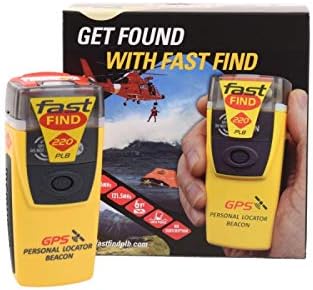
McMurdo FastFind 220
4.5Editor score
Simple three-step activation
Global satellite emergency coverage
Compact US-programmed PLB
Our Satellite Messenger Personal Locator Beacon guide compares ten emergency devices for GPS, SOS, coverage, battery life, durability, portability, and ease of
Satellite messenger personal locator beacons provide a dependable emergency link when cellular service disappears or a remote trail offers no way to call for help. A worthwhile device should locate you accurately, transmit an SOS signal through global rescue satellites, remain easy to operate under stress, and stay ready for years without regular charging.
We compared ten leading beacons and satellite communicators across essential criteria: satellite coverage, positioning systems, SOS behavior, return link confirmation, battery longevity, water resistance, physical size, attachment options, and ongoing service requirements. The list includes dedicated PLBs, models with return link service, and Garmin communicators for travelers who need more than emergency alerting.
Each review explains what stands out, where limitations matter, and which outdoor situations suit each device. Dedicated beacons generally prioritize simple emergency activation, while two-way satellite communicators add messaging, weather, tracking, and phone-pairing functions. Product details and availability can change, so readers should confirm current specifications, registration requirements, and subscription terms.
4.5Editor score

4.8Editor score

4.7Editor score
This side-by-side comparison highlights the different emergency and communication roles offered by dedicated personal locator beacons and subscription-based satellite communicators, helping readers match essential rescue functions with their outdoor plans.


The McMurdo FastFind 220 is a focused personal locator beacon built for people who want satellite emergency protection without a collection of advanced communication features. It carries a 4.5 rating and stands out for its straightforward operation: deploy the antenna, remove the anti-tamper seal, and press the ON button. That simplicity is especially valuable when the device must be activated by a worried or injured traveler.
We may earn a commission when you buy through this link, at no additional cost to you.
The beacon is programmed for registration with the US country code and can function internationally after appropriate registration. It uses the international distress infrastructure to send an emergency alert with identifying information and location details. Registration remains essential because it connects the alert to the registered user and may allow rescuers to learn about travel plans, reducing delays when a serious emergency occurs.
Its main limitation is that it does not provide ordinary satellite messaging, weather forecasts, interactive tracking, or return link confirmation. It is therefore a rescue tool rather than a general-purpose communicator. The US-programmed configuration may also require attention for international travelers, although the manufacturer describes reprogramming options through a separate regional listing. Users should confirm the correct registration path before departing.
This is a compelling choice for hikers, backpackers, international travelers, and families seeking a straightforward, subscription-free emergency beacon. It is particularly appropriate for someone who wants a PLB to remain in a pack for years without frequent charging. For travelers who need two-way contact or interactive SOS, one of the Garmin communicators is more versatile, but for pure emergency signaling the FastFind 220 delivers an admirably clear package.
The three-step activation sequence reduces hesitation when time, energy, or visibility is limited. Extending the antenna and removing the anti-tamper seal are intuitive actions, while the prominent ON control makes the beacon approachable for a wide range of users.
A correctly registered beacon gives search-and-rescue authorities meaningful victim information. The US-programmed version is best suited to users registering through the US system, while international travelers should verify local registration and reprogramming requirements before relying on it.
We may earn a commission when you buy through this link, at no additional cost to you.
The Ocean Signal rescueME PLB1 is among the most portable dedicated beacons in this guide, combining a four-ounce weight with a housing that can be attached directly to a life jacket. Its 4.6 rating reflects a well-balanced feature set, but the defining advantage is physical convenience. Users can carry it on boating trips, sailing adventures, hiking excursions, or any activity where every extra gram and cubic inch matters.
We may earn a commission when you buy through this link, at no additional cost to you.
Its one-handed operation is important because an emergency beacon can become difficult to use with cold hands, injuries, or limited strength. The device includes a 66-channel GPS receiver, a 1-candela high-intensity strobe, and more than 24 hours of operating life. A seven-year battery helps preserve long-term readiness, while its waterproof rating of 49 feet suits demanding marine and outdoor environments.
The trade-off is that the PLB1 focuses on distress signaling rather than communication. It has no two-way satellite messaging and does not provide the return link service found on newer ACR and Jotron models. Users cannot routinely contact loved ones through the beacon, nor can they use it for weather, tracking, or trip coordination. It should be treated as an emergency device rather than a general communications tool.
The PLB1 is a strong recommendation for sailors, paddlers, hikers, and anyone who prioritizes a tiny, one-handed beacon with long storage life. It is also a logical choice for people already carrying other communication equipment but wanting a dedicated, independently mounted rescue device. Those who need message confirmation and remote correspondence should look toward a return link or two-way communicator instead.
At four ounces, the PLB1 is easy to keep on a life jacket or inside a small pack without consuming meaningful space. Its unique mounting clip supports quick access while reducing the chance that a critical emergency tool will be buried.
Waterproofing to 49 feet and a high-intensity strobe make the PLB1 well suited to wet environments. Those qualities also support use on trails and campsites where rain, spray, or an accidental drop may be expected.
We may earn a commission when you buy through this link, at no additional cost to you.
The ACR ResQLink View RLS is the strongest all-around choice in this guide because it combines a high 4.8 rating with a modern set of emergency features. Most importantly, its Return Link Service confirms that search and rescue has received the distress signal. That feedback offers reassurance at the moment of activation and provides useful information while the user waits for assistance.
We may earn a commission when you buy through this link, at no additional cost to you.
Positioning capabilities include GPS, Galileo GNSS, and MEOSAR compatibility, supporting accurate location reporting and compatibility with the international rescue satellite network. The beacon provides more than 28 hours of operating life, a five-year battery, no subscription requirement, and a digital display with an infrared strobe. Built-in buoyancy and a multifunction clip system improve its suitability for marine travel and convenient everyday carrying.
This is still a dedicated emergency PLB, so it does not support routine two-way messaging, weather forecasts, or family tracking. The display and confirmation features make it somewhat more complex than the most minimal beacons, although the extra information can be useful in an emergency. Users who only need a basic distress signal may consider the simpler alternatives in this list.
The ResQLink View RLS is ideal for serious hikers, climbers, boaters, expedition travelers, and families who want confirmation that their SOS was received without paying a subscription. It is also well suited to anyone who appreciates current positioning and satellite standards. For the balance of compactness, operating endurance, buoyancy, visibility, and signal confirmation, it stands as the editor's choice.
A return link message indicates that the distress signal has been received and the user's location identified. This feature distinguishes the model from beacons that provide no indication of transmission status, although it does not replace professional rescue coordination.
Support for GPS and Galileo gives the beacon access to multiple satellite navigation systems. Combined with MEOSAR compatibility, these technologies support dependable emergency location information across a wide range of remote environments.
We may earn a commission when you buy through this link, at no additional cost to you.
The ACR ResQLink 400 is a premium dedicated rescue beacon with a 4.7 rating and a clear emphasis on established satellite emergency standards. It transmits a 406 MHz distress signal and supports a 121.5 MHz homing signal, giving it a well-defined role in search-and-rescue operations. It is a device for people who want dependable emergency signaling without paying a recurring service fee.
We may earn a commission when you buy through this link, at no additional cost to you.
Global coverage through Cospas-Sarsat and MEOSAR makes the beacon relevant to international travel, remote expeditions, and extended wilderness trips. GPS and Galileo GNSS support position determination, while an LED strobe and infrared strobe improve nighttime and low-light visibility. These features focus on the essential rescue chain rather than entertainment or routine communication.
Compared with the ResQLink View RLS, the 400 does not offer return link confirmation and lacks the digital display. It therefore provides less immediate feedback after activation. It also cannot send ordinary messages, weather requests, or location updates to family. That is not necessarily a flaw for a dedicated PLB, but it does make the newer View RLS easier to recommend to users who value visible status information.
The ResQLink 400 is a strong choice for experienced travelers who prioritize established rescue frequencies, broad satellite compatibility, and freedom from subscriptions. Hikers, pilots, boaters, and off-grid workers may find its dedicated design especially appropriate. Buyers willing to pay more for a premium platform should choose it for proven emergency fundamentals rather than messaging versatility.
The 406 MHz distress channel and 121.5 MHz homing signal form the core of the rescue system. Avoiding subscription-based communication keeps the long-term ownership model simple for travelers who mainly need a dependable last-resort alert.
A visible LED and infrared strobe help rescuers identify the beacon under different lighting conditions. Infrared can be particularly valuable at night or when weather limits conventional illumination.
We may earn a commission when you buy through this link, at no additional cost to you.
The Jotron Tron SA20 stands apart through its stated 11-year battery lifespan, making it an attractive option for people who want a personal locator beacon stored for long periods between trips. It is programmed for US registration, can operate for maritime and land emergencies, and offers return link service to confirm that a distress signal has been received.
We may earn a commission when you buy through this link, at no additional cost to you.
Integrated Near-Field Communication adds a useful status function. A compatible smartphone can retrieve device information through NFC, offering a convenient way to check condition without relying on the beacon for everyday communication. The combination of 406 and 121.5 MHz frequencies, GPS and Galileo GNSS support, waterproof construction, and SOLAS approval supports a broad range of outdoor and marine applications.
The main uncertainty is the absence of a listed customer rating, which makes long-term user feedback less available than for the highest-rated products. It also lacks two-way messaging, weather, and routine tracking functions. Although NFC status readout is helpful, it is not equivalent to a full satellite communicator and should not be mistaken for a way to contact family during an emergency.
The Tron SA20 is a compelling choice for expedition travelers, sailors, and backup safety kits where battery storage life is a priority. Users should confirm the correct registration, waterproofing details, and local regulations before departure. It is best viewed as a durable, modern emergency PLB rather than a general-purpose satellite messaging device.
The stated 11-year battery lifespan is the model's most striking feature. It can reduce the need for routine maintenance and makes the device attractive for emergency kits that remain packed between occasional adventures.
NFC allows a compatible smartphone to read device status information. The feature helps owners check the beacon more conveniently without turning it into a general communications device.
We may earn a commission when you buy through this link, at no additional cost to you.
The ACR ResQLink View PLB425 is a compact, buoyant personal locator beacon with a 4.6 rating and a particularly broad set of wearing options. Its belt clip, oral inflation tube clip, straps, and lanyards make it easy to keep accessible in settings ranging from hiking and camping to boating, climbing, and RV travel.
We may earn a commission when you buy through this link, at no additional cost to you.
Once activated, it sends an SOS distress signal with a GPS position directly to search-and-rescue forces worldwide through the 406 MHz Emergency Distress Signal and 121.5 MHz Homing Signal. It uses the COSPAS-SARSAT constellation without requiring a rescue monitoring center, and no subscription is required for emergency protection. A bright LED strobe and infrared strobe further improve visibility.
An optional 406Link testing subscription enables pre-canned, non-emergency self-test and GPS test messages to be sent to multiple contacts by SMS or email. This is valuable for verifying setup, but it creates a distinction between core rescue functionality and optional testing services. The PLB425 also lacks return link confirmation, so it provides less direct evidence of receipt than the View RLS and 410 RLS.
The PLB425 is a well-rounded choice for outdoor users who need many attachment methods and a buoyant design. It is especially attractive to boaters and water sports participants who also enjoy hiking or camping. Users willing to pay for optional testing software may appreciate the added confidence, while others can rely on the standard global distress system without an ongoing fee.
The included clip, strap, lanyard, and oral inflation tube attachments let users place the beacon close at hand. Versatile mounting is especially useful for activities where clothing and gear differ from one trip to the next.
The 406 MHz alert and 121.5 MHz homing signal send distress information directly through the international satellite system. Core emergency protection does not depend on a commercial subscription or a private monitoring center.
We may earn a commission when you buy through this link, at no additional cost to you.
The ACR ResQLink 410 RLS delivers the essential features of a modern emergency PLB without extending into general satellite communication. It carries a 4.5 rating and offers return link service, confirming receipt of the distress signal and the user's location. As a dedicated rescue device, it requires no subscription for core operation.
We may earn a commission when you buy through this link, at no additional cost to you.
GPS, Galileo GNSS, and MEOSAR compatibility support positioning and global emergency coverage. The beacon provides more than 24 hours of operational life, a five-year battery, built-in buoyancy, and both visible and infrared strobes. A multifunction clip supports convenient attachment to clothing, packs, or boating equipment while keeping the activation control accessible.
Its limitations are similar to those shared by most dedicated PLBs. It does not offer ordinary text messaging, interactive weather forecasts, or live location sharing with family. Although return link confirmation is helpful, it is not a full communication channel. The stated battery and operating-life figures also trail the longer specifications offered by some competing models, making periodic readiness checks worthwhile.
The 410 RLS is a well-balanced choice for hikers, boaters, and international travelers who want modern positioning and signal confirmation without a subscription. It is particularly suitable for those who want a simple PLB but do not need the extensive features of a Garmin satellite communicator. For users prioritizing maximum emergency operating duration, the View RLS is the stronger choice.
Return link service sends confirmation after search and rescue receives the emergency signal. This feature helps the user understand that help has been notified while the dedicated beacon continues serving its core function.
Built-in buoyancy improves the chance that the beacon remains accessible in a marine mishap. Its lightweight form and multifunction clip also suit hiking, climbing, camping, and other land-based activities.
We may earn a commission when you buy through this link, at no additional cost to you.
The Garmin inReach Mini 3 Plus is a full satellite communicator rather than a conventional PLB, and it expands the definition of emergency preparedness. Its 4.7 rating reflects a well-equipped device that supports interactive SOS, two-way messages, photos, voice messages, tracking, and weather information through Garmin's global Iridium satellite network.
We may earn a commission when you buy through this link, at no additional cost to you.
An active satellite subscription is required. With service active, users can trigger an interactive SOS containing location coordinates for Garmin Response, a 24/7-staffed international coordination center. The Garmin Messenger app enables compatible smartphones to exchange photos, texts, and voice messages without cellular coverage, while LiveTrack lets contacts follow a journey and view information such as elapsed time, distance, and elevation.
The rugged housing has an IP67 water rating, a scratch-resistant color touchscreen, and internal rechargeable battery support of up to 350 hours with ten-minute tracking or up to 95 hours in performance messaging mode. It also supports voice commands, forecasts, route planning, activity recording, and navigation. In exchange, the device is larger, more complex, and more dependent on batteries and subscription management than a dedicated PLB.
The Mini 3 Plus is ideal for travelers who want emergency response plus ordinary satellite communication, family check-ins, photography, and navigation. It suits long backpacking trips, international travel, and group expeditions where staying connected matters. Be sure to activate the appropriate service before leaving and understand local rules governing satellite communication devices.
Two-way text, voice messaging, photographs, weather forecasts, and live tracking turn the communicator into a daily travel tool. A smartphone-compatible workflow makes these features accessible without requiring users to type lengthy messages on the handheld.
The SOS function sends an interactive message with coordinates to a staffed coordination center. This approach can provide rescuers with richer information than a simple automated distress beacon, making communication history especially valuable.
We may earn a commission when you buy through this link, at no additional cost to you.
The Garmin inReach Messenger is a compact satellite communicator designed around two-way contact. It carries a 4.5 rating and enables users to exchange global text messages through the Garmin Messenger app even where cellular service is unavailable. That makes it more useful for daily coordination than a dedicated distress-only PLB.
We may earn a commission when you buy through this link, at no additional cost to you.
Group messaging lets travelers communicate with multiple friends and family members, while preset check-in messages can simplify routine updates. Users can share GPS coordinates, trigger an interactive SOS to Garmin's 24/7-staffed monitoring and coordination center, and choose whether messages travel by cellular or satellite networks for the best available connection. The device can also pair with compatible Garmin equipment.
An internal rechargeable lithium battery provides up to 28 days in ten-minute tracking mode, and the device can provide safety charging for a depleted phone. The trade-off is that the satellite service requires an active subscription, and some jurisdictions regulate or prohibit satellite communication devices. Unlike the Mini 3 Plus, this model does not emphasize a color touchscreen, photo exchange, or the same broad navigation feature set.
The inReach Messenger is a strong value-oriented choice for backpackers, travelers, and boaters who want emergency support plus ordinary satellite messages. It is particularly useful when relatives want regular updates instead of waiting for an emergency. Buyers should confirm the service requirement, plan for activation before remote travel, and verify regulatory guidance for their destination.
Two-way and group messaging make it possible to coordinate plans, share arrival updates, and request information while outside cellular coverage. The phone app provides familiar text-style interaction, reducing the learning curve for routine use.
A stated 28-day battery life in ten-minute tracking mode supports extended travel. The ability to provide safety charging for a phone adds another layer of usefulness when a depleted handset could affect navigation or communication.
We may earn a commission when you buy through this link, at no additional cost to you.
The Garmin inReach Messenger Satellite Communicator Bundle combines the core inReach Messenger with several charging accessories and has a listed 5.0 rating. It is a complete setup for travelers who want two-way satellite communication, interactive SOS capability, and a portable power solution rather than a standalone emergency beacon.
We may earn a commission when you buy through this link, at no additional cost to you.
The bundle includes the handheld communicator, a 10-foot USB Type A to USB Type C cable, USB charging adapters, a USB car adapter, a microfiber cleaning cloth, and a P-Bank portable battery charger. These additions make it easier to keep the device powered in vehicles, campsites, or multi-day travel configurations without relying on a single wall outlet.
The communicator connects with the Garmin Messenger app to send and receive messages over satellite or cellular networks. It supports group messaging, threaded conversations, contact syncing, location sharing, detailed weather updates, and TracBack navigation to a starting point. Interactive SOS sends a distress signal to Garmin's coordination center, and a stated 28-day battery life in ten-minute tracking mode supports extended use.
As with other Garmin inReach devices, an active satellite subscription is required, and travelers must consider local restrictions. The included accessories improve convenience but do not make the device a dedicated PLB, and routine communication still depends on service activation. The bundle is best for new users who want a complete portable setup and for households sharing charging equipment across several trips.
The portable battery and included charging options address one of the practical realities of long-distance travel: keeping essential electronics powered. The accessory set makes the package more immediately useful for a first expedition or an emergency kit.
Group messaging and threaded conversations allow several contacts to participate in the same exchange. This makes coordinating with family, friends, or travel partners easier when everyone is beyond cellular coverage.
We may earn a commission when you buy through this link, at no additional cost to you.
The right emergency device depends on whether you need a simple distress alarm or a full satellite communications system. Consider registration, satellite standards, battery, environmental resistance, attachment, and the amount of information your device can send.
Choose a PLB for a simple, always-ready rescue device. Choose a communicator when regular check-ins and remote conversation are important parts of the trip.
Always confirm the registration authority, country code, owner details, and emergency contacts for every destination. Do not assume that global satellite function means global registration is already complete.
Prioritize recognized satellite systems, return link confirmation when available, and registration appropriate to your travel region. Check the distinction between a registered PLB and a subscription-based communicator.
Look for GPS plus Galileo or equivalent multi-constellation support. Remember that a precise displayed position does not guarantee instant acquisition beneath dense tree cover or inside steep terrain.
Compare storage life separately from emergency operating time. Rechargeable communicators need more regular attention, while primary-battery PLBs suit owners who prefer long unattended readiness.
For boating and water sports, prioritize verified waterproofing and buoyancy. For land travel, impact resistance and a secure attachment may matter more, though weather resistance remains valuable.
Choose the smallest device you are likely to carry and keep accessible. For all-day satellite messaging, prioritize comfort and controls over minimum weight.
Choose return link or interactive SOS when confirmation matters to you. Add infrared strobes for night visibility and marine use, and include two-way messaging only if you genuinely need ongoing contact.
Before an adventure, register the device under the appropriate national authority and enter current emergency contacts. If the manufacturer provides a self-test or GPS test, perform it in an open area with a clear view of the sky, following the manual's instructions. Confirm that the battery, antenna, attachment clip, and activation sequence are in good condition. For a communicator, activate the required satellite service and send a test message before leaving cellular coverage.
Carry the device where it remains accessible, but protect the antenna and avoid placing it in a metal container, deep pocket, or sealed bag that could block satellite reception. On a water trip, attach it to a life jacket using the appropriate clip or lanyard. At camp, keep it dry and away from excessive heat. Never rely on an unregistered beacon, and do not use it for non-emergency test transmissions outside the manufacturer's approved procedures.
After each trip, inspect the housing, seal, antenna, clip, and contacts for damage. Follow the battery instructions exactly: do not replace a primary battery unless the manual permits it, and do not leave a rechargeable communicator in a depleted state for months. Record the purchase and registration details, update emergency contacts when your travel plans change, and replace the device or battery according to the manufacturer's guidance if readiness becomes uncertain.
Dedicated PLBs in this guide, including the McMurdo FastFind 220 and the ACR models, do not require a subscription for their core emergency distress functions. Garmin inReach communicators do require an active satellite subscription for messaging, tracking, and interactive SOS. Users should compare service requirements before purchasing rather than assuming every satellite device has the same operating model.
A PLB is designed primarily to send an automated distress alert with location information. A satellite communicator can provide two-way messages, check-ins, weather, tracking, and an interactive emergency response in addition to SOS functions. A PLB is usually simpler and ready for emergencies, while a communicator is more useful for routine communication but typically requires charging and an active service.
Yes, registration is legally required in most countries and helps search-and-rescue teams identify the owner and relevant travel information. The McMurdo FastFind 220 and Jotron Tron SA20 listings described here are programmed for US registration. International travelers should confirm the correct country code, registration procedure, and any available reprogramming service before departure.
Yes, their emergency and communication functions use satellite systems rather than cellular towers. That makes them useful in wilderness, remote marine, and other areas without mobile service. The Garmin communicators still need an active satellite subscription, and users should check local rules because some jurisdictions regulate or prohibit satellite communication devices.
Return link service provides confirmation through the Cospas-Sarsat system that a distress signal has been received and the user's location identified. The ACR ResQLink View RLS, ResQLink 410 RLS, and Jotron Tron SA20 feature this capability. It offers useful reassurance, but it is not the same as two-way messaging and does not replace search-and-rescue operations.
The Ocean Signal rescueME PLB1, ACR ResQLink View RLS, ACR ResQLink 400, and ACR ResQLink 410 RLS all offer features suited to marine use, including strong waterproofing, strobes, and attachments. The PLB1 stands out for its four-ounce weight and 49-foot waterproof rating, while the ACR models add advanced positioning, return link service, or established rescue frequency support. Personal preference and required features should guide the final choice.
Follow the manufacturer's recommended test schedule and inspect the device before every major trip. A GPS or self-test should be performed in an open area with a clear view of the sky, while an approved message test should go only to the designated testing recipients. Never activate a real distress alert merely to check whether the device works.
The Garmin inReach Messenger and the Garmin inReach Messenger Bundle provide safety charging for a depleted phone. The standard inReach Messenger lists this capability, and the bundle includes a P-Bank portable battery charger. Actual charging time and available power will depend on the device, battery condition, and the amount of energy already consumed.
The McMurdo FastFind 220 is the best budget option for someone who wants simple, subscription-free distress signaling and straightforward activation. The ACR ResQLink View RLS is the most complete dedicated emergency beacon in the group, combining return link confirmation, modern multi-constellation positioning, buoyancy, and a long operating specification. The ACR ResQLink 400 represents a premium, no-fee rescue platform built around established distress frequencies and global search-and-rescue compatibility.
Priority should begin with the type of protection needed. Choose a dedicated PLB for low-complexity emergency readiness, a model with return link service for signal confirmation, or a Garmin inReach communicator when two-way messaging, location sharing, weather, and interactive SOS justify the added complexity and service dependency. Registration, attachment method, battery strategy, and environmental conditions are equally important to the choice.
Before buying, confirm the current product specification, regional registration rules, compatibility with your existing equipment, and any subscription terms. Product details, availability, and pricing can change, so checking the current listing ensures that the selected device remains the right fit for the intended journey.