
Nitecore NU20 Classic
4.8Editor score
360-lumen maximum output
Up to 97-hour runtime
Compact 1.34-ounce design
Explore 10 leading headlamps for ultra and trail running, comparing brightness, weight, beam quality, battery life, fit, durability, and useful features for
A headlamp for ultra and trail running must be light, secure, easy to operate, and bright enough to reveal roots, rocks, and uneven ground. The best models also manage heat, battery drain, rain, and the repeated impact of fast movement without distracting from the run.
This guide compares ten headlamps using their published brightness, beam distance, weight, runtime, charging method, weather resistance, lighting modes, and headband design. It covers ultralight options for racing, high-output models for technical terrain, and versatile choices for everyday trail use.
Each review explains the strongest reasons to choose a model, along with its limitations and likely best audience. The top picks represent the most balanced options, while the complete comparison helps identify the right balance of output, comfort, endurance, and protection for October 2026.
4.8Editor score
4.8Editor score

4.6Editor score
The table below compares all ten models by maximum output, weight, headline lighting capability, and weather protection, making it easier to identify the right headlamp for different running priorities.
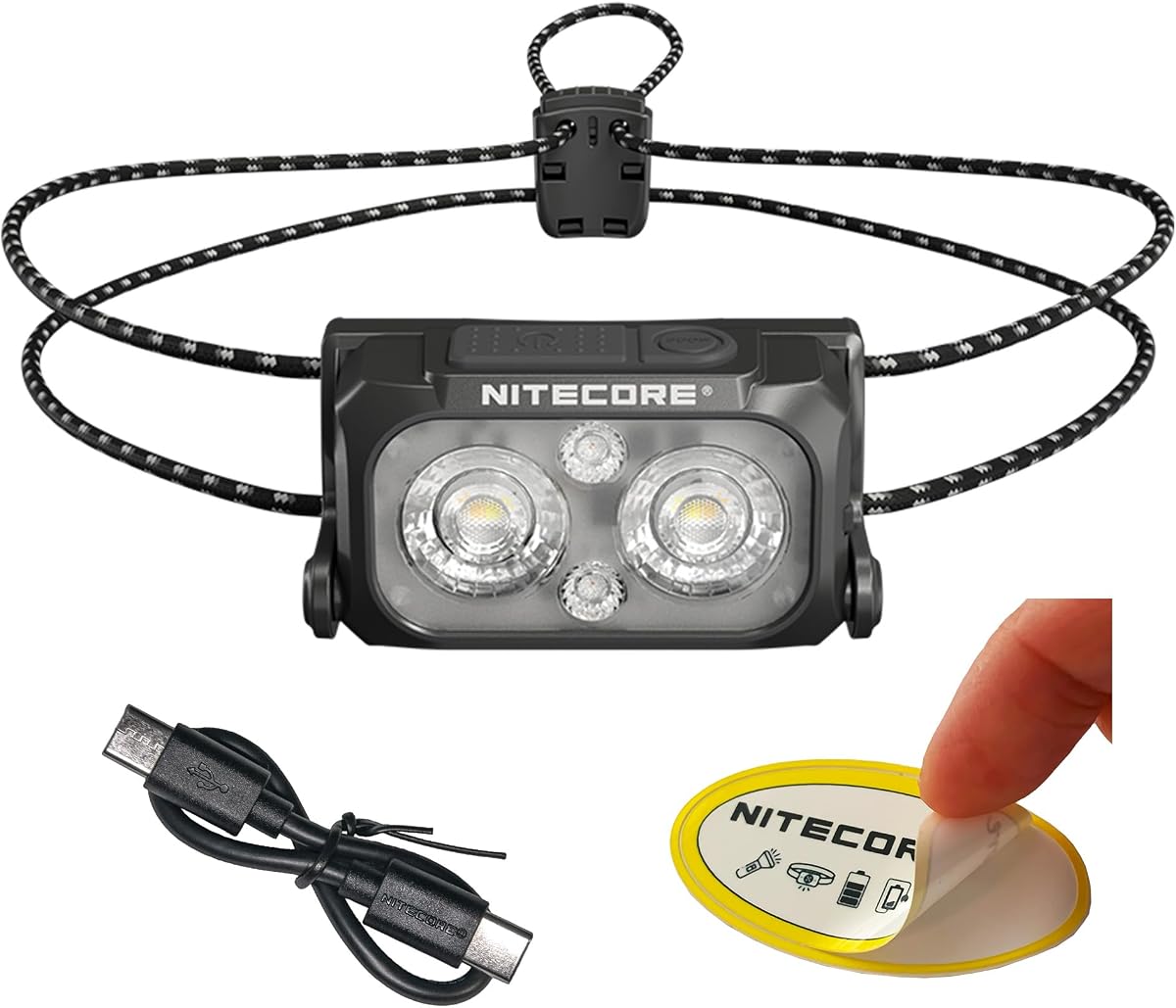


The Nitecore NU25 MCT UL combines 400 lumens with a total weight of just 1.65 ounces, creating one of the most compelling balances in this guide. Its 4.7 rating reflects a favorable combination of output, portability, color control, and protection, while its 144-yard maximum beam is ample for running trails, forest paths, and campsite navigation.
We may earn a commission when you buy through this link, at no additional cost to you.
The headlamp offers warm, natural, and cool white illumination, allowing runners to choose the most comfortable color for fog, rain, clear conditions, or close-range tasks. It also includes SOS and beacon signals along with an auxiliary red light. USB-C charging, a power indicator, and a stated runtime of up to 45 hours make it practical for both long runs and repeated training sessions.
Its trade-off is that 400 lumens is less output than the 600-, 1100-, and 1600-lumen models included here. On unlit technical trails, runners who want maximum throw or broad terrain coverage may prefer a higher-output lamp. Even so, the NU25 MCT UL weighs less than 2 ounces, carries an IP66 waterproof rating, and is impact resistant to one meter, so its performance remains well suited to fast movement.
This is the strongest all-around recommendation for runners who refuse to compromise between brightness and comfort. It is especially compelling for ultrarunners, fast-paced trail sessions, and wet-weather training. Choose the Petzl Swift LT for an even more compact design, the Nitecore NU20 Classic for maximum runtime, or the Fenix HM65R-T V2.0 when exceptional nighttime visibility matters more than minimum weight.
Warm light can be gentler in fog and rain, neutral light offers balanced everyday visibility, and cool light enhances outdoor contrast. That flexibility helps one headlamp serve early starts, technical descents, and ordinary evening runs.
At 1.65 ounces, the lamp places little weight on the forehead or neck. That makes it easier to sustain a steady pace without the distracting sensation of a heavier lighting unit bouncing during footfall.
We may earn a commission when you buy through this link, at no additional cost to you.
The Petzl Swift LT is designed around minimalism, measuring just 43 grams and delivering 380 lumens. Its 4.5 rating indicates a well-liked package for runners who prioritize a palm-sized light, uncomplicated controls, and a streamlined headband over maximum brightness or advanced beam automation.
We may earn a commission when you buy through this link, at no additional cost to you.
Three white brightness levels let users balance visibility against energy use, while a dedicated red mode helps preserve night vision and avoids dazzling companions. Reflective thread woven into the headband adds passive visibility when the active beam is pointed elsewhere, an understated benefit during group runs or on busy paths.
The main limitation is its IPX4 rain-resistance rating. That is appropriate for ordinary showers, but it provides less protection against the full force of falling water or immersion than the IP66, IP67, and IP68 models in this comparison. The Swift LT also lacks the reactive lighting found in the larger Petzl Swift RL, so runners must adjust brightness manually.
The Swift LT is an excellent choice for ultrarunners, travelers, and anyone who dislikes bulky headlamps. It is also a sensible pick for trail running in relatively settled weather. Those needing greater output for technical descents should consider the Fenix HM65R-T V2.0, while a rechargeable ultra-compact alternative with more color options is the Nitecore NU25 MCT UL.
The small housing and light 43-gram construction reduce bulk around the forehead, which is valuable during long sessions. The streamlined shape also suits runners who want illumination without a large, expedition-style lamp dominating their gear.
Reflective thread helps other road users, trail users, or group members notice the runner. It does not replace active lighting, but it adds a useful layer of visibility when the beam is aimed along the ground.
We may earn a commission when you buy through this link, at no additional cost to you.
The Fenix HM65R-T V2.0 is built specifically for trail running and offers the highest maximum output in this guide at 1,600 lumens. Its 4.6 rating supports its reputation as a capable technical light, while the stated beam reach of up to 185 yards gives it a major advantage on unfamiliar descents, wide trails, and fast-moving terrain.
We may earn a commission when you buy through this link, at no additional cost to you.
Dual-beam capability allows runners to choose white or warm white illumination. Warm output may be easier on the eyes in fog and rain, while the standard white beam provides crisp visibility for trail conditions. A two-way SPORT fit system allows one-handed adjustment, and the wide reflective headband is designed to remain stable over long periods.
This is not the lightest choice. Its magnesium alloy frame is described as 30 percent lighter than aluminum, yet the headlamp still carries more bulk than the Nitecore NU25 or Petzl Swift LT. Maximum output also creates significantly more heat and energy demand than lower settings, so the extreme mode is best reserved for brief periods when extra reach is essential.
The HM65R-T V2.0 is the premium choice for serious trail runners who value confidence, beam reach, weather resistance, and premium construction. It also earns a place for runners navigating unlit, rugged routes. If the priority is minimum weight, choose the Nitecore NU25 MCT UL; if maximum endurance is the priority, the Nitecore NU20 Classic is a lighter alternative.
The 1,600-lumen setting reveals trail features farther ahead than most compact lamps. That extra reach is most useful on descents, open paths, and unfamiliar ground where identifying roots or drop-offs earlier can support smoother movement.
The wide reflective headband and two-way fastener help distribute weight and resist shifting. A magnesium alloy frame, two-meter impact resistance, and an IP68 rating make the unit particularly convincing for demanding outdoor conditions.
We may earn a commission when you buy through this link, at no additional cost to you.
The Petzl Swift RL combines 1,100 lumens with automatic reactive lighting, giving it a distinct advantage for runners who do not want to manage output manually. Its 4.5 rating reflects a well-rounded premium design suitable for trail running, mountaineering, skiing, and other fast-moving activities.
We may earn a commission when you buy through this link, at no additional cost to you.
A light sensor automatically adjusts brightness and beam pattern according to ambient light. This can preserve runtime while keeping the scene illuminated, and it reduces the need to stop or slow down to operate controls. The included 2350 mAh lithium-ion battery recharges through USB-C, while a five-level indicator gives a clearer view of remaining charge.
At 100 grams, the Swift RL is noticeably heavier than the ultralight alternatives. The split headband improves stability during dynamic movement, but it creates a larger package than a minimal night-running lamp. Reactive lighting also has less appeal for someone who wants a straightforward, predictable beam at every moment.
This model is best for runners who value intelligent output management and premium comfort. It is a strong choice for alpine trails, multi-terrain adventures, and variable weather. Those seeking the absolute lightest option should select the Nitecore NU20 Classic, while the Fenix HM65R-T V2.0 offers greater maximum output and stronger formal waterproofing.
Reactive lighting responds to changing ambient conditions, reducing unnecessary manual adjustments. This is particularly useful on trails that alternate between dark forest, open sky, and reflective or wet surfaces.
The split headband is designed to stay in place while running or skiing. Its reflective detailing also improves passive visibility, complementing the active beam and red signaling modes.
We may earn a commission when you buy through this link, at no additional cost to you.
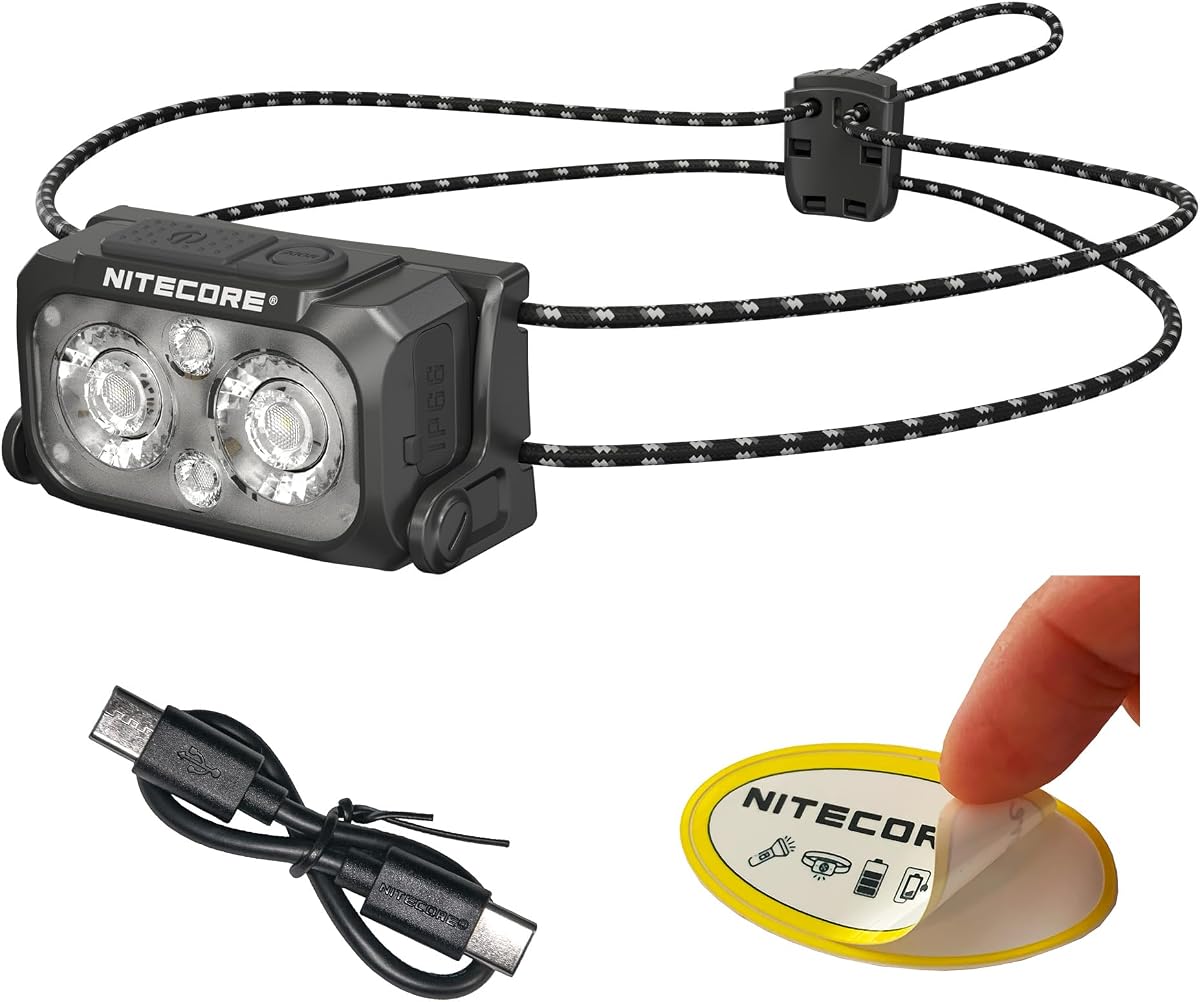
The Nitecore NU20 Classic is the lightest model in this comparison at 1.34 ounces, yet it still produces 360 lumens and reaches up to 119 yards. Its 4.8 rating makes it a particularly well-regarded value, combining low weight, useful output, flexible modes, and a stated runtime of up to 97 hours.
We may earn a commission when you buy through this link, at no additional cost to you.
The main white LED offers three brightness levels, supported by SOS and beacon functions, a soft reading light, and an auxiliary red light. Those options let runners preserve battery life on easy sections, see nearby gear without disrupting night vision, and use signaling patterns in emergencies. A battery indicator helps avoid being surprised by a depleted light.
Its beam reach is more modest than that of the Fenix HM65R-T V2.0, Petzl Swift RL, and Nitecore NU25 MCT UL. The product also centers on white illumination rather than offering multiple white color temperatures. Neither limitation undermines it on maintained trails, but runners seeking broad illumination across very technical ground may want more reach.
The NU20 Classic is an excellent value for night jogging, hiking, backpacking, and runners who want minimal weight with long battery endurance. It is our budget recommendation because it gives up very little practical versatility while standing out for efficiency. For color-temperature control, move up to the Nitecore NU25 MCT UL; for maximum illumination, consider the Fenix HM65R-T V2.0.
The stated 97-hour runtime on low mode makes the NU20 Classic easy to keep in a rotation of gear. Frequent runners can charge it periodically rather than preparing a fresh set of batteries before every outing.
The 1.34-ounce construction minimizes head weight, while the simple mode structure keeps the headlamp approachable. Brightness, reading, red, SOS, and beacon functions cover most common running needs.
We may earn a commission when you buy through this link, at no additional cost to you.
The Black Diamond Cosmo 350 distinguishes itself with dual-fuel flexibility, running on three standard AAA batteries or a compatible rechargeable BD 1500 lithium-ion battery. Its 4.6 rating reflects a well-regarded 350-lumen output, convenient dimming, and an IP67 waterproof rating in a practical package for running and hiking.
We may earn a commission when you buy through this link, at no additional cost to you.
Brightness can be dimmed for close-range use, while a strobe and red night-vision setting expand its usefulness beyond steady trail illumination. The low-profile housing and adjustable headband are designed for comfortable long-term wear, which matters when a headlamp is carried through repeated training sessions.
The primary drawback is charging convenience. Unlike most USB-C models here, the Cosmo 350 can use familiar AAA cells, but carrying spare disposable batteries has environmental and logistical disadvantages. Rechargeable battery compatibility is useful, yet runners should confirm the compatible battery and its charging setup before relying on it for extended events.
Choose the Cosmo 350 if battery availability and flexible power options matter more than integrated USB-C charging. It is a solid choice for hikers and runners who frequently travel or practice where replacing cells is easy. Runners prioritizing recharge simplicity should choose the Nitecore NU25 MCT UL, while maximum light output belongs to the Fenix HM65R-T V2.0.
The ability to use AAA batteries makes the lamp useful when access to charging is uncertain. A compatible rechargeable battery offers a more sustainable alternative for regular users, depending on their preferred charging setup.
Full dimming allows a runner to select a lower level for close inspection or preserve power on easier terrain. Strobe and red modes add signaling and night-vision options without changing the main headlamp.
We may earn a commission when you buy through this link, at no additional cost to you.
This Nitecore NU25 MCT UL listing shares the core strengths of the similarly named first-ranked product while standing out with a 4.8 rating. It delivers 400 lumens, reaches up to 144 yards, and weighs only 1.65 ounces, making it another convincing choice for fast-paced trail running and ultralight travel.
We may earn a commission when you buy through this link, at no additional cost to you.
Warm, natural, and cool white light can be selected from the interface. Warm output is useful in fog and rain, natural light offers balanced visibility for routine tasks, and cool light can improve perceived outdoor contrast. Four output selections, SOS, beacon, and a three-output auxiliary red light create several ways to adapt to changing conditions.
As with all compact lights, its brightest mode cannot match the raw reach of the Fenix HM65R-T V2.0 or Petzl Swift RL. The 45-hour maximum stated runtime is also shorter than the NU20 Classic's 97-hour low-mode figure, although the two headlamps serve somewhat different priorities: this model emphasizes color and output flexibility.
This NU25 MCT UL variant is best for runners who want detailed control without accepting a heavy housing. It is particularly suitable for variable weather, mixed-use adventures, and anyone who values color-temperature choice. It is also a strong alternative to the Petzl Swift LT because it provides warm, natural, and cool options in a similarly compact form.
Color temperature can make a big difference during long sessions. Warm light is often easier on the eyes, neutral light preserves accurate detail, and cool light can increase the apparent contrast of outdoor obstacles.
The auxiliary red light provides low-disruption illumination for preserving night vision. SOS and beacon modes add practical signaling choices for group awareness and emergency situations.
We may earn a commission when you buy through this link, at no additional cost to you.
The Black Diamond Deploy Run is purpose-built for active movement, with a compact contoured housing designed to sit close to the forehead and minimize bounce. Its 4.4 rating reflects a practical running-focused design that emphasizes a secure, uncomplicated form rather than headline brightness.
We may earn a commission when you buy through this link, at no additional cost to you.
Maximum output is 325 lumens, which is sufficient for maintained trails, woodland paths, and general night-running navigation. A side switch provides straightforward access to brightness, beam settings, full dimming, and strobe. The built-in lithium-ion battery recharges through USB-C, removing the need to carry spare cells, while the lockout helps prevent accidental activation inside a pocket or pack.
The 325-lumen maximum and 119-yard-class trail coverage are less impressive than the higher-output alternatives, and the IPX4 rating is intended primarily for rain and splashes rather than immersion. Runners who regularly enter dense, unlit, or wet technical terrain may prefer stronger illumination and more advanced waterproofing.
The Deploy Run is a good fit for trail runners who value low profile, simple operation, and a reduced chance of distracting bounce. It is also a logical choice for everyday evening running. Choose the Nitecore NU20 Classic for greater runtime and weight savings, or the Fenix HM65R-T V2.0 for exceptional maximum output and IP68 protection.
The contoured housing sits close to the forehead, creating a balanced appearance and reducing movement. That low-profile fit is useful for runners who want illumination without a bulky unit interrupting their line of sight.
A simple side switch reduces menu complexity, and the lockout helps protect against accidental activation. Dimming provides a middle ground between full output and the lowest available setting.
We may earn a commission when you buy through this link, at no additional cost to you.
The Nitecore NU27 is a well-balanced high-output headlamp, producing 600 lumens with a maximum beam distance of 134 yards. Its 4.6 rating and broad feature set make it a compelling option for runners who want more brightness than the ultralight models without moving to the largest premium lamps.
We may earn a commission when you buy through this link, at no additional cost to you.
Warm, neutral, and cool white LEDs offer adaptable visibility across fog, rain, ordinary trails, and high-contrast terrain. Five outputs, SOS, beacon, and an auxiliary red light with three outputs create a generous control set. USB-C recharging, a power status indicator, and up to 57 hours of stated operation simplify long-term use.
Compared with the Nitecore NU20 Classic and NU25 MCT UL, the NU27 is more substantial and its maximum output draws more power. It also lacks the Petzl Swift RL's automatic brightness adjustment. Those are reasonable trade-offs for a stronger beam, but runners seeking an ultralight race setup should prioritize a lighter alternative.
The NU27 is best for trail runners who want strong output, selectable color temperatures, and useful emergency functions in one package. It works well for camping, hiking, and nighttime work as well. Those seeking maximum output can choose the Fenix HM65R-T V2.0, while ultrarunners who prize minimum weight should select the Nitecore NU20 Classic.
A 600-lumen ceiling provides a useful middle ground between compact everyday lamps and 1,100- or 1,600-lumen technical lights. It offers broader illumination for roots, branches, and trail edges without the largest housing in the group.
Multiple brightness levels, three color temperatures, red lighting, SOS, and beacon modes cover both performance and safety needs. The battery indicator provides reassurance that the lamp is ready for the next outing.
We may earn a commission when you buy through this link, at no additional cost to you.
The Foxelli USB-C Headlamp focuses on straightforward illumination, offering 180 lumens in a 2.4-ounce package. Its 4.7 rating indicates a well-liked, uncomplicated option for trail running, camping, and hiking, particularly for people who value simple charging and a familiar mode layout.
We may earn a commission when you buy through this link, at no additional cost to you.
Five modes include a white beam, a dimmer setting, red light for night vision, and an emergency SOS strobe. The lamp can illuminate up to 300 feet, and its 45-degree tilt allows the beam to be aimed where it is needed without removing it from the head. A stretch-fit, non-slip strap is designed to remain secure during movement.
The 180-lumen output is the lowest maximum in the comparison, making the Foxelli less suitable for technical, unlit trails where distant obstacles need early detection. At 2.4 ounces, it is also heavier than the Nitecore NU20 Classic and NU25 MCT UL, despite serving a similar basic purpose. Its IPX5 rating is appropriate for rain, snow, and splashes but does not match the stronger waterproof ratings offered by several Nitecore models.
This headlamp is best for casual night running, hiking, household backup, and users who want a simple rechargeable light with red and emergency modes. A more serious trail runner should consider the Nitecore NU25 MCT UL for greater output and lower weight, while the Black Diamond Cosmo 350 offers stronger illumination and flexible battery options.
USB-C charging works with a power bank, laptop, or car charger, reducing the need for proprietary cables or disposable batteries. The limited mode set is easy to understand and quick to operate.
The stretch-fit headband accommodates a range of head sizes and is designed to resist slipping. A 45-degree tilt allows the beam to be pointed down toward nearby trail obstacles or upward toward distant landmarks.
We may earn a commission when you buy through this link, at no additional cost to you.
The right running headlamp depends on the terrain, expected duration, and tolerance for weight. Light output matters, but fit, beam shape, weather protection, controls, and battery strategy can have an equally large effect on a runner's experience.
Maximum lumens indicate potential brightness, but beam distance and beam pattern are just as important. A 180-lumen lamp may be sufficient for maintained paths, while 400 to 600 lumens provides a more reassuring view of roots and uneven ground. Premium models reaching 1,100 or 1,600 lumens can illuminate farther, which can be valuable on fast descents, wide paths, and unlit mountain terrain. Choose output according to the darkest and most technical routes you regularly use rather than selecting the largest number available.
Prioritize useful beam control alongside raw brightness. Runners should be able to dim the lamp for close obstacles and preserve battery life on easier sections.
A headlamp is carried directly on the head, so even a small amount of extra mass can become noticeable over long distances. The lightest options in this guide weigh 1.34 to 1.65 ounces, while premium technical lights can be considerably bulkier. Beyond the number, examine housing shape, headband width, and how closely the lamp rests against the forehead. A low-profile design reduces bounce and visual distraction.
For ultras, prioritize the lowest comfortable weight. For technical trail use, a slightly larger model may be worthwhile if it provides better stability, controls, or battery performance.
Published maximum runtimes usually describe the lowest setting, so consider how the lamp will be used in practice. A 97-hour figure may represent many nights of casual use, while a high-output setting can reduce endurance dramatically. USB-C charging is convenient because the same cable often powers phones, power banks, and other gear. Models accepting standard AAA cells offer exceptional flexibility but require more planning and can create unnecessary disposable waste.
Match runtime to the longest expected outing and carry a backup light for ultra events. Check the included charging cable, battery indicator, and recharge time before departure.
Warm, neutral, and cool white light can materially change visibility and comfort. Warm light is often less harsh in fog and rain, neutral light presents a balanced view, and cool light enhances outdoor contrast. Red lighting supports night-vision preservation and avoids blinding nearby runners. SOS and beacon modes provide signaling options, while dimming helps runners control both glare and power use.
Look for the modes you will genuinely use rather than paying attention only to a long feature list. A simple interface that remains easy to operate in the dark is often more valuable than numerous secondary functions.
Rain, mud, condensation, and dropped gear are common on trails, so weather resistance deserves careful attention. IPX4 is oriented toward splashes and rain, IP66 adds protection against powerful water jets and dust, IP67 indicates temporary immersion protection, and IP68 offers the strongest stated waterproofing in this group. No rating makes a lamp completely indestructible, and connectors and ports still require care.
For frequent wet-weather running or ultra events, favor IP66 or higher and inspect the charging port before use. Let any wet headlamp dry fully according to the manufacturer's guidance.
A secure headband prevents the light from bouncing with each footfall, which can reduce attention to the trail and create glare. Look for adjustable tension, sufficient width, soft edges, and a housing that sits close to the forehead. Reflective details add passive visibility around other people, while split or two-way systems can improve stability during running, skiing, or climbing.
Try the fit before a long event, particularly if you wear a hat or regularly sweat. The lamp should remain centered without pressing uncomfortably into the forehead.
Manual controls are direct and dependable, but they require attention when the terrain is changing quickly. Reactive lighting can adjust output and beam pattern automatically, conserving energy while maintaining useful visibility. It is especially appealing for runners who want fewer interactions with the lamp. The trade-off is that automation may not always match personal preferences, so familiarizing yourself with the settings remains important.
Choose a simple interface for dependable control, or an automatic system for convenience. In either case, learn the controls in daylight before taking the lamp onto technical ground.
Red light helps preserve night vision and allows runners to check maps, phones, or nearby gear without ruining dark adaptation. A strobe can increase visibility, while an SOS pattern may help communicate a location or need for assistance. These features should supplement, not replace, sound signaling, communication tools, navigation, and appropriate safety planning.
Confirm the available signals before an event and test them with companions. Easy access matters more than having a feature that is difficult to activate under stress.
Before every outing, charge the headlamp fully, confirm the battery indicator is working, and test every mode in a dark area. Adjust the headband so the light sits close to the forehead without pressure, and verify that the beam aims slightly below the horizon. Familiarize yourself with the controls before reaching technical terrain, when fumbling with a button can interrupt rhythm or direct the beam into a companion's eyes.
Use the lowest practical brightness for clear paths and save higher outputs for darkness, fog, descents, and unfamiliar terrain. Use warm light in poor weather, cool light when contrast is most useful, and red light for map checks or preserving night vision. A second light in a pack can provide backup, and reflective clothing or a blinking tail light adds visibility beyond what the headlamp itself can provide.
After use, switch the lamp off, inspect the charging port for dirt or moisture, and clean the housing with a soft, lightly damp cloth. Do not immerse a unit unless its stated rating permits it, and allow wet equipment to dry before storage. Keep the battery from remaining completely depleted for long periods, follow the manufacturer's charging guidance, and store the headlamp in a dry place with the band relaxed.
For maintained paths and familiar routes, around 180 to 360 lumens may provide enough light for many runners. Technical trails, fog, and fast descents benefit from 400 to 600 lumens or more. Models reaching 1,100 or 1,600 lumens offer greater reach and terrain coverage. Beam quality, color, fit, and runtime matter alongside the headline lumen figure.
Not necessarily. Lower weight can improve comfort and reduce distraction, but a very compact lamp may offer less output, shorter runtime, or fewer controls. The best ultralight model is one that meets your terrain and duration needs without feeling unnecessarily heavy. Compare actual fit, battery strategy, and beam coverage rather than choosing solely by the weight listed on the package.
Warm light is often easier on the eyes and can reduce harsh glare in fog, drizzle, or close-quarter trails. Neutral light gives a balanced view of the ground, while cool light can improve perceived contrast on roots, rocks, and vegetation. Headlamps with multiple color temperatures are versatile because trail conditions and personal comfort can change throughout a run.
That depends on the model's water-resistance rating. IPX4 is designed for rain and splashes, while IP66, IP67, and IP68 provide progressively stronger protection against water in different exposure scenarios. Even with a higher rating, the charging port should be clean and dry before charging, and the headlamp should be allowed to dry after wet use.
USB-C is usually more convenient for regular runners because the lamp can be charged from a power bank or other common equipment and does not require spare cells. AAA-compatible models can be more practical when batteries are easy to obtain or when a backup power strategy is essential. The best choice depends on how often you run, where you train, and how you carry backup power.
A red light preserves night vision, while strobe and SOS modes can help communicate with others. A battery indicator and simple controls are also valuable, but they should be supported by a fully charged phone, navigation tools, communication devices, and a backup light. In remote terrain, redundant safety equipment is more important than relying on a single headlamp feature.
Most adjustable headbands can accommodate a thin cap, but bulky hats may change the fit and prevent the housing from sitting close to the forehead. Test the lamp with the same headwear you plan to use. The strap should remain centered, and you should be able to operate the buttons without removing the hat or taking off the light.
A wide beam illuminates nearby surroundings and helps with peripheral awareness, while a longer-reaching beam is useful for identifying distant obstacles and navigating open terrain. The ideal trail-running headlamp offers a useful close field while retaining enough reach for faster movement. Consider beam pattern, multiple output levels, and whether the model can dim the light without losing useful detail.
The Nitecore NU25 MCT UL is the most balanced overall choice, combining 400 lumens, a 1.65-ounce weight, selectable color temperatures, and solid weather protection. The Nitecore NU20 Classic stands out for value, extreme low weight, and long low-mode runtime, while the Fenix HM65R-T V2.0 leads when premium illumination, long beam reach, and serious trail protection are the priorities.
For runners, the correct choice is the one that matches the route, duration, and required level of visibility. Ultrarunners should minimize weight without giving up secure fit or battery confidence, technical trail runners should prioritize reach and weather resistance, and casual users can find excellent performance in a simpler, lower-output design. A proper fit and familiarization with the controls remain as important as the specifications.
Specifications and availability can change, so check the current listing, included accessories, battery information, and weather rating before buying. Current prices and promotions also vary frequently. Comparing the latest details helps ensure that the chosen headlamp remains suitable for your regular terrain and October 2026 training plan.