
LW-20 HF 80-6m Multiband Long Wire Antenna/Aerial
5.0Editor score
Broad 80-to-6-meter range
Long-wire HF configuration
Rated 5.0 by users
Explore the best End Fed Antennas for Ham Radio with this expert guide comparing balun ratios, band coverage, power handling, portability, and outdoor
End-fed antennas offer ham radio operators a lightweight, portable way to put a useful HF antenna into service. A good model balances the required wire length, impedance matching, power handling, installation flexibility, and resistance to outdoor conditions. The right choice depends heavily on your operating location, radio, and intended bands.
We compared these ten antennas by examining the published balun ratio, supported frequency range, stated power limits, included components, mounting options, weather resistance, and suitability for portable or permanent operation. The list includes single-band-style resonator antennas, broad-coverage end-fed wires, dual 49:1 and 9:1 designs, and more specialized portable installations.
The top selections show three distinct ways to approach the category: a feature-rich four-band model, a wide-frequency long-wire option, and a budget-friendly dual-impedance unit. Ratings and specifications reflect the information available for these products, while marketplace ratings, bundle contents, and prices can change. Always confirm the current listing before ordering.
5.0Editor score

4.7Editor score

3.9Editor score
This side-by-side comparison highlights the principal differences in impedance matching, frequency coverage, stated power handling, portability, and installation requirements. It also makes clear which antennas require user-supplied wire, a tuner, or frequency-specific trimming before operation.
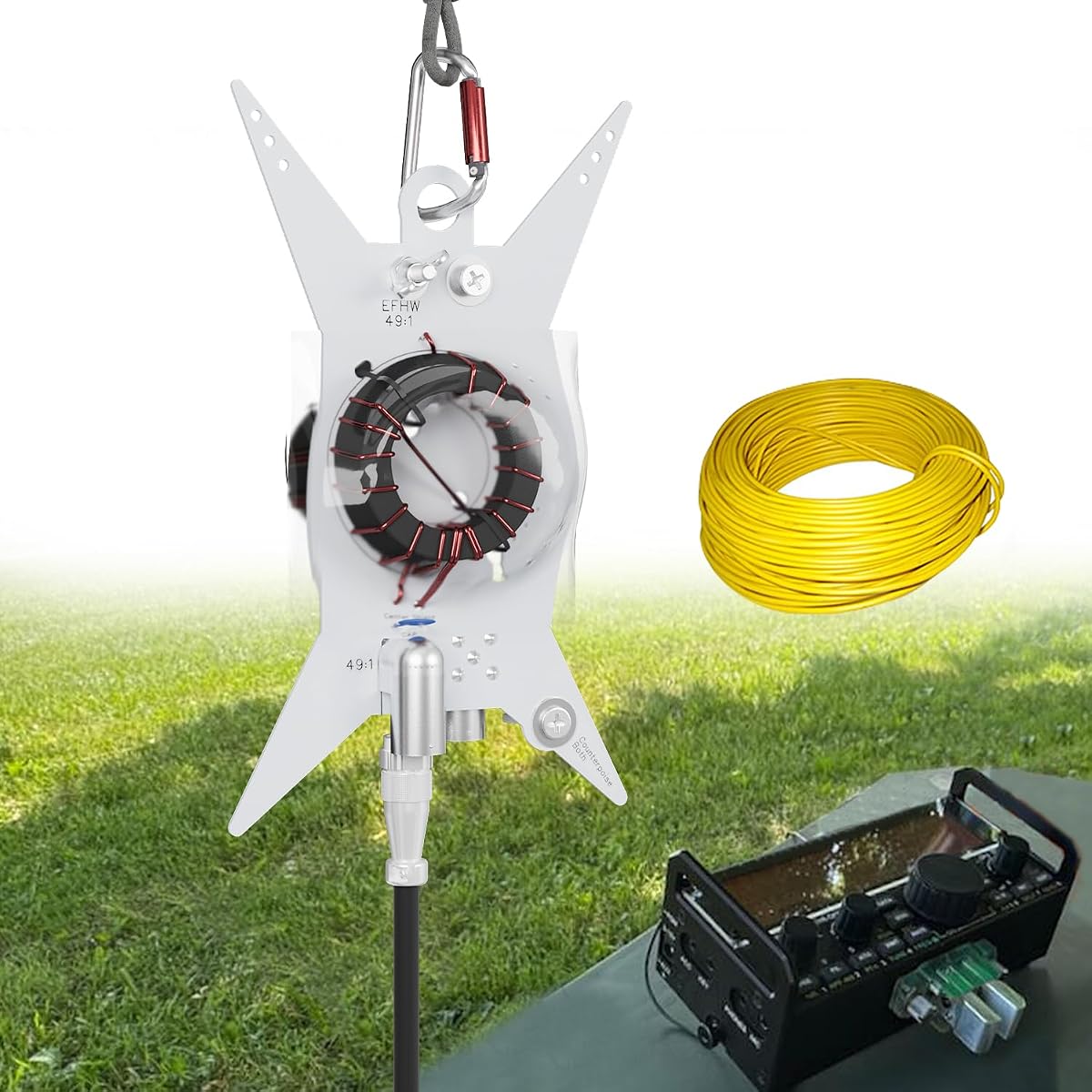
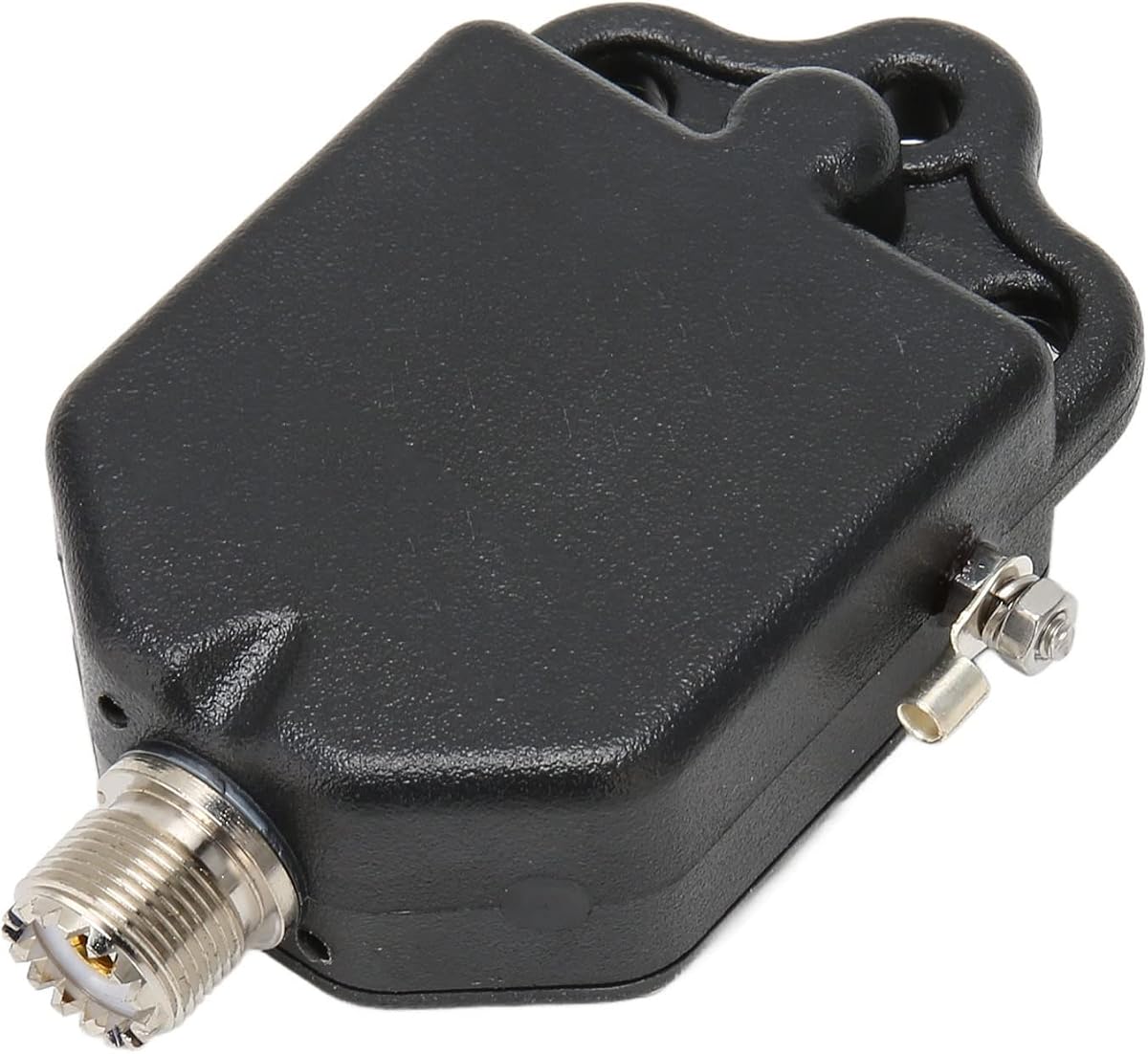
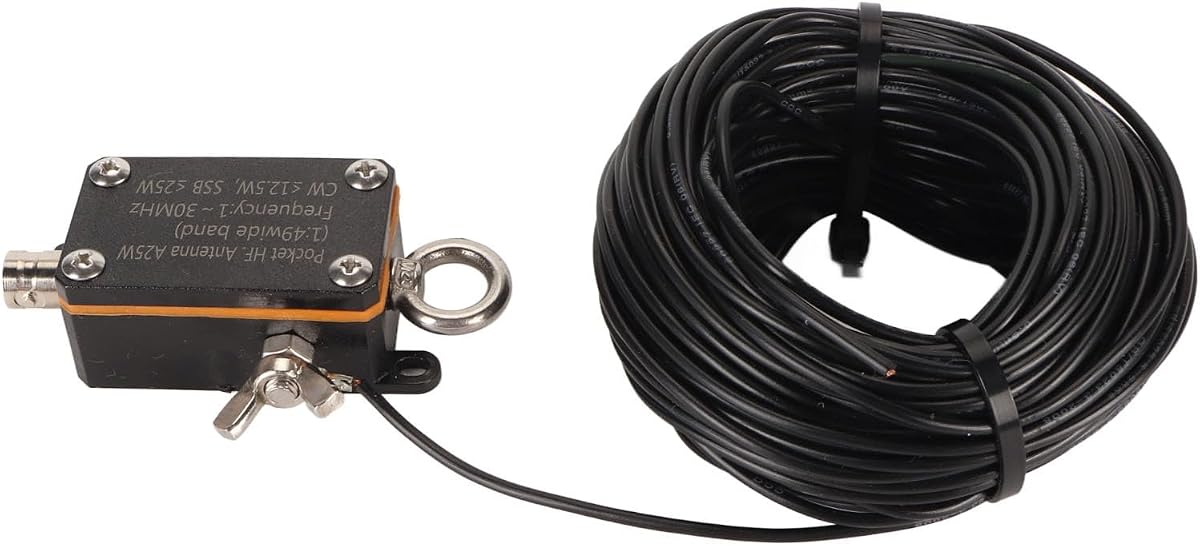


The JYR4010-150W is a four-band end-fed half-wave antenna with a 1:64 balun, a stated 150-watt SSB limit, and a 4.7 rating. Its supported bands are 10, 15, 20, and 40 meters, giving it a useful mix of day and night operating options. The integrated matching transformer is designed to reduce the need for an external tuner in most installations.
We may earn a commission when you buy through this link, at no additional cost to you.
Installation flexibility is one of its strongest attributes. The single-wire antenna can be suspended horizontally, vertically, or diagonally, and the product information specifically calls out POTA, SOTA, camping, backyard, rooftop, and mast deployment. The manufacturer also recommends keeping the antenna about 3 meters from obstacles and 5 meters from metal surfaces, making site selection an important part of achieving the expected result.
Construction details suggest it is better suited to permanent outdoor service than a basic wire-and-insulator kit. The enclosure uses ABS, the wire is heavy gauge, the end insulator is reinforced, and the connection system is described as clamped and sealed. A waterproof M-J connector, UV-resistant housing, large ferrite core, and convection-oriented cooling design further distinguish it from simpler products in the group.
This is the most complete general recommendation for operators who want a defined four-band antenna without relying on a tuner for everyday use. It is especially appropriate for portable activity, a home station with enough clear space, or an operator who appreciates a rugged matched unit. The main limitation is its narrower band coverage compared with the eight-band and broad-range alternatives in this list.
The 10, 15, 20, and 40-meter coverage provides a practical operating spread for voice, CW, FT8, and general HF use. The integrated 1:64 transformer and stated 1:49 and 1:64 options are intended to simplify matching, although an antenna analyzer remains the best way to verify resonance in a real installation.
A reinforced insulator, heavy-gauge wire, sealed housing, waterproof connector, and UV-resistant enclosure address common outdoor failure points. The published guidance also recommends inspecting the installation and guy rope every six months, which is sensible practice for any exposed antenna.
We may earn a commission when you buy through this link, at no additional cost to you.
The Upgrade 49:1 and 9:1 antenna offers two impedance-transformer choices in a single enclosure and carries a 3.9 rating. The 49:1 side is intended for resonant end-fed antennas, while the 9:1 side is meant for random-wire operation across HF bands with a tuner. That flexibility makes it a practical entry point for operators experimenting with different wire arrangements.
We may earn a commission when you buy through this link, at no additional cost to you.
Installation is uncomplicated by design. The unit can be mounted horizontally, vertically, or diagonally, and its compact, lightweight format is suited to POTA, SOTA, camping, and other field activities. The listed package includes wire, reducing the need to source and prepare a separate conductor before a first portable deployment.
Weather resistance and a solid structure are other stated strengths. The product is described as windproof and rainproof, making it a reasonable choice for temporary outdoor installations where carrying a larger framed antenna would be inconvenient. The dual design does not eliminate all setup considerations: using the 9:1 mode for a random wire generally calls for an external tuner and appropriate operating power limits.
Budget-conscious operators who want both resonant and random-wire capability should give this model close attention. It is less compelling for someone seeking detailed frequency coverage or very high published power limits, but its dual impedance options and included wire offer useful versatility. Check the included wire length and current connector details before choosing a configuration.
Having both 49:1 and 9:1 paths allows the operator to choose a higher-impedance resonant arrangement or a more flexible random-wire setup. The correct choice depends on the conductor, its length, the target frequency, and whether a tuner will be available in the field.
The compact enclosure and included wire reduce packing volume and make deployment faster. Horizontal, vertical, and diagonal mounting options also help an operator adapt the antenna to available supports when a conventional mast or tower is not practical.
We may earn a commission when you buy through this link, at no additional cost to you.
This 49:1 and 9:1 end-fed half-wave antenna combines two matching options with a 4.6 rating. The 49:1 output is designed for an end-fed resonant antenna, while the 9:1 output supports random-wire use over multiple HF bands when paired with a tuner. It is a straightforward choice for operators who want one enclosure to cover multiple installation styles.
We may earn a commission when you buy through this link, at no additional cost to you.
The product emphasizes simple setup rather than complex configuration. It can be suspended horizontally, vertically, or diagonally, and the compact, lightweight body is easy to carry. POTA, SOTA, camping, and long-distance DX operating are all named as suitable applications, giving the unit a clear field orientation.
Its published construction claims include windproofing, rain resistance, durable materials, and stable operation in harsh weather. The listing notes that wire is included, which is helpful for buyers comparing complete kits against assemblies that require a separately purchased conductor. However, the available information does not provide a detailed power-handling table, so users should not assume the limits of higher-powered products elsewhere in this roundup.
This antenna is a good middle-ground choice for portable HF operators who value dual matching paths and flexible mounting over a long list of published power specifications. It also offers a stronger user rating than the other listed 49:1 and 9:1 model. The resonant-wire configuration is likely the simpler starting point, while the random-wire mode is better suited to operators already equipped with a tuner.
A purpose-cut resonant wire pairs naturally with the 49:1 side, while a variable-length random wire benefits from the 9:1 side and external tuning. This makes the enclosure adaptable to both planned installations and improvised field situations.
The stated windproof and rainproof construction supports use outside a permanent station. Its low weight also reduces the mechanical load on temporary supports, although operators should still use suitable cord, insulators, and attachment points.
We may earn a commission when you buy through this link, at no additional cost to you.
This compact end-fed antenna is built around a 1:64 balun and is described as covering 1 to 30 MHz. It has a 4.5 rating and a stated overall 100-watt power level, making it a practical option for operators who do not need to drive a high-powered station continuously.
We may earn a commission when you buy through this link, at no additional cost to you.
The antenna is offered in four-band and eight-band wire configurations. Published guidance calls for approximately 2.5 square meters of wire, with examples of 65.6 feet for a four-band 20-meter setup and 132.5 feet for an eight-band 40-meter setup. The wire must be trimmed to the intended operating frequency, so this is a hands-on kit rather than a completely preconfigured antenna.
Power is divided by mode: SSB is stated below 100 watts, while FT8, FM, and FSK are listed below 60 watts. The ABS housing is described as hard, wear resistant, and intended for a long service life. A standard interface supports straightforward connection to compatible radio equipment.
This model is most useful for an operator who enjoys building or tuning an installation and wants broad coverage in a compact package. It costs less to enter than many complete systems, but the need to prepare wire and trim it for the desired band is an important tradeoff. Those who need a ready-made setup may prefer a product that includes its wire.
The stated 1-to-30MHz range gives the antenna room to work across conventional HF and lower-frequency amateur allocations. Actual performance will depend on the selected wire length, installation, nearby structures, and the radio's internal tuner.
The lower limits for digital and frequency-modulated modes make the stated ratings more useful than a single maximum figure. Operators should still follow the radio manufacturer's guidance, allow adequate cooling, and avoid continuous high-power operation beyond the listed specifications.
We may earn a commission when you buy through this link, at no additional cost to you.
The FE8 portable antenna is designed for operators who value a small enclosure over substantial output power. It uses a 1:49 balun, is listed for 1 to 30 MHz, and carries a 4.4 rating. Its stated limits are below 25 watts for SSB, below 5 watts for FE8, and below 12.5 watts for CW.
We may earn a commission when you buy through this link, at no additional cost to you.
Installation is simple. A standard interface connects to the radio, while the lightweight PVC body is easy to carry and requires no complicated setup. That makes it a candidate for low-power portable work, receiving, emergency communications, or operators using a small radio with a conservative output level.
The high-hardness PVC enclosure is described as resistant to damage and wear. The product's short, portable format is useful when pack weight and volume matter more than high power. Nevertheless, the mode-specific limits are restrictive enough that users should not treat it as a full-power station antenna.
This antenna makes the most sense for travel, lightweight kits, and low-power setups. It is less appropriate for an operator who wants to run SSB near its higher limits or use digital modes with a typical high-powered transceiver. Within that lower-power niche, the compact format and straightforward connection are clear advantages.
The compact housing is easy to fit into a small pack, vehicle, or field bag. Because the antenna is intended to be quick to deploy, operators can spend more time arranging a wire support and less time assembling a complex matching network.
The mode-specific power limits keep the design focused on portable and emergency-style communication. Users should match their actual radio output to the stated allowance and leave the radio's own thermal protection enabled.
We may earn a commission when you buy through this link, at no additional cost to you.
The LW-20 is the broadest-coverage selection here, with a title that states an 80-meter through 6-meter range and a 5.0 user rating. It is presented as a multiband long-wire antenna for HF, giving operators a very different proposition from the compact resonator units and dual-transformer designs elsewhere in the list.
We may earn a commission when you buy through this link, at no additional cost to you.
Long-wire antennas appeal to portable and experimental operators because a single conductor can support many frequencies with the right matching arrangement. The obvious advantage is potential coverage: if the system can operate from the low bands through 6 meters, it may serve several activities without replacing the entire antenna.
The available product information is limited, however. It identifies the unit as an HF long-wire antenna but does not provide a detailed balun ratio, connector type, exact wire length, power table, or installation clearance in the supplied listing. Those omissions make it difficult to compare the product line by line with the more fully specified alternatives.
The LW-20 is the premium pick for an operator attracted to a genuinely wide-range long-wire system and willing to confirm the exact components and operating conditions before deployment. It may also appeal to builders who already understand long-wire matching. For a buyer's first end-fed antenna with clearly published power and configuration details, one of the more thoroughly documented options may be easier to evaluate.
The stated inclusion of 6 meters distinguishes this model from products limited to amateur HF bands. The listing is concise, so operators should verify which matching accessories, wire sections, and connectors are included before planning a complete installation.
A long-wire antenna rewards careful wire placement, grounding assessment, and matching work. Operators who enjoy tuning and measuring an installation may find that flexibility appealing, while those wanting immediate plug-and-play operation may prefer a more clearly specified end-fed half-wave system.
We may earn a commission when you buy through this link, at no additional cost to you.
This WOOKLEA end-fed antenna has a 4.8 rating, a stated 1-to-30 MHz range, and matching options listed as 1:64 and 1:49. It supports a four-band or eight-band wire arrangement and has a substantial stated SSB power allowance of up to 150 watts, making it a strong all-around contender.
We may earn a commission when you buy through this link, at no additional cost to you.
The listed bands are 80, 60, 40, 30, 20, 16, 12, 10, and 6 meters, although the actual supported bands depend on whether the buyer chooses a four-band or eight-band wire configuration. Published power figures distinguish SSB below 150 watts, CW below 120 watts, and FM, AM, FT4, and FT8 below 80 watts.
The antenna uses premium ABS material described as hard and resistant to damage and wear. Its standard interface and compact enclosure are intended for quick setup, whether for a long-term outdoor installation or temporary emergency communication. As with several other kits in this category, the buyer must prepare approximately 2.5 square meters of wire and trim it to the desired frequency.
This product is well suited to operators who want strong published power ratings and flexible configuration without paying for the largest fully specified eight-band kit. Its 4.8 user rating adds confidence, although ratings are not a substitute for checking compatibility, following the trimming instructions, and confirming the current package contents.
The listed 150-watt SSB and 120-watt CW allowances suit a wide range of modern HF transceivers. The lower 80-watt ceiling for FM, AM, FT4, and FT8 gives operators a useful distinction for digital and AM operation.
Four-band and eight-band options let the buyer match wire length to the intended installation. Because the conductor is not included, operators should budget time for selecting a suitable wire, making a secure termination, and trimming for the desired operating point.
We may earn a commission when you buy through this link, at no additional cost to you.
The Upgraded 150W 1:64 antenna is a high-power end-fed option with a 4.6 rating. Its published 1-to-30 MHz range, 1:64 balun, and 150-watt SSB limit make it relevant to operators running modern HF transceivers who want more than a low-power portable unit.
We may earn a commission when you buy through this link, at no additional cost to you.
The listing identifies 80, 60, 40, 30, 20, 16, 12, 10, and 6 meters, with four-band and eight-band configurations available. The stated power handling is below 150 watts for SSB, below 120 watts for CW, and below 80 watts for FM, AM, FT4, and FT8. These mode-specific figures provide a more useful basis for choosing the antenna than one broad maximum alone.
The ABS shell is described as durable and suitable for both indoor and outdoor environments, including operation in poor weather. Installation is designed to be approachable, and the small, portable unit is positioned for permanent outdoor use, temporary setups, and emergency response communications.
This is a solid choice for a high-power user who can prepare the wire and tune the final installation. The product explicitly recommends an antenna analyzer for finding the optimal frequency point. Buyers should also confirm that approximately 2.5 square meters of wire and the expected four-band or eight-band dimensions are acceptable before installation.
The ABS enclosure and sealed-looking design focus on durability for exposed installations. While no outdoor antenna is maintenance-free, a robust housing helps protect the internal transformer and connection from weather exposure.
Trimming the antenna with an analyzer helps establish a usable resonance and lowers the need for an external tuner. The process also lets the operator account for nearby buildings, metal objects, and support structures that can change the antenna's electrical behavior.
We may earn a commission when you buy through this link, at no additional cost to you.
This 1:64 multiband end-fed antenna has a 4.7 rating and a stated 1-to-30 MHz operating range. It is positioned as a tuner-free option for HF work, with a 1:64 transformer intended to support broadband multiband performance. Power is rated up to 100 watts for SSB and 60 watts for FT8, FM, AM, and FSK.
We may earn a commission when you buy through this link, at no additional cost to you.
Wire preparation is part of the system. The listed four-band option uses approximately 20 meters or 65.6 feet of wire, while the eight-band option uses approximately 40.4 meters or 132.5 feet. The conductor is trimmed to the desired frequency, allowing the installation to be adapted rather than forcing one fixed length on every operator.
A standard interface and compact body keep the setup straightforward. The product is small enough for field operation or permanent outdoor use, and the high-hardness ABS construction is described as resistant to wear and tear. These features make it a balanced choice for operators who want broad coverage without moving to the highest published power ratings.
This antenna is a good general selection for home or portable HF operation at moderate power. It is especially appealing when avoiding an external tuner is a priority. The key trade-off is the lower 100-watt SSB ceiling compared with several 150-watt models, along with the need to source and trim the antenna wire.
The 1:64 transformer is designed to ease multiband operation across the stated range. Real installations vary, so an antenna analyzer remains valuable for confirming resonance and making the final wire adjustment.
Offering both four-band and eight-band wire lengths gives operators a path between a shorter portable setup and broader low-band coverage. The correct length depends on the desired bands, the transformer connection, and the local installation environment.
We may earn a commission when you buy through this link, at no additional cost to you.
The JYR8010-150W is one of the most clearly specified antennas in the group. It covers eight natural-resonance bands from 80 through 10 meters, uses a 64:1 balun winding, includes 130 feet of antenna wire and a 20-meter rope, and has a stated SWR of 2 or lower across the listed bands.
We may earn a commission when you buy through this link, at no additional cost to you.
Its conductor is cold-drawn, multistrand copper wire with a 2.5 mm square cross section. The SO-239 connector is a familiar standard for many amateur radio installations. With no tuner described as necessary, this model appeals to operators who want broad multiband coverage and a substantial power allowance without adding a separate matching unit.
Stated power handling reaches 150 watts for SSB and CW. Maximum power for FT8, FM, AM, and FSK is listed as 100 watts. The product guidance also says performance is best when the antenna is kept 3 meters away from buildings and the ground, making installation clearance an essential part of obtaining the advertised behavior.
This is the most detailed option for an operator seeking an eight-band, no-tuning antenna and willing to accommodate a long wire. It is a strong choice for home stations with space, provided the operator can safely suspend the conductor and maintain suitable clearance. Portable users should account for the much greater wire length compared with compact low-power units.
The listed coverage includes 80, 40, 30, 20, 17, 15, 12, and 10 meters. That range gives an operator broad access to common HF conditions without specifying multiple separate antennas for a fixed installation.
The supplied 130-foot conductor and 20-meter rope remove much of the initial material gathering. The included wire should still be inspected for damage, properly supported, and installed with safe clearances from structures and the ground.
We may earn a commission when you buy through this link, at no additional cost to you.
A useful end-fed antenna is not defined by frequency range alone. Balun ratio, wire configuration, stated power limits, connector, included components, installation space, and intended mobility should all influence the decision.
The balun transforms the high impedance of an end-fed wire into a form that the radio and transmission line can handle more efficiently. A 49:1 or 64:1 ratio is commonly paired with a resonant half-wave wire, while a 9:1 ratio offers more flexibility for a random-wire installation and commonly works best with a tuner. Match the transformer to the antenna system rather than choosing solely by the highest ratio.
A stated 1-to-30 MHz range can sound universal, but the usable bands still depend on wire length, transformer connection, and installation. Four-band kits may cover a focused set of popular HF bands, while eight-band systems add lower-frequency options at the cost of a much longer conductor. Operators who want regular access to 80 and 40 meters need to verify both the listed band plan and the required wire length.
Power ratings are often separated by mode because SSB, CW, FM, AM, FT8, FT4, and FSK create different duty cycles and heat loads. The products here range from a 5-watt digital-mode limit on the compact FE8 model to 150-watt SSB and CW allowances on larger systems. Compare the rating for the mode you actually use, and leave thermal headroom rather than operating continuously at the absolute maximum.
A common eight-band wire is about 130 to 132.5 feet long, while shorter four-band arrangements are still substantial. Support structures, nearby buildings, metal surfaces, and the ground all influence performance. Several listings recommend at least 3 meters of clearance from obstacles or the ground, and the JYR4010 also recommends about 5 meters from metal surfaces. Space planning is therefore part of the purchase decision, not merely an installation detail.
Some antennas include wire, while others require the buyer to prepare approximately 2.5 square meters of conductor. Kits with included wire can be deployed faster, although the user may still need to trim it for the desired frequency. A rope, hardware, or standard connector can also influence setup time, so compare the package contents rather than assuming every enclosure includes a complete antenna system.
Field operators benefit from compact enclosures, light weight, and the ability to mount horizontally, vertically, or diagonally. A true portable package should also include a manageable wire length and a quick connection method. Long-wire systems can still be transported, but they demand more space at the operating site and take longer to deploy than a compact low-power antenna.
Permanent and seasonal installations require a housing that can tolerate ultraviolet exposure, wind, and rain. ABS is used by several models in the group, while the JYR4010 adds a sealed housing, waterproof M-J connector, UV-resistant shell, reinforced insulator, and cooling-oriented enclosure. Weather-resistant construction reduces maintenance needs, but periodic inspections remain important for wire, terminations, supports, and connectors.
No-tuning claims usually apply to a properly prepared resonant wire in a suitable environment. Random-wire operation and nearby structures can still produce high standing-wave ratios, so a capable tuner or antenna analyzer may be useful. Understanding whether a model is intended for resonant or random-wire use prevents frustrating setup and helps the buyer select the correct transformer and wire plan.
Begin by selecting the correct transformer output and wire configuration. For a 49:1 or 64:1 resonant setup, use the manufacturer’s recommended wire length and trim it for the intended band. For a 9:1 random-wire setup, connect a suitable tuner and begin with a conservative radio output level. Install the wire with the specified clearance from buildings, the ground, metal objects, and other antennas.
Connect the antenna using the proper interface, secure the conductor mechanically, and protect the feed point from moisture. Use an antenna analyzer to check resonance and standing-wave ratio after installation, making small adjustments to wire length as needed. Test each planned band rather than assuming every frequency will be resonant, and avoid transmitting until the feed point and support points are secure.
During use, stay within the product’s mode-specific power limits and monitor the radio for unusual heat or output behavior. Periodically inspect the wire for abrasion, corrosion, damaged insulation, loose clamps, and movement at the support. Check the enclosure, connector, guy rope, and nearby vegetation after severe weather, and replace or repair damaged components before the next transmission.
An end-fed antenna uses a single wire with one end connected to the radio through a matching transformer. The wire is often arranged as a resonant half-wave or a longer random-wire element. A high-impedance transformer makes the antenna easier for the radio to drive, although actual performance still depends on wire length, clearance, and the operating frequency.
Both transform the high impedance of an end-fed wire into a more usable impedance for the radio. A 49:1 unit is frequently associated with resonant end-fed wire arrangements, while a 64:1 transformer may suit certain long-wire or multi-band configurations. The correct choice depends on the antenna design, wire length, and transformer recommendations rather than the ratio alone.
Some models are designed to operate across listed bands without routine tuning, particularly when a properly trimmed resonant wire is installed with adequate clearance. A tuner is more commonly needed for random-wire setups, changing bands, or installations affected by nearby structures. An antenna analyzer can confirm whether the installed system is actually resonant.
Yes, if the design is portable and your operating power remains within its stated limits. Compact dual-mode antennas and lower-power units are especially convenient for field work. Longer eight-band systems can also be transported, but they require more space, support preparation, and setup time at the operating site.
Clearance varies with frequency, wire design, and the environment, but several products in this roundup recommend about 3 meters from obstacles or the ground. The JYR4010 additionally recommends about 5 meters from metal surfaces. Treat those figures as useful starting guidance and test the final installation because nearby structures can change impedance and standing-wave ratio.
Power handling varies considerably across the ten products. The compact FE8 model lists lower limits, while several 150-watt designs support much more output for specific modes. Always check the rating for SSB, CW, digital modes, FM, and AM separately, and do not exceed the lower applicable limit.
A dedicated ground system is not part of the typical end-fed half-wave arrangement, and the end away from the feed point is normally left insulated. Ground-related behavior can still vary with soil, nearby structures, and the antenna design, so operators should follow the specific product guidance and avoid adding an arbitrary ground connection.
First install the intended wire and transformer configuration in a representative location, then use an antenna analyzer to locate the desired resonance. Shorten or extend the conductor in small increments and repeat the measurement. Changes in the surrounding environment can shift resonance, so final tuning should be done after the supports and neighboring structures are in place.
The JYR4010-150W stands out as the most balanced overall choice, combining four useful bands, 150-watt SSB capability, a 1:64 transformer, and rugged outdoor construction. The LW-20 is the premium choice for anyone focused on an exceptionally broad long-wire concept, while the Upgrade 49:1 and 9:1 offers the most budget-conscious entry with two matching paths and included wire.
Your priority should be the bands you need, the power you plan to use, and the amount of installation space available. Choose a resonant 49:1 or 64:1 system for straightforward multiband work, consider 9:1 for tuner-assisted random-wire operation, and do not underestimate the space required by an eight-band wire. A tuner and antenna analyzer remain useful tools even when a product is described as no-tuning.
Before buying, confirm the current bundle contents, connector, wire length, power limits, and compatibility with your radio. Marketplace ratings and configurations can change, and current prices vary frequently. Comparing those details at the time of purchase will help you select an antenna that suits both your station and your operating plans.