
Pacific Handy Cutter S4R
4.7Editor score
Bladeless reinforced tape splitter
Three adjustable blade depths
Stores five replacement blades
A duct tape cutter should do more than slice through one stubborn layer of adhesive. It should open packages quickly, protect the contents, and remain comfortable during repetitive warehouse, workshop, moving, or installation work. The best tools combine a controlled cutting path with useful features such as retractable blades, enclosed edges, tape splitters, and ergonomic grips.
We compared ten products based on their cutting mechanisms, supported materials, safety features, blade handling, portability, and practical applications. The list includes dedicated safety cutters, heavy-duty shears, HVAC duct tools, precision strip cutters, and a cordless rotary option, so readers can compare more than a single style of duct tape cutter.
Each review highlights the strongest reason to choose a model, along with its limitations and ideal buyer. Ratings and product details reflect the supplied listings, while availability and prices can change. The top selections offer the strongest combinations of performance, convenience, and value for different needs.
4.7Editor score

4.8Editor score

4.3Editor score
As an Amazon Associate we earn from qualifying purchases.
The comparison below covers ten distinct approaches to cutting tape and related packaging materials, ranging from enclosed safety cutters to powered rotary scissors. Compare blade exposure, supported materials, specialized functions, and handling features to identify the design that best fits your workflow.
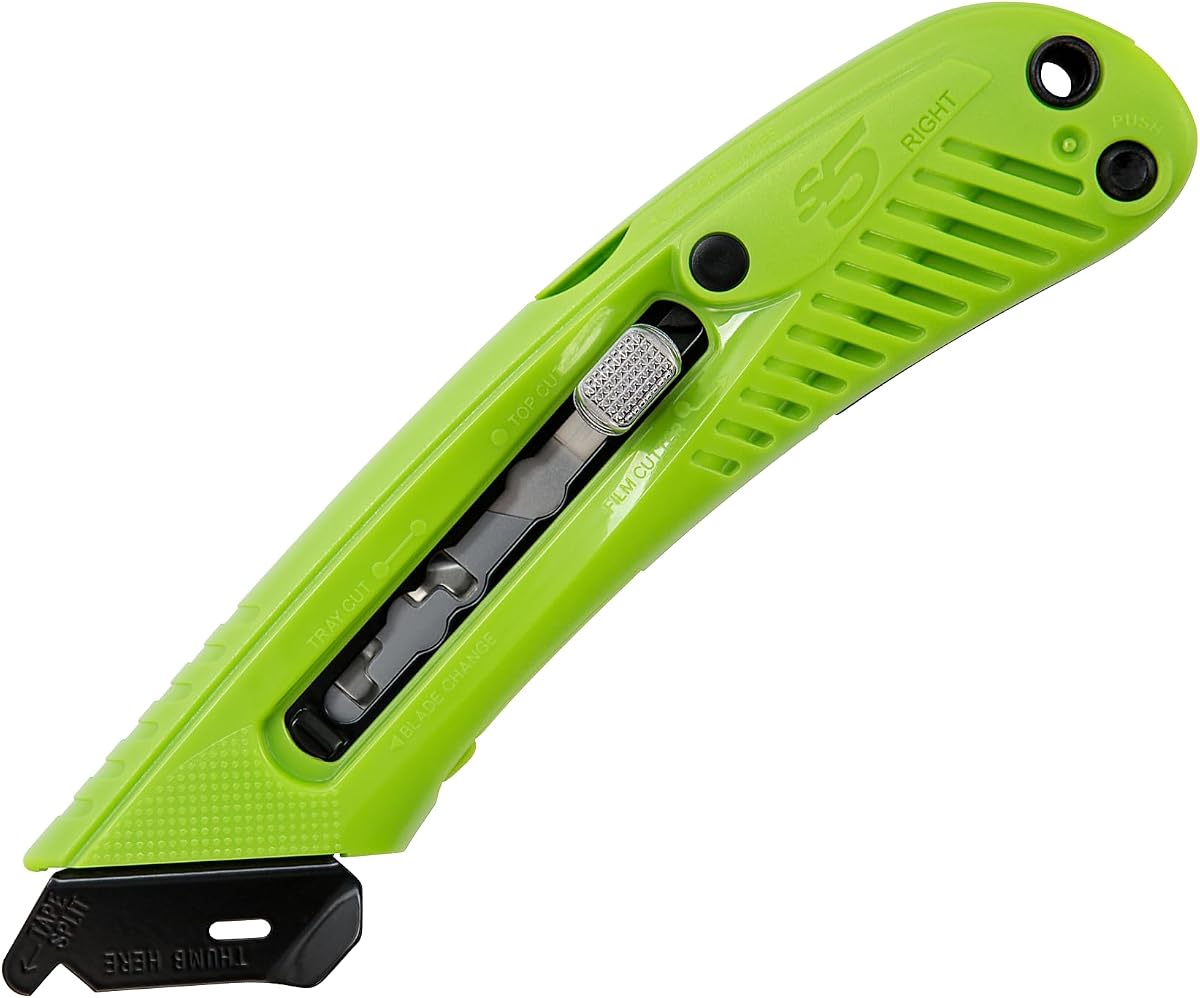




The Pacific Handy Cutter S5R is a multi-function box cutter with a customer rating of 4.7. Its combination of a retractable utility blade, a bladeless tape splitter, and a recessed film cutter makes it one of the most broadly useful products in this guide. It is designed for right-handed users who want more control than a simple handheld safety cutter offers.
We may earn a commission when you buy through this link, at no additional cost to you.
A sturdy steel guard guides the main blade and is designed not to flex or break during a cut. Three adjustable blade-depth positions support top cuts, shallow window cuts, and tray cuts, allowing the user to control how deeply the blade enters a package. The separate tape splitter handles reinforced fiber tape without exposing a blade, while the fold-out recessed film blade addresses shrink wrap, straps, and twine.
The primary compromise is its right-handed design, which may not suit every worker or task orientation. Its expanded feature set also makes it larger and more complex than a minimalist safety cutter. Even so, the added functions are not merely decorative: each addresses a different packaging material, and the guarded design reduces the need to switch among several loose-bladed tools.
This is a strong choice for warehouse staff, general warehouse personnel, office-supply teams, and DIY users who regularly encounter a mixture of corrugated boxes, reinforced tape, shrink wrap, and straps. It is especially attractive for users who value multiple functions in one body and want a safer alternative to an exposed box-cutter blade. For those needs, the S5R is a flexible and dependable selection.
The retractable blade handles precise box work, the bladeless splitter tackles reinforced tape, and the recessed film cutter is intended for flexible packaging. Combining these functions reduces tool changes and keeps more of the cutting edge under control.
Three depth settings let the user select a shallower or deeper cut. This is particularly useful when opening different carton styles without pushing the blade too far into the contents.
We may earn a commission when you buy through this link, at no additional cost to you.
The Multi-Cut Industrial Cutter has a 4.6 rating and uses an offset blade-to-anvil action to generate substantial cutting force. Rather than functioning only as a tape opener, it is intended for plastic, vinyl, rubber, leather, wood, rope, and several other materials. That makes it a good fit for contractors, craftspeople, repairers, and users who need more capability than a basic safety cutter.
We may earn a commission when you buy through this link, at no additional cost to you.
The replaceable industrial steel blades offer useful longevity, while three spare blades stored in the handle help prevent interruptions. A high-impact plastic anvil supports the cutting bed, and the black-oxide coating is designed to resist rust and corrosion. Inch markings add a degree of measurement guidance for users who need more than a rough cut.
Its limitations are important. The supplied information specifically excludes thick metal such as coins, nails, and bolts, along with hard PVC and very hard materials. The blade-to-anvil design also exposes more of the cutting system than a fully enclosed film cutter. Users should therefore treat it as a powerful general utility tool rather than a cutter for every possible object.
Choose the Multi-Cut when tape is only one part of the workload and you also cut hoses, PEX pipe, garden branches, soft trim, craft stock, or upholstery materials. It is less appropriate for a user who only wants a small, blade-free package opener. Within that broader use case, the replaceable-blade system and strong cutting action provide convincing utility.
The offset blade-to-anvil configuration is the defining feature. It directs the blade into a supported cutting bed, helping produce a clean cut through dense plastic, rubber, vinyl, and other listed materials.
Three extras stored in the handle make blade replacement more convenient. Users working regularly with this cutter can replace a dull edge without searching through a separate toolbox.
We may earn a commission when you buy through this link, at no additional cost to you.
The Malco FDC1 Flex Duct Cutter has a 4.3 rating and is designed specifically around the challenges of flexible ductwork. Unlike general-purpose box cutters, it combines a fine-honed, double-edged blade with a built-in wire cutter, making it a specialized option for HVAC technicians, installers, and maintenance professionals.
We may earn a commission when you buy through this link, at no additional cost to you.
Its cutting process pierces the duct's outer skin and insulation, while the ability to cut from either direction supports work in confined areas. The double-edged blade provides a practical advantage when access is limited, and the integrated wire cutter avoids the need to switch to a second tool when reinforcement wire is encountered.
As a focused specialist tool, it is less versatile than the Fiskars shears, the Multi-Cut, or the electric SnapFresh unit. The product information does not indicate that it is intended for general carton opening or a wide range of craft materials. Its appeal comes from doing a demanding duct-cutting job in a more purpose-built format.
The Malco is best for HVAC professionals who repeatedly cut flexible duct and need a tool that can also sever wire. A homeowner undertaking one small duct repair may get more value from a broader utility cutter, but a technician who values direction-independent cutting and a dedicated wire-cutting edge will find this design especially relevant.
The blade is designed to pierce the outer skin and insulation of flexible duct. This focused geometry makes the tool better aligned with HVAC work than a general carton cutter.
A double-edged blade that cuts from either direction can be helpful in tight installation spaces. The built-in wire cutter further consolidates common duct-preparation steps.
We may earn a commission when you buy through this link, at no additional cost to you.
The Fiskars Pro 8-inch PowerArc Shop Shears have a 4.8 rating, the highest customer rating among the ten products featured. They are explicitly listed as suitable for duct tape, making them one of the clearest matches for the keyword while also serving as capable shears for insulation, cardboard, rope, and tar paper.
We may earn a commission when you buy through this link, at no additional cost to you.
PowerArc technology is designed to provide 30 percent more cutting force, which helps the blades work through tough materials. Serrated stainless steel edges grip rather than simply push against the material, supporting cleaner and more accurate cuts. The curved blade and handle geometry also work together to reduce hand strain during repetitive projects.
The principal drawback is that this is a scissor-style tool with exposed blades rather than a guarded, retractable box cutter. It will not offer the same protection against accidental contact as a dedicated safety cutter, and it may be less convenient for very precise box-top work. Another consideration is that the steel construction should be kept dry and protected from impact or corrosion.
Despite those trade-offs, the Fiskars is the most versatile choice for someone who cuts duct tape along with insulation, cardboard, rope, and related workshop materials. It suits contractors, crafters, homeowners, and maintenance workers. Its combination of strong customer feedback, serrated grip, cutting force, and reduced fatigue makes it our editor's choice for the broadest range of tasks.
The serrated blades are designed to hold into duct tape, cardboard, rope, and insulation. This reduces slipping and supports the consistent, accurate cuts that a smooth edge can struggle to produce on flexible materials.
Curved stainless steel blades and the PowerArc profile are intended to reduce hand fatigue. The result is a more comfortable tool for repeated package opening or workshop cutting.
We may earn a commission when you buy through this link, at no additional cost to you.
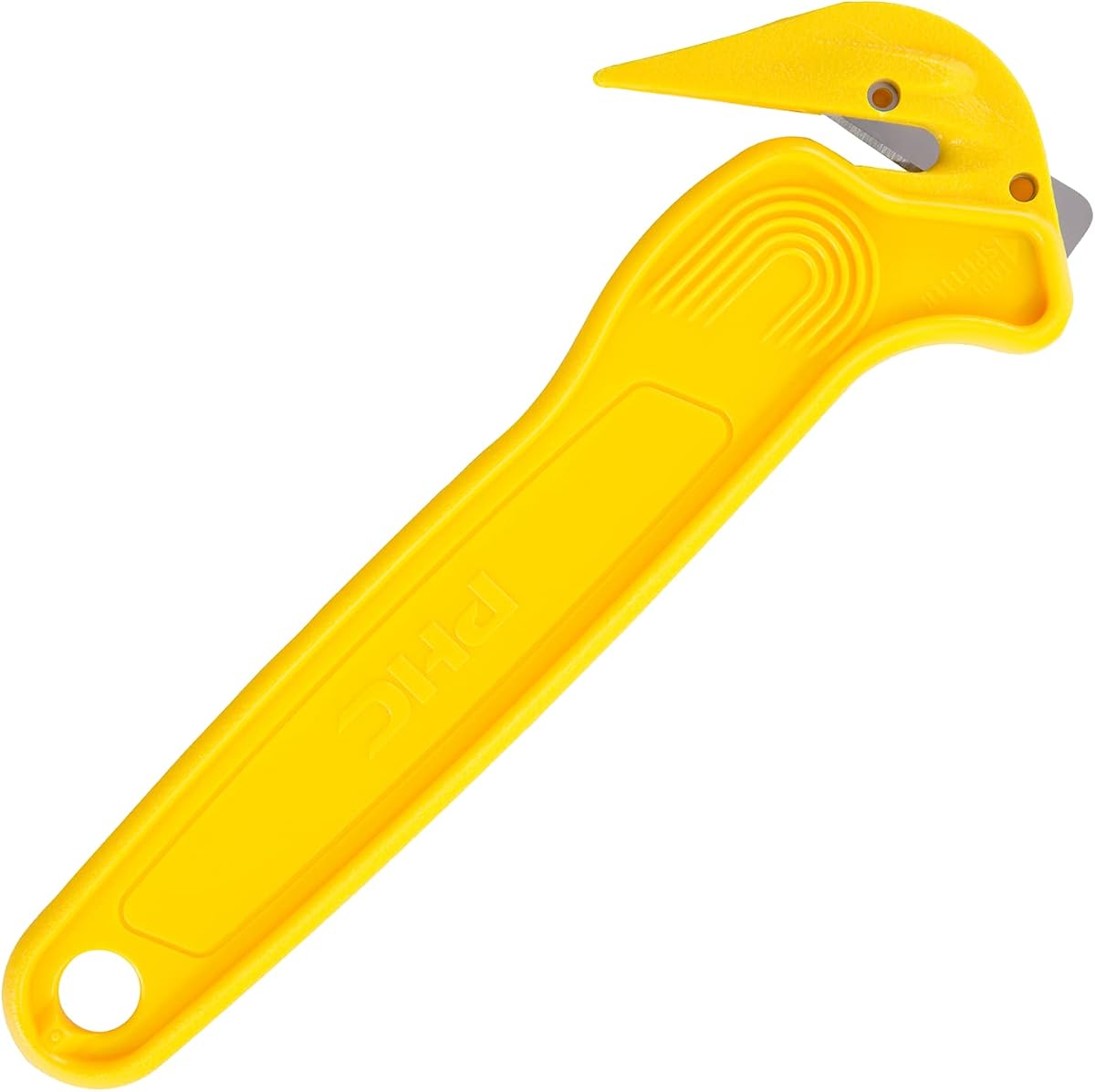
Thornton's Disposable Film Cutter is a compact three-pack rated at 4.5 by customers. It is intended for shrink wrap, stretch wrap, tape, and plastic straps, making it a practical choice for office-supply teams, small warehouses, retail work, and users who cut lighter packaging materials frequently.
We may earn a commission when you buy through this link, at no additional cost to you.
Each unit uses a sharp steel blade while keeping the cutting edge less exposed to the user's fingers. The lightweight body is shaped for comfortable handling, and the bright yellow color makes the tool easy to find in a busy environment. Receiving three cutters provides a simple way to place one in several work areas or keep a backup nearby.
The disposable designation and compact construction make this less attractive for heavy-duty or specialized work. Compared with retractable safety knives, it offers fewer adjustment options, and compared with the Fiskars shears, it is less capable against thick or fibrous materials. Users should also understand that the blade is still capable of causing injury if the tool is handled carelessly.
This set is best for lightweight packaging work where portability, visibility, and simple enclosed cutting matter more than adjustability or heavy-duty construction. It can be a useful addition to an office, shipping station, or retail counter, though a higher-capacity cutter will be more appropriate for reinforced tape or industrial packaging.
The high-visibility yellow finish reduces the time spent searching for a small cutter in a packed workspace. Three units can be distributed among separate stations or retained as replacements.
The recessed steel blade is intended to cut efficiently without fully exposing the edge. This design makes the tool practical for common stretch wrap, shrink wrap, tape, and strap applications.
We may earn a commission when you buy through this link, at no additional cost to you.
The Pacific Handy Cutter S4R has a 4.7 rating and stands out as a practical safety cutter for warehouses, stores, and other high-frequency environments. It focuses on the essentials of opening packages: a guarded retractable blade, a bladeless tape splitter, easy blade changes, and an ergonomic handle.
We may earn a commission when you buy through this link, at no additional cost to you.
The sturdy metal guard guides the blade and is designed to resist flexing or breaking, which supports both worker safety and protection of package contents. Three blade-depth settings allow controlled top, window, and tray cuts. Its bladeless splitter handles reinforced fiber tape without exposing a sharp edge, and the tool-free replacement system simplifies maintenance.
Compared with the larger S5R, the S4R lacks the recessed fold-out film cutter, so users who regularly cut shrink wrap or plastic straps may prefer the broader feature set. Users may also need to purchase replacement blades when the stored five are depleted, although the onboard compartment still makes the tool unusually self-contained for its category.
The S4R is our best budget pick because it delivers the core qualities sought in a duct tape cutter: a guarded cutting path, a bladeless tape-splitting option, multiple depth settings, and convenient blade storage. It is especially valuable for high-volume package opening where comfort, safety, and rapid blade changes matter more than specialized extras.
The metal tape splitter is designed to slice through reinforced fiber tape while keeping the utility blade away from that operation. This is a meaningful safety advantage in busy packing environments.
A tool-free replacement mechanism simplifies maintenance, while the integrated compartment holds up to five extra blades. Workers can replace a dull edge quickly and keep the cutter ready for the next task.
We may earn a commission when you buy through this link, at no additional cost to you.
The Klein Tools 89554 HVAC Tool has a 4.3 rating and is built for demanding installation and service work. It combines a double-edge blade with a wire cutter, allowing it to handle fiberboard, fiberglass-lined ductwork, and flexible ducts without requiring frequent tool changes.
We may earn a commission when you buy through this link, at no additional cost to you.
Its compound leverage mechanism is a major advantage when the user has to cut tough wire or force the blade through layered duct materials. Hardened steel handles and nickel-chrome-plated hardware are intended to withstand wear and corrosion. Contoured non-slip grips improve control and help reduce strain during extended work.
The trade-off is specialization. This is not a conventional package opener or a compact everyday safety cutter, and its larger professional design may be unnecessary for someone who only opens taped cartons. Its 4.3 rating is also lower than several lighter alternatives, although that figure should be considered alongside the specialized construction and intended use.
The Klein is our best premium pick for HVAC professionals, facilities teams, and serious renovation users who need to cut flexible duct, fiberboard, fiberglass, and wire in one tool. The integrated functions and leverage justify the more specialized approach for buyers whose regular work justifies a professional-grade tool.
Combining duct, fiberboard, fiberglass, and wire-cutting capabilities reduces interruptions. Workers can move through duct-preparation tasks without repeatedly changing to separate hand tools.
The compound mechanism amplifies hand force, while the contoured grips support control. These features are particularly useful during repetitive HVAC installation and service work.
We may earn a commission when you buy through this link, at no additional cost to you.
The Pacific Handy Cutter Disposable Film Cutter has a 4.4 rating and a distinct food-service focus. Its National Sanitation Foundation certification makes it especially relevant to food manufacturers, commercial kitchens, packaging operations, and businesses that handle cryovac bags, cling wrap, shrink wrap, and other sanitary packaging.
We may earn a commission when you buy through this link, at no additional cost to you.
The recessed blade is enclosed within the tool's construction, reducing direct contact with the cutting edge. A stainless steel blade is easy to sanitize and keep clean, an important advantage in food-related environments. The rounded bladeless tape splitter is intended to open cellophane and fiber-reinforced tape while protecting both the user and the package contents.
It is less versatile than a retractable utility knife with adjustable depth settings, and it is not designed to cut thick fibrous insulation or heavy materials. The word disposable describes the supplied product format rather than a confirmed lifespan, so buyers should still replace it if the edge becomes damaged or difficult to clean.
Choose this cutter when sanitation, enclosed cutting, and food-safe packaging matter more than blade-depth adjustment. It is less appropriate for a workshop that primarily cuts wood, leather, or industrial materials. Within food packaging and service settings, however, its certified design and protected tape splitter create a clear practical advantage.
The NSF certification supports use around food service and manufacturing. A stainless steel blade that can be sanitized is particularly valuable where cleanliness is part of the cutting process.
The recessed blade protects the user's fingers, while the angled cutting design and rounded splitter help protect the contents. That two-sided focus distinguishes it from a basic exposed-blade opener.
We may earn a commission when you buy through this link, at no additional cost to you.
The Excel Blades Adjustable Dual Blade Strip Cutter has a 4.4 rating and stands apart from box-focused products. It uses two parallel number 59 blades to create clean, even strips with a shearing action, making it a strong choice for designers, artists, vehicle wrappers, and detail-oriented hobbyists.
We may earn a commission when you buy through this link, at no additional cost to you.
The cutting width can be adjusted from 0.12 to 0.63 inches, allowing the user to produce narrow strips or wider bands. The tool is listed for paper, leather, vinyl, foam core, plastic, cork, fondant, gum paste, wood, fabric, polymer clay, and vehicle vinyl wrap. This unusually broad creative-material list makes it more specialized than an ordinary utility knife.
It is not the right instrument for stubborn duct tape or reinforced packaging. The exposed dual blades also demand more care than an enclosed safety cutter, and the adjustable screw requires attention to keep the parallel blades properly aligned. Users wanting a simple package opener should choose a guard-based product instead.
Choose the Excel Blades for precision strip work rather than tape opening. It offers particular value for craft, art, model-making, and vinyl-wrap projects where consistent width and clean edges matter. Although it appears in this guide because many cutters can handle light tape, its real advantage lies in controlled creative cutting.
Two parallel blades create a shearing action instead of relying on a single edge to drag through the material. That arrangement is designed to produce consistent, clean strips.
The adjustment range supports different project requirements, from narrow details to wider strips. This flexibility makes the tool useful across paper art, crafts, upholstery, and vehicle wrap.
We may earn a commission when you buy through this link, at no additional cost to you.
The SnapFresh Cordless Electric Scissors have a 4.3 rating and offer a powered alternative to manual cutters. The 4V rotary tool is designed to cut cardboard, leather, plastic, canvas, carpet, wallpaper, and related materials up to one-quarter inch thick, making it more substantial than a small office film cutter.
We may earn a commission when you buy through this link, at no additional cost to you.
Two tungsten steel rotary blades are included according to the product listing, with one extra blade and a charger supplied in the set. A safety-start system requires the user to hold a switch before pressing the trigger, reducing the chance of accidental activation. The listed weight of 0.87 pounds and ergonomic design aim to limit fatigue during extended use.
Battery charging and tool setup add friction to occasional package opening. A powered cutter is also more cumbersome than a pocket-sized safety blade, and users must keep the rechargeable tool available for the jobs that justify it. The stated material capacity should also be treated as a limit rather than an invitation to force thicker or unsuitable stock.
The SnapFresh is best for users who cut substantial amounts of cardboard, carpet, leather, or plastic and want powered assistance. It can be useful for home décor, tailoring, packaging, and DIY projects, but it is less practical for someone who occasionally opens a single taped box. For frequent high-volume work, the automation may deliver meaningful convenience.
The rotary motor handles the cutting action with less continuous hand force. That can make larger sheets and repeated cuts more comfortable than working manually with shears or a utility knife.
The safety switch must be held before the trigger can be used, helping avoid unintended starts. This controlled activation suits homes and workspaces where a loose powered tool could be hazardous.
We may earn a commission when you buy through this link, at no additional cost to you.
The most useful duct tape cutter depends on the materials involved, the volume of work, and how much protection the cutting edge should provide. Evaluate safety, cutting capacity, blade maintenance, ergonomics, and intended applications before choosing a design.
Retractable utility knives provide depth control and precision for cartons, while safety cutters conceal or shield the edge for frequent package opening. Scissor-style shears are more intuitive for duct tape and fibrous materials, dedicated duct tools handle layered HVAC construction, and powered rotary cutters reduce manual effort. Choose the mechanism that corresponds to the job rather than assuming every tool can handle the same stock equally well.
A bladeless tape splitter is useful when reinforced tape must be cut without bringing an exposed utility blade into contact with it. Recessed film blades and enclosed safety cutters also reduce accidental contact. Traditional utility knives and scissors expose more of the edge, so they may require more careful handling. Workers handling unknown packages, sharp strapping, or frequent shipments should place greater value on protection.
Duct tape is only one of many materials a cutter may encounter. Some models explicitly handle insulation, cardboard, rope, shrink wrap, and tar paper; others specialize in vinyl, leather, rubber, flexible duct, fiberboard, or plastic. Review the supported and unsupported materials carefully, especially when a tool is advertised for heavy-duty cutting. A strong tool for rope may still be unsuitable for hard PVC, thick metal, or other hard materials.
Precision matters when opening packages without damaging their contents. Adjustable blade depths, a stable steel guard, parallel blades, and controlled shearing action all help keep the cut consistent. Serrated edges are particularly useful on flexible materials because they resist slipping, while enclosed recessed edges are better suited to film. The best control comes from matching the edge and guide geometry to the package and tape.
A light, compact cutter is convenient for occasional use, while ergonomically curved handles, non-slip grips, and compound leverage help with repetitive work. Powered tools can further reduce manual effort, although they introduce charging and handling considerations. Think about how many cuts you make in a typical session, how much force the material demands, and whether tool portability or reduced fatigue matters more.
A sharp blade produces cleaner cuts and requires less force, but not every product includes a replacement system. Some tools store spare blades in the handle, while others use a tool-free or quick-change design. A powered rotary tool may include an extra blade and removal pin. Confirm that compatible replacement blades are available and consider how the tool will be stored so its edge remains protected.
Compact safety cutters fit easily into a pocket, pouch, or shipping-station drawer, while heavy-duty shears and HVAC tools usually remain on a workbench or in a tool bag. Powered scissors require access to their charger and a clear working surface. Consider where the tool will live, how often it must be carried, and whether the workspace has room for the tool's intended cutting action.
Some environments impose requirements that outweigh general versatility. Food handlers may need NSF certification and a sanitizable blade. HVAC technicians may need simultaneous duct and wire cutting. Craftspeople and vehicle wrappers may prioritize clean, adjustable strip widths. Warehouse workers may need a high-visibility color and onboard blade storage. Identify these constraints before choosing the most convenient option.
Inspect the cutter before every shift or project. Confirm that the blade is sharp, properly seated, and free of bends, and that any retractable mechanism moves smoothly. For enclosed safety cutters, check that the cutting window is unobstructed. For powered models, inspect the rotary blade and battery compartment, and do not use the tool if the blade is loose or damaged.
Place the package on a stable surface and keep fingers, cords, loose clothing, and other material away from the cutting path. Use the tape splitter or scissor-style blades for ordinary tape when available. With a retractable knife, select the shallowest depth that will complete the cut, keep the guard against the carton, and avoid bending the blade sideways. For powered scissors, hold the safety switch as directed and guide the tool steadily without forcing the material.
Clean the tool after use and store it with the edge covered or retracted. Remove debris from recessed cutters and wipe the body with a suitable cleaner without immersing the tool. Sanitize food-service cutters according to facility procedures. Replace dull or damaged blades promptly, keep replacement parts dry, and follow the manufacturer's instructions for charging, disassembly, and battery care.
The Fiskars Pro 8-inch PowerArc Shop Shears are a strong choice for quick, controlled cuts because their serrated blades are specifically listed for duct tape. A dedicated safety cutter may be preferable when keeping the cutting edge fully concealed is the priority. The best option ultimately depends on whether speed, enclosed safety, or package-opening precision matters more.
Yes, if the product is specifically designed to handle reinforced tape. The Pacific Handy Cutter S5R and S4R both include bladeless metal tape splitters for fiber-reinforced tape. A standard utility blade can also cut it, but the exposed edge creates more risk. A bladeless splitter is generally preferable for high-volume warehouse work.
An enclosed or bladeless safety cutter is usually the safest choice because it keeps the working edge away from fingers. The Pacific S4R, the food-safe Pacific film cutter, and Thornton's compact cutters all use protected cutting designs. Even with these products, workers should keep fingers clear of the cutting window and inspect the tool before each use.
A utility knife is not always necessary. Serrated shop shears can cut duct tape effectively, while safety cutters can split it without exposing a blade. A utility-style knife becomes more useful when you also need adjustable depth for carton work, and dedicated duct tools serve specialized HVAC tasks better than either alternative.
The Malco FDC1 is purpose-built for flexible duct and includes a wire cutter, while the Klein Tools 89554 handles flexible duct, fiberglass, fiberboard, and wire in one professional tool. The Malco is more narrowly focused, whereas the Klein offers a broader set of HVAC cutting functions and compound leverage.
They can be worthwhile when a user frequently cuts cardboard, carpet, leather, plastic, or wallpaper. The SnapFresh model reduces manual effort and includes a replacement blade and charger. For occasional box opening, however, a lightweight safety cutter is simpler, more compact, and ready without charging.
Use the shallowest effective blade depth, keep a steel guard or recessed edge against the package, and cut away from the contents. Avoid bending the blade or forcing it through a sealed seam. Serrated shears can also reduce slipping, while a blunt blade is more likely to tear tape and drift toward the material beneath it.
Disposable models are convenient for lightweight, low-wear tasks and multiple work locations. Replaceable-blade systems are generally better for frequent use because a fresh edge can be installed without replacing the entire tool. Look for tool-free changes and onboard storage if blade downtime is a concern in your workflow.
The Fiskars Pro 8-inch PowerArc Shop Shears are the strongest all-around option, combining strong customer feedback with an ability to cut duct tape and other difficult materials. The Pacific Handy Cutter S4R is the best budget selection for frequent package opening because it adds a bladeless tape splitter and convenient blade storage, while the Klein Tools 89554 is the premium choice for professional HVAC work.
Prioritize the features your work actually demands. Choose an enclosed blade or bladeless splitter for safety, adjustable depth for precise carton work, serrated shears for flexible tape and rope, a dedicated duct tool for HVAC materials, or powered rotary action when reduced fatigue outweighs charging and bulk.
Before purchasing, confirm the supported materials, current availability, replacement-blade options, and the latest price. Product details, ratings, and pricing can change over time, so checking the current listing will help ensure that the selected cutter still matches both your needs and your budget.