
Fieldpiece SOX3
4.3Editor score
Automatic gas sampling pump
Field-replaceable oxygen sensor
Three fuel configuration options
Triple-line combustion display
Our Combustion Analyzer Test Kit guide compares ten options for flue gas, carbon monoxide, oxygen, draft, pressure, temperature, reporting, and ease of use.
A combustion analyzer test kit helps technicians diagnose furnace, boiler, fireplace, and commercial heating-system performance by measuring flue gases, temperature, draft, pressure, oxygen, and carbon monoxide. The right instrument combines dependable sensors, clear readings, useful reports, and accessories that support efficient field service.
This guide compares ten supplied products using their stated functions, included components, measurement capabilities, display design, sensor provisions, and customer ratings. It covers residential HVAC analyzers, commercial equipment, a fuel-cell analyzer, and an automotive leak detector to clarify which tools belong in each service scenario.
Each review explains the strongest capabilities, practical trade-offs, and likely buyer based on the available product information. Rankings reflect the supplied order, while the top-pick badges identify the budget, overall, and premium choices. Product availability and prices can change, so confirm current details before purchasing.
4.3Editor score

5.0Editor score

The table below compares the ten products by core measurements, reporting features, fuel compatibility, field-service accessories, and customer feedback. One automotive combustion leak detector appears because it shares the broad search term, but it is not an electronic flue-gas analyzer.


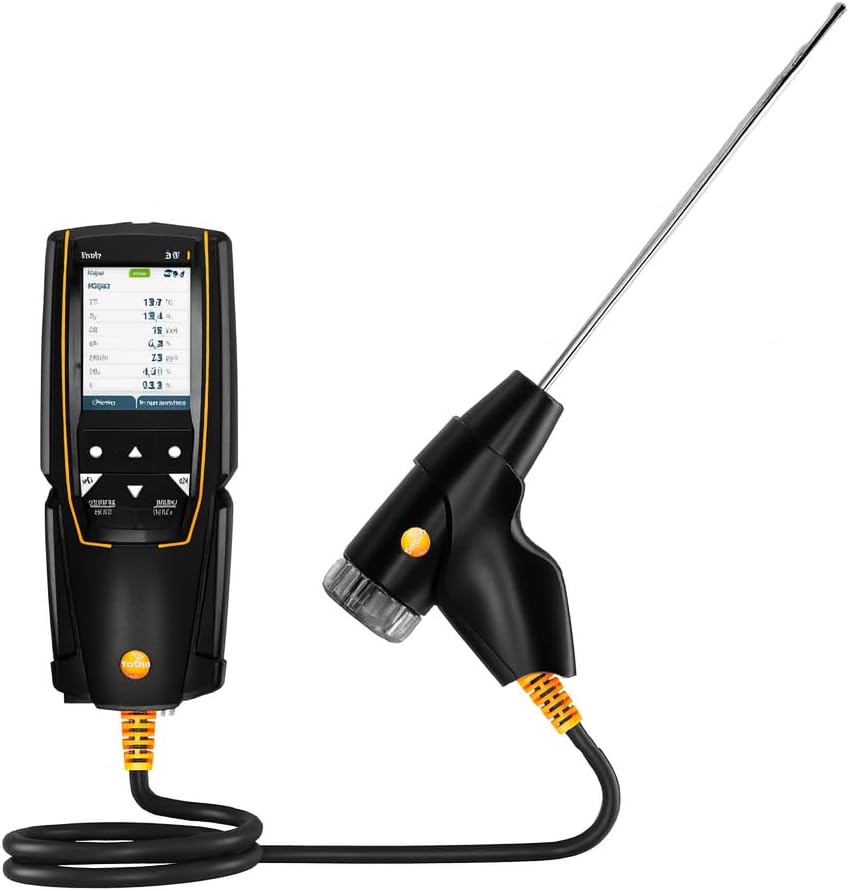


The Combustion Analyzer,Residential,LCD is a compact residential instrument with a 4.6 customer rating and a clear product-category focus: combustion testing. Its limited published description does not enumerate sensor types, measurement ranges, fuel support, or report functions, so the LCD is the main identifiable interface feature. That makes it best understood as a focused residential option rather than a fully documented multi-function commercial platform.
We may earn a commission when you buy through this link, at no additional cost to you.
The strongest argument for this analyzer is its combination of residential relevance and strong customer feedback. An LCD can provide a direct way to view combustion readings without the complexity of a larger touchscreen or printed report system. The listed restriction that it cannot be shipped to California should be checked before ordering, particularly for technicians working in that market.
Honest evaluation is necessarily restrained because the supplied information provides very few technical details. Buyers should confirm the required flue-gas, oxygen, carbon monoxide, draft, pressure, and temperature measurements, along with probe and filter accessories, before treating it as a complete kit. The absence of a detailed inventory also makes accessory availability an important question.
This analyzer is most suitable for residential service technicians who want a straightforward LCD instrument and can verify its specifications and shipping eligibility. It may be less attractive to professionals who need documented fuel compatibility, app-based reports, printer support, or extensive accessories. For those requirements, one of the more fully documented testo, Fieldpiece, or INFICON choices is the safer purchasing direction.
The residential positioning suggests a practical instrument for routine furnace, boiler, or similar heating-system checks. Its LCD is likely the primary benefit for technicians who value immediate readings over elaborate report workflows, although the precise screen size and menu structure are not specified.
Because the supplied listing information is limited, confirm measurement coverage, sensor configuration, calibration details, included probes, and case contents. Also verify shipping restrictions before purchase, especially when delivery to California is required.
We may earn a commission when you buy through this link, at no additional cost to you.
The testo 300 HVAC Kit earns the Editor's Choice position because its published feature set closely matches the needs of a residential combustion analyzer test kit. It measures carbon monoxide, oxygen, temperature, draft, and differential pressure, while also covering ambient carbon monoxide in heating-system work. Its 4.2 rating reflects generally favorable customer feedback, although it trails several alternatives in the supplied ratings.
We may earn a commission when you buy through this link, at no additional cost to you.
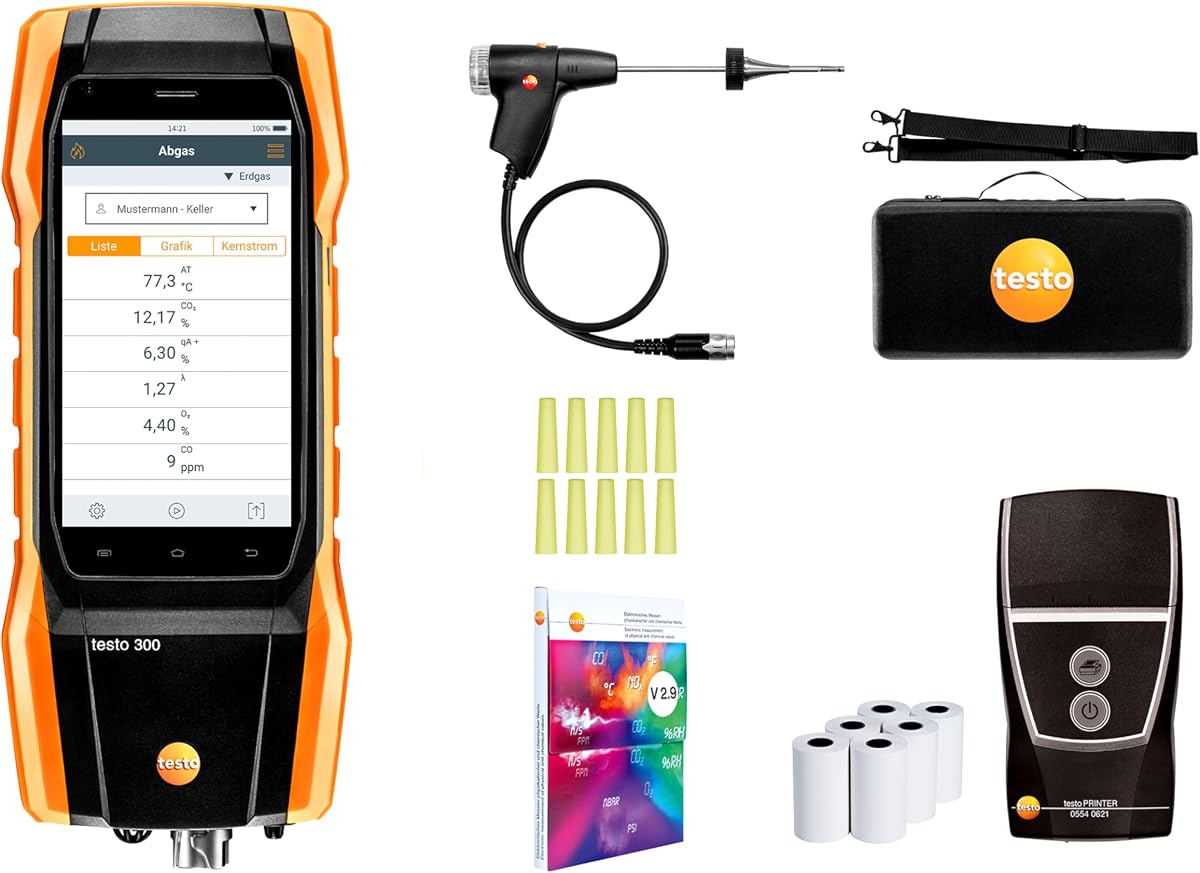
Sensor longevity is a particularly useful feature. The manufacturer states that the CO and O2 sensors can have a life expectancy of up to six years, and the CO measuring range extends to 4,000 ppm. The kit also includes a mains unit, basic flue-gas probe, spare dirt filters, long-life O2 and CO sensors, a rugged hard-shell case, easyHeat software, and a spare probe, creating a more complete field package than many listings describe.
Operation is designed around real service workflow. A single-button start from standby reduces setup steps, strong rear magnets support hands-free positioning, and the large HD smart-touch display presents measurements through a structured menu. The trade-off is that this feature density may make the instrument feel more elaborate than a basic residential model, and the lower customer rating suggests buyers should examine the full specification and included accessories closely.
This is a strong recommendation for HVAC technicians who regularly inspect residential furnaces and boilers, want both flue-gas and pressure measurements, and value a ready-to-use kit. It is particularly compelling when a spare probe and replaceable filters reduce the chance of an interrupted job. Buyers who only need a basic display or have very limited service needs should compare that requirement against the comprehensive testo package.
Carbon monoxide, oxygen, temperature, draft, differential pressure, and ambient CO create a practical set of readings for troubleshooting combustion equipment. This breadth allows technicians to move beyond a single symptom and assess several operating conditions during one service visit.
One-touch startup and magnetic hands-free placement reduce friction at the appliance. The HD touch display provides a structured view of readings, while easyHeat software supports a more digital workflow for reviewing and presenting combustion data.
The included basic and spare probes, dirt filters, sensors, mains unit, and hard case make the package easier to organize and deploy. These supporting pieces matter because a combustion analyzer still requires a suitable probe, clean filters, dependable power, and protection during transport.
We may earn a commission when you buy through this link, at no additional cost to you.
The Fieldpiece SOX3 is the best budget-oriented choice in this roundup because it concentrates on the essential functions of combustion analysis without centering the package on a printer, app, or advanced reporting system. Its 4.3 rating and broad HVAC purpose make it a credible choice for technicians who regularly service furnaces and need reliable measurements in a practical instrument.
We may earn a commission when you buy through this link, at no additional cost to you.
The built-in electric pump draws flue gas automatically, allowing hands-free sampling while the magnetic back helps keep the analyzer positioned. The instrument measures flue temperature and oxygen while calculating carbon dioxide, excess air, and combustion efficiency. Its triple-line display is designed to show important readings clearly, and the supplied thermocouple handle, filter kit, and protective case keep core accessories together.
Sensor maintenance is another practical strength. The oxygen sensor can be replaced in the field, with calibration data stored on the sensor to simplify service. Fuel choices include natural gas, No. 2 oil, and propane, plus programmable custom settings. The principal limitation is that the published information does not mention a printer, app, or NOx capability, so technicians needing those features may need a different model.
The SOX3 suits budget-conscious HVAC professionals who value automatic sampling, replaceable components, and straightforward calculations. It is less compelling for commercial specialists who require broad fuel certification, digital reports, or extensive pressure accessories. Even so, for routine furnace checks, the automatic pump and field-replaceable oxygen sensor make it one of the most serviceable picks here.
The built-in electric pump draws flue gas without requiring manual suction. Combined with the magnetic back, it supports a more stable workflow when the technician needs both hands for connecting the probe, adjusting equipment, or reviewing other components.
Storing calibration data on the oxygen sensor simplifies replacement and helps keep the instrument ready for service. This is valuable for a field tool because a damaged or aging sensor can otherwise remove a core analyzer from productive use.
Standard settings cover natural gas, No. 2 oil, and propane, while custom fuel settings expand compatibility. Programmable configurations can make the instrument more adaptable to varied residential and light-commercial applications without changing the core instrument.
We may earn a commission when you buy through this link, at no additional cost to you.
The INFICON Flue-Mate stands out with a perfect 5.0 customer rating and one of the most complete feature sets in the roundup. It displays efficiency, oxygen, carbon dioxide, carbon monoxide, and flue-gas temperature on one screen while adding pressure monitoring through a built-in manometer and hose kit. That combination makes it a compelling premium analyzer for technicians who want both combustion and pressure information in one platform.
We may earn a commission when you buy through this link, at no additional cost to you.
Its digital functions provide a major workflow advantage. The FLUE-Mate app allows reports to be saved and shared through a smartphone or tablet, and a QR code supports quick access to analysis reports. The backlit LCD remains useful at the appliance, while the app can make records more convenient to transfer, document, and present after the work is complete.
Sensor planning and protection are especially thoughtful. Field-replaceable sensors help control long-term maintenance, automatic CO sensor protection adds a layer of instrument care, and an external water trap is designed to prevent damage to internal electronics and sensors. The analyzer can also be upgraded to measure NOx, making the platform adaptable as service requirements expand.
Fuel compatibility is unusually broad, covering natural gas, propane, fuel oils, diesel, wood, coal, biofuel, LPG, butane, bagasse, B100, and other options. The premium pick is therefore well suited to HVAC and combustion professionals who need flexibility. Those working only on one appliance type with basic readings may find the app and advanced capabilities unnecessary.
Efficiency, O2, CO2, CO, and flue-gas temperature share one display, reducing the need to page through separate menus during a diagnostic sequence. The backlit screen also supports readability in varied service environments.
The FLUE-Mate app and QR-code workflow help technicians save and share analysis records using a smartphone or tablet. This is particularly useful when a customer, office, or supervising technician needs a clear record beyond a handwritten set of readings.
Field-replaceable sensors, automatic CO sensor protection, and the external water trap address common maintenance and environmental concerns. These provisions can help protect instrument longevity and reduce the impact of condensate or sensor exposure.
The supported-fuel list spans common heating fuels, several petroleum products, solid fuels, and biofuels. That range makes the analyzer useful for mixed-service technicians, provided the selected fuel configuration and measurement requirements fit the specific application.
We may earn a commission when you buy through this link, at no additional cost to you.
The UEi C161C is a residential combustion analyzer with a case, a large six-line backlit display, heat-exchanger testing, and two levels of sensor protection. Its 3.1 customer rating is the lowest among the electronic products in the supplied data, so potential buyers should examine recent customer feedback and confirm that the listed measurement set matches their service requirements.
We may earn a commission when you buy through this link, at no additional cost to you.
The display is one of the clearest advantages described. Six lines provide room for more simultaneous information than a minimal readout, while backlighting should improve visibility around appliances and in dim service areas. Heat-exchanger testing adds a targeted capability for furnace diagnostics, and the included case helps protect the analyzer during storage and transport.
The instrument is backed by UEi Service+ and described as carrying an up-to-10-year warranty with annual recertification. That framework may appeal to technicians who value an established service relationship, although the supplied information does not specify every measurement, sensor, probe, or accessory included in the package.
This C161C is most relevant for residential HVAC technicians who prioritize a large display, heat-exchanger testing, sensor protection, and warranty support. The low customer rating and sparse feature documentation make a careful comparison essential. It is less compelling than the Fieldpiece SOX3 or testo 300 for buyers prioritizing a more explicitly documented measurement and accessory bundle.
The six-line backlit display offers more visual capacity than a compact single- or few-line screen. That can help technicians view several combustion parameters without repeatedly changing menus, depending on the analyzer's configured measurement layout.
Heat-exchanger testing makes the C161C directly relevant to common residential furnace inspection workflows. Two levels of sensor protection also address the need to preserve measurement reliability when the instrument is used around heat, dust, and moisture.
Backing by UEi Service+ and an up-to-10-year warranty with annual recertification can add confidence for professional users. Buyers should confirm the precise terms, included recertification coverage, and whether their planned measurement workflow satisfies the unit's full specification.
We may earn a commission when you buy through this link, at no additional cost to you.
The testo 310 II combines flue-gas analysis, temperature measurement, and pressure testing in a residential HVAC package. Its 3.8 customer rating indicates generally positive but less emphatic feedback than the leading choices. The instrument's broad measurement list and smart-app workflow nevertheless make it a strong candidate for technicians who want connected diagnostics and mobile analysis support.
We may earn a commission when you buy through this link, at no additional cost to you.
The analyzer measures temperature in K TC and J TC, flue-gas oxygen, draft, flue-gas loss, efficiency, pressure, CO without hydrogen compensation, and ambient CO. That coverage supports common combustion checks, while the intuitive menu and smart app allow simultaneous monitoring of important parameters. The app connection is especially useful for documenting and reviewing measurements away from the appliance.
The complete set includes a rechargeable battery, calibration protocol for O2, CO, hPa, and degrees Celsius, an 180 mm probe with cone, silicon pressure hose, five particle filters, and a sturdy case. A modest weakness is that the CO measurement lacks hydrogen compensation, which matters when interpreting readings in fuel-cell or other hydrogen-influenced combustion environments.
This testo is best for residential HVAC technicians seeking a rechargeable, connected analyzer with broad flue-gas and pressure functions. It may be less ideal for a hydrogen-specific specialist or for buyers who prioritize an onboard printer. The smart app and rechargeable power make it particularly convenient for mobile service work and repeatable customer reporting.
The supported readings include oxygen, carbon monoxide, draft, efficiency, flue-gas loss, ambient CO, pressure, and multiple temperature formats. This range helps a technician compare combustion behavior with appliance airflow and pressure conditions rather than relying on one isolated value.
The intuitive menu and smart app support simultaneous measurement and connected review. That workflow can make it easier to capture findings, move between measurements, and present information to customers or service teams after the job.
A rechargeable battery, 180 mm probe, silicon hose, five filters, calibration protocol, and sturdy case create a practical field bundle. The included accessories support common residential tasks, while the case helps organize and protect the instrument during travel.
We may earn a commission when you buy through this link, at no additional cost to you.
The testo 300 HVAC Kit with Printer is designed for technicians who want combustion readings and an immediate printed record. It measures carbon monoxide, oxygen, temperature, draft, differential pressure, and ambient CO while adding a wireless printer and spare thermal paper. Its 3.7 rating is moderate, but the reporting package is a clear distinction from the standard testo 300 kit.
We may earn a commission when you buy through this link, at no additional cost to you.
The core analyzer uses sensitive CO and O2 sensors with a stated life expectancy of up to six years and a CO range reaching 4,000 ppm. One-touch startup, rear magnets, and a large HD smart-touch display support field operation. The included easyHeat software adds another layer of analysis support, while the retrofittable NO sensor creates a path to expanded measurement capability.
The most notable trade-off is the ongoing requirement for printer consumables. Thermal paper must be replenished, and the printer, probes, filters, case, software, and sensor options make the package more complex than a basic analyzer. The 3.7 rating also suggests buyers should carefully assess long-term customer feedback rather than relying solely on the feature list.
This kit is an excellent fit for service companies that routinely produce paper reports for customers, supervisors, or compliance records. It also suits technicians who want advanced sensor expansion without leaving the testo platform. If onboard printing is unnecessary, the standard testo 300 kit offers the same core gas, temperature, and pressure focus with fewer printing-related considerations.
The wireless printer produces a tangible record directly during the service visit, while spare thermal paper keeps the workflow prepared. That convenience is valuable for companies that deliver printed combustion results as part of a standard service report.
The retrofittable NO sensor allows the platform to expand beyond its standard oxygen and carbon monoxide configuration. It is a practical choice for technicians whose future measurement needs may grow without requiring an entirely new analyzer.
Multiple probes, filters, a sturdy case, easyHeat software, and a printer create a broad package. The added components improve workflow completeness, although users must manage more accessories and consumables than with a simpler kit.
We may earn a commission when you buy through this link, at no additional cost to you.
The Gold Label Combustion Leak Detector Kit is an automotive block and head-gasket tester rather than a residential or commercial flue-gas analyzer. Its 4.4 rating is strong, and it addresses a different combustion-related diagnostic need. The kit can help identify internal engine leaks in cars, trucks, and other vehicles using the included 18-ounce fluid container and a procedure designed for more than 100 possible tests.
We may earn a commission when you buy through this link, at no additional cost to you.
Its main benefit is focused problem identification. By placing the prepared fluid at relevant engine areas and observing the test response, technicians can investigate suspected leaks in an engine block, cylinder head, or head gasket. Clear instructions and an easy-to-use design make it suitable for experienced automotive professionals as well as do-it-yourself users seeking a structured diagnostic method.
This product must not be confused with an electronic combustion analyzer. It does not measure flue-gas oxygen, carbon monoxide, carbon dioxide, draft, efficiency, or pressure, and it cannot substitute for an HVAC combustion test kit. That distinction is important because keyword searches can mix automotive combustion leak detection with instrument-based heating-system diagnostics.
Buy this kit when the task is finding combustion leaks in an automotive engine, not when analyzing a furnace or boiler. For HVAC work, choose one of the electronic analyzers in this guide. Its favorable rating and specialized fluid-based design make it a useful addition to an automotive toolbox, but it belongs in a different category from the nine flue-gas measurement products.
The fluid-based procedure is designed to reveal combustion leakage around engine blocks, cylinder heads, and head gaskets. This makes it useful for narrowing down likely fault areas before more invasive teardown or repair work.
The included fluid, straightforward instructions, and clear user response help structure the test. The stated capacity for more than 100 tests supports repeated diagnostic checks across a range of vehicles and engine locations.
An engine combustion leak test checks for gas escaping into the cooling system or surrounding engine areas. A flue-gas analyzer instead assesses the operating condition of a heating appliance, so the two tools should not be treated as interchangeable.
We may earn a commission when you buy through this link, at no additional cost to you.
The Fieldpiece CAT85K2 combines combustion analysis, live draft measurement, a built-in manometer, and a printer. Its 3.8 customer rating suggests reasonably positive customer sentiment, while the integrated feature set distinguishes it from instruments that require separate pressure and reporting accessories. It is positioned for technicians who want a consolidated field workflow.
We may earn a commission when you buy through this link, at no additional cost to you.
Live draft is the defining diagnostic feature. Seeing draft change while operating a combustion appliance can help a technician understand flow behavior in real time rather than relying only on a static reading. The built-in manometer broadens the instrument's utility by allowing pressure-related tasks without a separate gauge, which can simplify equipment setup and reduce the number of items carried on a call.
The integrated printer is another major convenience. Combustion results can be produced as a physical report, useful for customer documentation and service records. The trade-off is that the supplied information does not detail sensor configurations, measurement ranges, fuel compatibility, included probes, or print-paper requirements. Those omissions make careful specification review important.
The CAT85K2 is best suited to HVAC professionals who prioritize live draft feedback, onboard pressure measurement, and printed reports. It may be overkill for a technician seeking only basic residential gas readings, but it can reduce accessory complexity for service work where draft and pressure are central concerns.
Live draft presents flow behavior as the appliance operates, which can make it easier to relate draft readings to burner behavior and appliance adjustments. It is particularly useful when static measurements alone do not reveal the full operating pattern.
The integrated manometer expands the analyzer's pressure capability within the same instrument. For technicians who would otherwise carry a dedicated gauge, this consolidation can streamline setup and reduce equipment loss during mobile work.
A built-in printer produces a physical output while the technician is still at the appliance. Confirm printer-paper compatibility, paper capacity, and the supplied documentation before relying on this workflow regularly.
We may earn a commission when you buy through this link, at no additional cost to you.
The testo 300 Commercial Analyzer with Long Life Sensors and Printer is the most specialized premium instrument in the list. It is explicitly a commercial analyzer kit with O2 and CO sensors installed, field upgradeability for NO, long-life sensors, and a printer. No customer rating is supplied, so the product should be evaluated primarily from its documented configuration rather than from the ratings used elsewhere in this guide.
We may earn a commission when you buy through this link, at no additional cost to you.
Its commercial orientation makes it relevant to technicians who routinely service larger boilers, burners, and other commercial combustion systems. Installing O2 and CO sensors provides the fundamental gas measurements, while the field-upgradable NO sensor creates flexibility for applications that require nitrogen oxide information. A printer supports professional documentation without requiring a separate output device.
The main uncertainty is that the supplied description does not list detailed ranges, draft or manometer functions, display size, fuel configurations, probe types, filters, battery details, or case contents. Commercial buyers should verify that the exact model 0564 3004 93 includes the measurement, reporting, and accessory functions required by their service operation rather than relying on the testo product family alone.
This analyzer is best for commercial combustion specialists who value a professional kit, upgradeable sensor architecture, long-life sensor positioning, and immediate printed output. It is probably excessive for a basic residential technician, while those handling advanced commercial diagnostics may find its feature direction highly relevant.
The analyzer is packaged for commercial combustion work rather than presented as a simple residential-only tool. That focus is sensible for technicians who encounter larger or more complex appliances and need a more advanced field platform.
Oxygen and carbon monoxide sensors are installed, and NO can be added in the field. That progression allows a technician to expand measurement capability as service requirements or certification needs develop.
The included printer creates a tangible record during the inspection. Confirm paper supplies and report formatting before deploying the instrument in a busy service workflow, particularly where standardized documentation is required.
Model 0564 3004 93 is identified by number, but the supplied information is abbreviated. Commercial buyers should review the full measurement specification, accessories, calibration process, and compatible fuels before making a final purchasing decision.
We may earn a commission when you buy through this link, at no additional cost to you.
Choosing a combustion analyzer test kit requires matching measurement capabilities, fuel coverage, reporting needs, and maintenance expectations to the equipment and customers you actually service. The most important distinction is whether you need an electronic flue-gas analyzer for heating systems or a fluid-based automotive leak tester.
Begin with the measurements required by your service process. Core residential combustion analysis commonly includes oxygen, carbon monoxide, flue-gas temperature, draft, pressure, carbon dioxide, excess air, and calculated efficiency. Commercial work may also call for flue-gas loss, ambient carbon monoxide, differential pressure, nitrogen oxide, or other fuel-specific parameters. Compare each candidate's measurement list against the readings you need rather than choosing based only on brand or display size.
A broader instrument can consolidate tasks, but additional functions do not guarantee better performance in the measurements you use most. Confirm that each important parameter is measured directly or calculated from validated inputs, and review the applicable sensor range and resolution where those details are available.
Choose a kit that covers every reading required for your typical service call without paying for capabilities you will never use.
The selected fuel configuration must match the appliance being inspected. Residential technicians often work with natural gas, propane, and heating oil, while commercial operations may also involve diesel, fuel oil, solid fuels, biofuels, or specialty fuels. Programmable custom fuel settings can add flexibility, but only if the manufacturer supports the intended fuel and its calculation requirements.
The INFICON Flue-Mate lists one of the broadest supplied fuel ranges, while the Fieldpiece SOX3 covers natural gas, No. 2 oil, propane, and custom settings. Confirm that the analyzer's documented fuel list includes the appliances in your service territory before comparing it with another model.
Match the instrument's supported fuel list directly to your workload, and avoid assuming that a generic combustion label guarantees compatibility.
The display should present important readings clearly enough to speed diagnosis without excessive menu navigation. A large backlit screen can help in dim mechanical rooms, while a multi-line layout may show more combustion values at once. Touch displays add menu flexibility, but some technicians may prefer physical buttons for operation while wearing gloves or working in dirty environments.
Consider how you will move from draft measurement to gas analysis to efficiency calculations. The testo 300 products emphasize a large HD touch display, the Fieldpiece SOX3 uses a triple-line layout, and the UEi C161C provides six backlit lines. The best choice is the interface that matches your workflow and remains easy to interpret in the field.
Prioritize readable layouts, logical menus, and quick access to the readings you use most often rather than choosing solely by screen technology.
Reporting requirements depend on how you communicate service findings. Some technicians are satisfied with on-screen readings and handwritten notes, while others need records emailed to customers or stored in a service-management system. Apps can simplify saving and sharing digital results, whereas onboard printers provide immediate paper documentation that works without an additional device.
The INFICON Flue-Mate supports app-based saving and sharing, including QR-code access. The testo 310 II includes a smart app, while the testo 300 printer kit, Fieldpiece CAT85K2, and commercial testo 300 include printers. Confirm the format required by your business and whether mobile connectivity is dependable at service locations.
Choose digital reporting for connected workflows, onboard printing for immediate physical records, or a basic display when your documentation process is entirely manual.
Sensors are among the most important service-life considerations because they influence measurement capability, maintenance expense, and instrument availability. Field-replaceable sensors can extend the useful life of an analyzer without replacing the entire unit. Some products store calibration information on the sensor, which may simplify replacement and help technicians maintain a consistent instrument.
The testo 300 HVAC kit states a sensor life expectancy of up to six years and a CO range up to 4,000 ppm. The Fieldpiece SOX3 has a field-replaceable oxygen sensor, and the INFICON Flue-Mate also supports field-replaceable sensors. Protection features such as automatic CO protection and an external water trap add another layer of protection for the INFICON platform.
Favor replaceable sensors, clear protection features, and a realistic maintenance path, especially if the analyzer is used every day and downtime affects scheduled appointments.
A complete test kit should support more than the analyzer display. Combustion probes gather the required sample, filters protect the instrument from soot and debris, hoses enable pressure or draft tasks, and a case makes transport easier. Extra filters and probes are useful because contaminated components can restrict flow or compromise a test.
The testo 300 HVAC package includes a basic flue-gas probe, spare probe, spare dirt filters, sensors, a hard case, and easyHeat software. The testo 310 II adds an 180 mm probe with cone, silicon pressure hose, five filters, calibration protocol, rechargeable battery, and case. Compare accessories by the work performed rather than by the number of pieces alone.
Select a package that includes the probe types, filters, hoses, power supply, and storage needed for your normal test sequence.
Mobile technicians need an analyzer that is comfortable to carry, quick to position, and simple to protect. Magnetic backs appear on several models and help keep the unit steady or visible while working. Compact formats reduce load, whereas large cases can organize a broader accessory collection but take up more vehicle space.
Consider startup speed, probe connection, battery life, display visibility, and whether the instrument can remain positioned without continual handling. One-touch startup and hands-free mounting on the testo 300 HVAC kit support a smoother field process. The testo 310 II's rechargeable battery adds convenience for extended mobile schedules.
Choose the balance of size, power, positioning, and accessory storage that suits your service vehicle and typical call duration.
The product category contains several distinct jobs. Residential analyzers target furnaces, boilers, and similar heating systems; commercial analyzers support larger or more complex burners; and automotive combustion leak kits locate internal engine leaks. Their outputs and procedures are not interchangeable, even though all may be described as combustion testers.
The Gold Label kit uses 18 ounces of fluid to test engine blocks, cylinder heads, and head gaskets across more than 100 possible tests. It does not measure appliance flue gases. The other nine products are electronic analyzers positioned for combustion-system measurements, although their depth and reporting features differ.
Define the equipment being diagnosed before choosing the category, then select the analyzer whose measurements and accessories directly support that work.
Begin by reading the instrument's manual, identifying the correct probe and filter, and checking the selected fuel configuration. Verify that the unit, sensors, and probes are clean, dry, and correctly connected. Install the battery or connect power as directed, perform the manufacturer's startup check, and confirm that the displayed measurements stabilize before approaching an operating appliance.
Operate the appliance under the conditions required by your service procedure, position the probe at the specified sampling point, and allow the analyzer to stabilize. Use the magnetic back or another stable positioning method where appropriate. Record oxygen, carbon monoxide, draft, pressure, temperature, efficiency, and other required values, then use the app or printer if the job calls for documented results.
After testing, disconnect and cool probes as directed, replace dirty filters, empty condensate or water traps, and cap open connections to protect sensors. Store the unit and accessories in the supplied case, keep consumables such as printer paper available, and follow the stated calibration and recertification schedule. If readings appear unstable, verify probe placement, filter condition, sensor status, and fuel selection before drawing conclusions.
A useful residential kit commonly measures oxygen, carbon monoxide, flue-gas temperature, draft, and pressure, then calculates values such as carbon dioxide, excess air, and combustion efficiency. Commercial requirements may also include flue-gas loss, ambient carbon monoxide, differential pressure, or nitrogen oxide. Confirm the full measurement list for the appliances and fuel types you service before purchasing.
No. An electronic combustion analyzer evaluates heating-appliance flue gases, temperature, draft, and related performance. The Gold Label kit in this guide is a fluid-based automotive tool for locating combustion leaks in engine blocks, cylinder heads, and head gaskets. It is useful in an automotive toolbox but cannot substitute for an HVAC flue-gas analyzer.
The Fieldpiece SOX3 is notable for its field-replaceable oxygen sensor, which stores calibration data on the sensor itself. The INFICON Flue-Mate also provides field-replaceable sensors, automatic CO sensor protection, and an external water trap. Maintenance needs still depend on usage, cleanliness, storage, calibration, and the specific appliance environment.
A printer is valuable if your company routinely provides physical service reports or records results for customers and supervisors. The testo 300 printer kit, Fieldpiece CAT85K2, and commercial testo 300 package support onboard printing. If you manage reports through a phone or tablet, an app-connected model such as the INFICON Flue-Mate or testo 310 II may offer a more convenient workflow.
It means a worn or failed sensor can be serviced without replacing the entire analyzer, subject to compatible parts and applicable calibration procedures. Products such as the Fieldpiece SOX3 and INFICON Flue-Mate emphasize this feature. It can reduce instrument downtime, although replacement sensors, calibration equipment, and recertification requirements should still be considered.
It depends on the equipment and reporting standard used in your service operation. The INFICON Flue-Mate and commercial testo 300 can be upgraded to measure NOx, while the testo 300 HVAC printer kit includes a retrofittable NO sensor. If your current work does not require nitrogen oxide, that capability may add unnecessary cost and complexity.
Filters protect internal sensors from soot and debris, while probes must permit consistent sampling. A restricted filter or contaminated probe can reduce flow, delay stabilization, or distort readings. Replace dirty filters according to the manual, keep spare filters and probes available, and allow the display to stabilize before recording final values.
Prioritize reliable oxygen and carbon monoxide measurement, temperature, draft, pressure, a readable display, and compatibility with the fuels used in your area. Field-replaceable sensors, included probes and filters, a protective case, and a convenient reporting method are useful secondary considerations. The testo 300 HVAC kit, Fieldpiece SOX3, and INFICON Flue-Mate offer different balances of these features.
The Fieldpiece SOX3 is the strongest budget-oriented pick for technicians who value an automatic sampling pump, field-replaceable oxygen sensor, practical fuel settings, and an uncomplicated service bundle. The testo 300 HVAC Kit takes the Editor's Choice position because it combines CO, O2, temperature, draft, differential pressure, ambient CO, software, probes, filters, and a case in a broad residential package.
At the premium end, the INFICON Flue-Mate stands out for its 5.0 supplied rating, all-screen combustion data, built-in manometer, app-based reporting, broad fuel compatibility, and sensor-protection provisions. The commercial testo 300 and printer-equipped testo 300 kit appeal to buyers who need printed records or commercial capability, while the testo 310 II offers connected residential analysis with a rechargeable battery.
Before buying, verify current product details, included accessories, calibration options, fuel support, and availability. Prices and configurations can change, so use the listings as an up-to-date comparison rather than assuming every historical package remains identical. Choose the instrument that matches your actual appliances, reporting process, and maintenance workflow.