
Behringer Super-X Pro Cx3400
3.9Editor score
Multiple crossover operating modes
Linkwitz-Riley filtering
Individual output limiters
Switchable subsonic protection
Explore the 10 best Audiophile Active Crossover Options, comparing analog and digital designs, filter control, I/O, speaker compatibility, and installation
An audiophile active crossover divides an audio signal into frequency bands before it reaches separate power amplifiers, giving listeners and installers more control than passive speaker networks. A worthwhile model should combine accurate filtering, flexible adjustment, clean connections, and compatibility with the rest of the system.
This guide compares ten crossover options suited to home hi-fi, home theater, car audio, studios, and professional sound reinforcement. We examined architecture, crossover modes, filter controls, frequency ranges, input and output options, phase functions, protection features, and practical installation considerations.
The list includes dedicated electronic processors, passive speaker crossovers, and a supplementary high-frequency product that can help reveal why broader coverage is only one part of building a coherent loudspeaker system. Ratings and availability can change, so readers should confirm current product details and prices before purchasing.
3.9Editor score

5.0Editor score

4.5Editor score
The comparison below highlights each product's crossover type, principal control features, connection format, and most relevant use case, helping readers separate true electronic processors from passive networks and supplementary tweeters.




The Marchand XM66 is a fully analog, two-way electronic crossover built for hi-fi listening rooms and other systems that place signal purity and precise adjustment ahead of broad professional routing options. Its 5.0 rating reflects an exceptionally strong reception among buyers, and the combination of a digital crossover-frequency display with analog processing is especially noteworthy.
We may earn a commission when you buy through this link, at no additional cost to you.
The crossover frequency can be adjusted from 20Hz to 4000Hz, allowing a conventional two-way speaker to be matched to a wide variety of drivers. Its 24dB per octave filters are designed to separate bands with a steep transition, while the infrasonic filter at 20Hz helps limit undesirable very-low-frequency content. RCA inputs and outputs are standard, and balanced connections are available for installations that need a cleaner signal path over longer cable runs.
The principal limitation is scope. This is a two-way processor rather than a three- or four-way unit, so it cannot independently feed low, low-mid, high-mid, and high bands. It also does not include the output limiters, horn equalization, or broad mode switching found in more specialized rack equipment. Even so, those omissions are logical for a product focused on a clean, dedicated hi-fi role.
The XM66 is best suited to an owner with a conventional two-way loudspeaker, separate power amplifiers, and a desire to fine-tune the transition between the midbass or bass driver and the tweeter. For those priorities, it is the most compelling dedicated audiophile crossover in this group and the strongest overall recommendation.
The fully analog processing path avoids digital conversion and clock-dependent circuitry, which can appeal to listeners who prefer short, straightforward signal chains. The digital display is used only for setting visibility; the crossover filtering itself is analog.
A 20Hz to 4000Hz setting range is broad enough to accommodate many driver combinations. The 24dB per octave slopes and infrasonic protection function support clean band separation, although exact integration still depends on the selected drivers and their native response.
We may earn a commission when you buy through this link, at no additional cost to you.
This professional crossover is built around adaptability, offering two-way, three-way, and four-way configurations rather than committing the user to one fixed loudspeaker layout. Its 4.3 rating indicates a favorable balance of capability and user reception, while balanced XLR inputs and outputs distinguish it from many consumer-oriented processors.
We may earn a commission when you buy through this link, at no additional cost to you.
Stereo mode can serve studio monitors, PA mains, or conventional two-band installations. Three-way mode adds a middle band for systems using separate bass, midrange, and high-frequency drivers. Four-way mono mode offers finer control for dedicated subwoofer and full-range systems. Separate output gain, phase invert, and 40Hz low-cut controls for each band make it possible to address balance, polarity, and low-frequency content without external processors.
The drawback is complexity. Buyers must understand amplifier channels, impedance behavior, output routing, and the difference between stereo and mono configurations. The product's PA and studio orientation also means it may be excessive for a simple living-room setup with one pair of speakers and two amplifiers. Confirming the included power requirements before installation is advisable.
This crossover is an excellent choice for installers who want one processor to support several loudspeaker arrangements. It is especially relevant to studios, live venues, houses of worship, installed sound systems, and serious PA builders who value balanced connections and per-band control.
The ability to move between two-way, three-way, and four-way operation makes the unit useful across changing projects. That flexibility is particularly valuable for rental providers, integrators, and mobile sound teams that cannot carry a separate processor for every driver configuration.
Balanced XLR connections can support cleaner signal transfer and better noise rejection over extended cable runs. The front-panel LED matrix provides quick confirmation of the selected mode and operating status, useful during setup and live troubleshooting.
We may earn a commission when you buy through this link, at no additional cost to you.
This second professional crossover follows a similar high-flexibility concept but emphasizes detailed band control and rugged construction. It supports two-way and three-way stereo operation along with four-way mono operation, and its 4.4 rating places it among the better-reviewed products featured here.
We may earn a commission when you buy through this link, at no additional cost to you.
Each band has its own output gain, phase reverse switch, and access to a dedicated 40Hz, 12dB per octave Butterworth high-pass filter. These controls are valuable when matching a subwoofer, protecting a high-frequency driver from low-frequency energy, or resolving polarity relationships. Balanced XLR inputs and outputs support professional signal routing, while an LED matrix makes the active operating mode easy to identify.
Its 110-volt operation needs attention, particularly for mobile users accustomed to universal or lower-voltage systems. The many mode and control options also create a steeper learning curve than a simple two-way home-audio crossover. Owners should also avoid assuming that enabling phase reverse guarantees correct acoustic alignment; placement, driver polarity, and room behavior still matter.
The product is best for sound stages, studios, conference rooms, churches, yards, decks, and DJ systems that benefit from independent control of several frequency bands. It is a strong choice when balanced connections and flexible routing are more important than a minimal design.
Independent gain and phase controls make it easier to balance each output after setting the crossover points. These features are particularly useful in multi-amplifier installations where mismatched output levels or wiring polarity can undermine system coherence.
The switchable 40Hz, 12dB per octave Butterworth high-pass can keep low-frequency content away from drivers that should not reproduce it. It is a simple control with meaningful protective value in a properly configured PA system.
We may earn a commission when you buy through this link, at no additional cost to you.
This one-way passive crossover is a different category of product from the electronic processors that dominate the list. It is intended to isolate a tweeter from mid and low frequencies in a car or home hi-fi speaker, and its 5.0 rating reflects a strong response from buyers looking for a simple installation.
We may earn a commission when you buy through this link, at no additional cost to you.
The network covers a stated 2200Hz to 20kHz range and is rated for 80 watts RMS across four- to ten-ohm speakers. It uses 2.2µF and 2.5µF capacitors to create a smoother high-frequency roll-off than a basic single-capacitor network. A heavy-duty inductor, flame-retardant PCB, thick copper traces, and large solder points are intended to support durable operation.
Because it is passive, it does not provide adjustable crossover frequency, electronic gain control, phase switching, or active signal management. Its performance also depends on the impedance response of the connected driver and the rest of the speaker network. It cannot replace an active electronic crossover in a multi-amplifier installation.
This product is ideal for a builder who wants a straightforward tweeter-protection network without an external processor. It may be especially useful in a car, a custom home speaker, or a compact system where simple installation matters more than fine electronic adjustment.
Using two capacitors is intended to produce a smoother transition and reduce harshness near the tweeter's operating range. The result still depends on the main speaker's crossover and the chosen tweeter's response, so it should be evaluated in the complete enclosure.
Pre-wired high-purity copper leads and screw-type connectors reduce the need for soldering. The network can therefore be integrated into a car or home loudspeaker with less assembly work than a solder-intensive passive crossover.
We may earn a commission when you buy through this link, at no additional cost to you.
The Autotek ATK2 3X is an automotive crossover processor designed to split a vehicle audio signal and manage the relationship between front speakers, rear speakers, and a subwoofer. Its 4.2 rating reflects a generally positive reception, and the included remote bass control is a practical feature for daily driving.
We may earn a commission when you buy through this link, at no additional cost to you.
The processor can operate as a two-way or three-way crossover, with level adjustment and built-in filtering for different outputs. A 180-degree phase shift changes the subwoofer output relationship to the front and rear signals, giving installers another way to address polarity. The 8.5-volt specification indicates a substantial output capability for a car-audio processor.
This is not a general-purpose studio or home-theater unit, and it does not provide the balanced XLR connectivity or multi-mode routing seen in the professional processors above. Vehicle electrical environments can also introduce noise and grounding challenges, so installation quality remains important. The phase switch should be treated as a diagnostic and tuning tool, not a substitute for correct wiring and measurement.
The ATK2 3X is best for car-audio builders who want onboard crossover processing, adjustable levels, and a remote subwoofer control. It is less compelling for a fixed home listening room where balanced connections, finer filter selection, or rack-style construction would be more useful.
The included remote bass control lets the driver alter subwoofer level without reaching the processor. That convenience is valuable in a car, where different music styles and road conditions can benefit from quick bass-level changes.
The 180-degree phase shift can help a tuner explore how the subwoofer integrates with front and rear outputs. Correct phase should be established through listening and measurement, especially when the subwoofer and main speakers occupy different positions in the vehicle.
We may earn a commission when you buy through this link, at no additional cost to you.
The Audiopipe XV-6-V15 stands apart through its six-way architecture, separate front, rear, and subwoofer inputs, and extensive customization. The 4.5 rating is among the strongest in the group, suggesting that car-audio users value its combination of routing options and everyday conveniences.
We may earn a commission when you buy through this link, at no additional cost to you.
A multiplier switch allows the crossover frequency to be adjusted continuously rather than restricted to a small set of fixed positions. Front and rear high-pass outputs, a non-fade low-pass output, adjustable low-pass gain, and a subwoofer bass boost provide several ways to shape the vehicle system. The remote bass knob places subwoofer level control within reach, while a ground-loop isolation input circuit is intended to reduce unwanted interference.
The main challenge is complexity. A six-way crossover offers more control than many users need, and incorrect settings can easily create gaps, overlap, excessive level, or phase problems. The included specifications of 0.04% total harmonic distortion at 1kHz, a signal-to-noise ratio above 105dB, and dimensions of 230 by 160 by 38mm make it appear suited to serious custom installation, but they do not remove the need for careful tuning.
This is a compelling choice for a complex car audio build using multiple front, rear, and subwoofer amplifier channels. It is less suitable for a minimal home system, but for a meticulously planned vehicle installation, the combination of routing flexibility, remote control, and isolation features is unusually comprehensive.
The multiplier switch enables continuous adjustment of the transition point. This is useful when matching different speaker types or accommodating vehicles with limited installation space, where a precise fixed-frequency option may not suit the driver combination.
Ground-loop isolation is especially relevant in automotive systems, where electrical noise and ground-related hum can complicate otherwise correct installations. The remote knob, power LED, adjustable low-pass gain, and mounting provisions further support real-world custom fitting.
We may earn a commission when you buy through this link, at no additional cost to you.
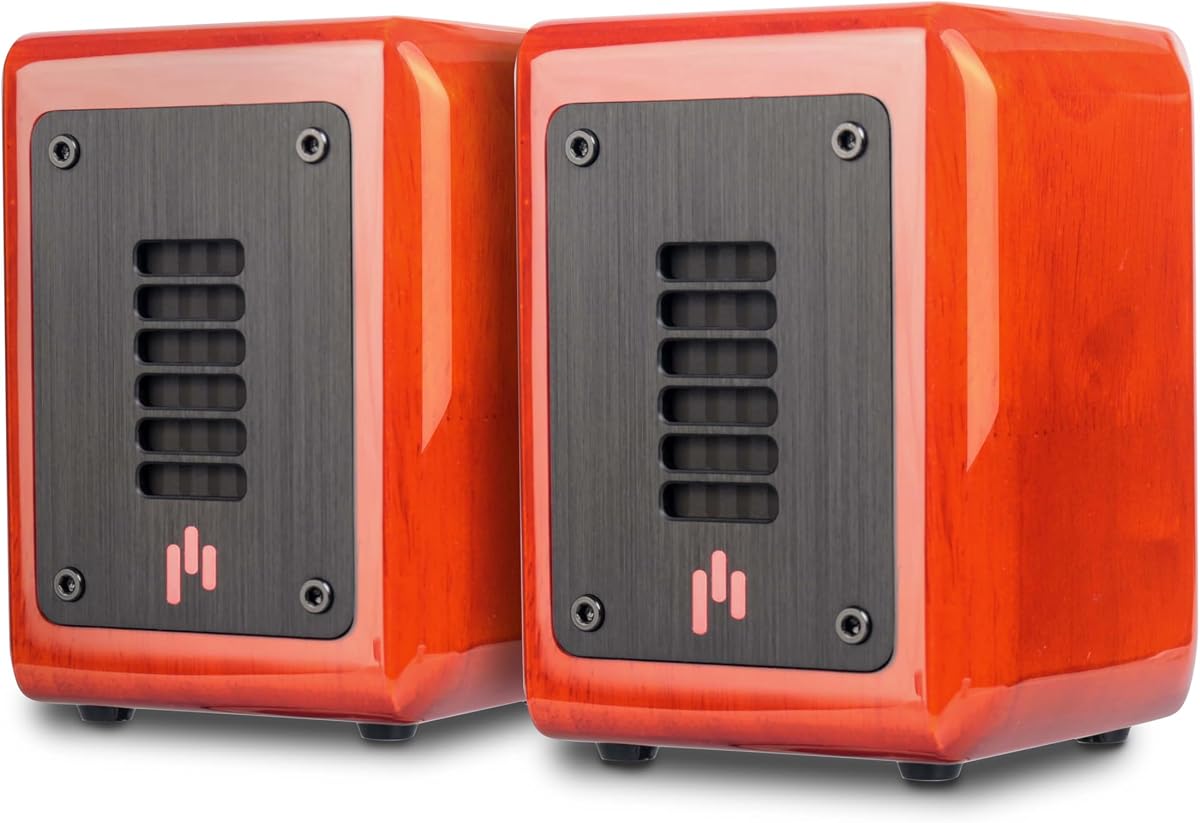
The Aperion PST MKII is a matched pair of planar-ribbon super tweeters, not a conventional active crossover. It is included because it performs a crossover-adjacent role: adding a high-pass-filtered contribution from 8,000Hz to 40,000Hz to an existing stereo or home-theater speaker system.
We may earn a commission when you buy through this link, at no additional cost to you.
The five preset crossover points let users select how the super tweeter joins the main speakers. Aperion describes the speakers as subtle and complementary rather than extremely loud, and they work best with main speakers having 85 to 93dB efficiency. The planar magnetic design offers an alternative to conventional horn-style high-frequency reproduction and is intended to blend smoothly with compatible speakers.
Compatibility is the central issue. Adding a super tweeter cannot repair a poorly balanced two-way system, and the result may be worse if the main speakers already have prominent upper treble. The product should not be viewed as a replacement for an active crossover, nor should it be expected to deliver the same perceived output as a dedicated high-energy studio tweeter.
The PST MKII is best for listeners with a compatible, well-behaved main system who want a subtle extension into the highest audible and ultrasonic range. It is a specialist supplementary product rather than a core choice for anyone seeking band splitting, electronic gain control, or multi-amplifier flexibility.
The super tweeter is intentionally designed to add refinement rather than dramatic volume. This makes it potentially easier to integrate with an existing main speaker, provided that speaker does not already have an overbearing treble presentation.
Preset high-pass points give installers a way to experiment with where the super tweeter begins contributing. The best setting depends on the main speaker's dispersion, crossover behavior, room acoustics, and the listener's tonal preferences.
We may earn a commission when you buy through this link, at no additional cost to you.
This four-way passive crossover is aimed at home-theater and dedicated music systems that need a single speaker-level network to divide a full-range signal among multiple drivers. Its 3.6 rating is the lowest in the group, but the underlying feature set is unusual for a passive design, including a four-band arrangement and up to 400 watts of stated power handling.
We may earn a commission when you buy through this link, at no additional cost to you.
The network uses a two-high and two-low crossover configuration with points stated at 2600Hz and 2650Hz and described as adjustable. Two blue-framed oxygen-free copper inductors and multiple specialty capacitors form the filtering network. Compatibility is listed for two- to six-ohm systems, while a routing switch offers control over the tweeter circuit.
Passive networks have inherent limitations. The final frequency response depends on driver impedance, crossover component values, enclosure acoustics, and interaction among the speaker sections. A single nominal impedance rating does not fully describe those variables. The installation also requires care because the passive network handles full speaker-level power rather than a lower-level line signal.
This product makes the most sense for a DIY speaker builder who wants a high-power, multi-driver passive network and is prepared to evaluate the finished system by ear or measurement. It is not the right choice for someone seeking adjustable electronic band splitting or independent amplifier control.
The stated 400-watt capacity makes the network suitable for powerful home-theater or music installations when paired with appropriate drivers. Actual performance still depends on the full loudspeaker design and the crossover's interaction with each driver's impedance curve.
Ten solderless terminals simplify hookup and reduce assembly errors. The routing switch adds a useful degree of setup flexibility without introducing the complexity of an external electronic processor.
We may earn a commission when you buy through this link, at no additional cost to you.
The Taramps CRX4 is a compact four-channel electronic crossover designed primarily for car audio. Its 4.5 rating is tied for one of the strongest in the group, suggesting that buyers value its combination of multi-channel processing, familiar RCA connectivity, and space-conscious construction.
We may earn a commission when you buy through this link, at no additional cost to you.
The processor provides customizable sound adjustments across low and high sections, with an eight-volt RMS output specification and a bass-boost function. Four RCA channels make it suitable for splitting and routing signals to multiple amplification stages without requiring balanced studio connections. The unit measures 190 by 145 by 40mm and weighs 560 grams, making it relatively unobtrusive in a vehicle installation.
The available product information is less detailed than for some competitors. It does not spell out the exact crossover slopes, selectable frequencies, or every control in the supplied description, so buyers should inspect the current manual and control layout before assuming it meets a specific system design. Its car-audio focus also makes it less natural for a home theater installation than a processor with XLR or home-audio-specific connectivity.
The CRX4 is a sensible option for a compact vehicle build that needs more than a basic fixed passive network. It should be selected by installers who understand the available filters and can match those controls to the intended speakers and amplifiers.
The compact enclosure and relatively low weight make installation easier where space is restricted. A processor that performs the band splitting near the amplifiers can also shorten some connection paths within a carefully planned wiring layout.
Separate low- and high-frequency adjustments provide the core controls required for a multi-channel car system. The bass boost and customizable levels add flexibility, although accurate tuning still depends on gain staging and the selected crossover points.
We may earn a commission when you buy through this link, at no additional cost to you.
The Behringer Super-X Pro Cx3400 is a multi-mode rack-style crossover offering stereo two-way, stereo three-way, and mono four-way operation. Its 3.9 rating is modest compared with the leaders, yet the unit offers an unusually complete feature set for a value-oriented choice, including individual output limiters and selectable filtering.
We may earn a commission when you buy through this link, at no additional cost to you.
Its 24dB per octave state-variable Linkwitz-Riley filters are designed for precise frequency separation, while the summed output is specified for flat amplitude response and zero phase difference. Each output has an individual limiter and phase reverse switch. A switchable 25Hz subsonic filter can protect low-frequency drivers, and equalization for constant-directivity horns is available for professional monitor and PA systems.
The number of switches and operating modes can be intimidating, particularly for listeners new to system design. The unit also has a lower rating than several more specialized products, so buyers should pay close attention to the condition of controls, current availability, and the included documentation. Its strongest features are professional workflow functions rather than decorative audiophile touches.
The Cx3400 is a compelling pick for a home-theater, project studio, or PA system that needs multiple crossover modes, protection, and per-output correction. It is especially attractive when the goal is broad functional coverage at a comparatively accessible entry point.
Individual output limiters help reduce excessive signal reaching an amplifier or driver, while the 25Hz subsonic filter can limit inaudible low-frequency energy. Together they make the processor more practical for a permanently installed system.
Two-way, three-way, and four-way modes allow the unit to serve different loudspeaker arrangements. Constant-directivity horn equalization further extends its usefulness for studio monitoring and professional PA work, although the user must understand the correct switch positions.
We may earn a commission when you buy through this link, at no additional cost to you.
Choosing an active crossover means matching filter capability, connectivity, control features, and physical format to the speakers, amplifiers, room, and installation. The most important distinction is whether the system needs electronic band splitting or only a passive speaker network.
Choose active processing for separate amplifiers, flexible band adjustments, or professional routing. Choose a passive network for a straightforward custom speaker with compatible drivers.
Match the band count to the number of drivers and amplifier channels. Do not choose more bands solely for flexibility.
Check slope, phase behavior, and summed response together. A steep filter alone does not guarantee a better crossover point.
Prioritize controls you will genuinely use. Clean labeling and repeatable settings matter more than a long feature list.
Map every source, processor, amplifier, and speaker connection before buying. Connector compatibility should match the installation.
Treat the crossover, speakers, and amplifiers as one system. Use each driver's specifications as design constraints.
Confirm fit and power requirements early. A feature-rich processor still needs safe, stable installation.
Begin by documenting every source, amplifier channel, driver, and connection before changing any switch. Connect the processor according to the manufacturer's diagram, observe correct input and output polarity, and make sure the output level is initially low. This reduces the risk of damaging speakers while the system is being configured.
Select the crossover points with the actual drivers in mind, then set band gains to establish a neutral starting balance. Use phase controls only as part of a careful comparison, because room placement, enclosure reflections, and driver design can influence the result. Limiters, low-cut filters, and subsonic settings should be engaged where they protect the intended driver without removing useful program content.
After installation, check the wiring and ventilation, secure all connections, and use the available meters or reliable listening tests to verify level and phase. Do not repeatedly power the processor on or off, bypass protective grounding, or improvise signal routing. Keep the manual nearby, document each successful setting, and revisit the configuration whenever an amplifier, speaker, or room position changes.
An active crossover splits a line-level audio signal into separate frequency bands before those bands reach the power amplifiers. Each band can then be amplified and directed to a suitable driver. Compared with a passive crossover, this approach provides more control over frequency assignment, output level, phase, and driver protection.
An active crossover is usually more flexible when separate power amplifiers are available, because it allows electronic adjustment of crossover points and band levels. A passive crossover is simpler and can suit a conventional speaker with a single amplifier. The better choice depends on the loudspeaker design, amplifier count, installation goals, and acceptable complexity.
No. A processor with enough input and output channels can serve an entire stereo system if its routing and gain structure match the setup. It must accommodate the left and right channels, all required frequency bands, and the corresponding amplifier outputs. A multichannel processor may also be shared between stereo and mono installations when the mode changes are appropriate.
A 24dB per octave slope offers strong separation between drivers and is common in professional crossover processors. Other slopes can also produce good results when the drivers, phase behavior, and system integration are handled correctly. The best slope is one that complements the loudspeaker design and permits smooth output when the bands are summed.
The crossover only reveals its actual behavior in the complete system, with every driver and amplifier connected as intended. Driver impedance, sensitivity, enclosure reflections, and amplifier behavior all influence the result. Start conservatively, listen for tonal balance and imaging changes, and make small adjustments rather than relying solely on an expected numeric value.
It can improve tonal balance and reduce certain integration problems by giving each band appropriate level and frequency settings. It cannot eliminate all reflections, uneven bass, or poor speaker placement. Room treatment, correct positioning, and careful subwoofer integration remain important, particularly when a listener sits between the main speakers.
Both formats can work correctly, but balanced XLR connections are often preferable in professional environments and over long cable runs because of their noise-rejection capability. RCA connections are widely available and appropriate for many home and car systems. The deciding factors should be compatibility with the rest of the system, wiring distance, and installation convenience.
A crossover divides a signal into bands and can manage several drivers through separate outputs. A super tweeter is an actual supplementary driver that adds high-frequency reproduction, often using its own high-pass filter. It does not replace the phase, gain, protection, and routing functions of a full active crossover.
The Marchand XM66 is the leading choice for a dedicated, fully analog two-way hi-fi crossover, with a broad adjustment range, steep filters, and balanced connection availability. The Audiopipe XV-6-V15 offers the most elaborate vehicle-focused routing, while the Behringer Super-X Pro provides extensive crossover modes and protection features in a value-oriented rack processor.
The right priority depends on the system. Choose a low-complexity passive network for a dedicated speaker project, a balanced professional processor for studio or PA routing, and an automotive model when remote bass control and vehicle-specific integration matter most. Always evaluate the crossover with the intended drivers, amplifiers, and listening position rather than choosing on feature count alone.
Ratings, product configurations, availability, and prices can change over time, so buyers should confirm the current specifications and listing details before ordering. Taking time to verify connector formats, crossover modes, filter settings, and power requirements will make the final choice more dependable and improve the likelihood of a coherent finished system.